

Code P0305 is an OBD-II code indicating that the PCM has detected misfires in cylinder 5. When this code appears, the engine typically runs rough, power decreases, and the Check Engine light either stays on or flashes under load. In this article, we will explain why the PCM specifically stores P0305, the conditions that cause it, how to diagnose the issue from simple to complex, and what steps to take to fix the problem without guessing.
“Over years of diagnostic work, I’ve noticed a pattern: most owners see code P0305 and immediately start replacing parts at random—spark plug, coil, injector. But the PCM doesn’t guess. It detects misfires based on specific conditions: crankshaft speed variations, knock sensor signals, oxygen sensor readings. Understanding how the PCM ‘thinks’ makes it clear that the code is a result, not a diagnosis. My goal is to teach you to see the logical chain behind P0305, not just a list of ‘possible causes.’” – Daniel Brooks, DecodeAuto
This information is general and does not replace professional consultation.
Page contents
What does code P0305 mean?
Code P0305 indicates that the PCM has detected misfires specifically in cylinder 5. Let’s break down what actually happens when this code appears.
The PCM continuously monitors crankshaft rotation via the crankshaft position sensor (CKP). When fuel combusts normally in a cylinder, the piston receives a push, and the crankshaft accelerates—visible as microvariations in speed. If combustion fails or is incomplete, there is no impulse, and the crankshaft slows during that cylinder’s power stroke. The PCM compares these variations across cylinders. When deviations in cylinder 5 exceed a threshold, the control module logs a misfire.
To identify which cylinder misfired, the PCM uses the camshaft position sensor (CMP) signal. CMP indicates the engine phase, while CKP shows each piston’s position. By correlating this data, the PCM precisely knows that the misfire occurred in cylinder 5, not another.
It is important to understand that the P0305 code itself does not explain why the misfire happened. It only reports the result: cylinder 5 did not have normal combustion. Causes can vary—from a worn spark plug to low compression. OBD-II algorithms are reliable, but rare false positives can occur (due to vibrations, sensor noise, or software quirks). Cross-check Mode 6 and freeze-frame data, and rule out external factors.
How to identify cylinder 5 on your engine?
Before starting diagnostics, you need to know exactly where cylinder 5 is located. Cylinder numbering depends on engine type and manufacturer.
Inline engines (I4, I5, I6):
In inline engines, cylinders are arranged in a single row. Usually, numbering starts from the front of the engine (belt side) to the rear (flywheel/transmission side). For an inline 6-cylinder engine, the order is 1-2-3-4-5-6 from front to back. Thus, cylinder 5 is the second from the rear.
V-type engines (V6, V8):
In V engines, cylinders are split into two banks: left and right. Numbering depends on the manufacturer. For most American V8s (Ford, GM, Chrysler):
- Left bank (driver’s side): 1-3-5-7
- Right bank (passenger’s side): 2-4-6-8
Therefore, cylinder 5 is on the left bank, in the middle.
Examples of specific layouts:
| Manufacturer | Engine type | Location of cylinder 5 | Source |
|---|---|---|---|
| Ford | V8 | Left bank, middle (1-3-5-7) | Ford service manual |
| GM (YaMZ-8401) | V8 | Left bank, 5th from front | YaMZ-8401.10 manual |
| Toyota | Inline 6 | Position 5 from front | Refer to the service manual |
Opposed engines (boxer, e.g., Subaru):
In opposed engines, cylinders are arranged horizontally on both sides of the crankshaft. Numbering is usually mirrored: left side 1-3-5, right side 2-4-6 (for 6-cylinder engines). Exact order is in the service manual.
How to find the layout:
- Look under the hood: some engines have a sticker or marking with cylinder numbering.
- Consult the owner’s manual or service manual (available online).
- Search for TSBs or diagrams for your model and year.
Misidentifying the cylinder is a common cause of unsuccessful repairs. You might replace the “cylinder 5” spark plug but actually swap cylinder 3’s, leaving the problem unresolved.
Quick checklist: what to do right now
This information is general and does not replace professional consultation.
If your Check Engine light is on and the scanner shows P0305, here are the first steps:
- Read fault codes and freeze-frame data with an OBD-II scanner. Confirm that P0305 is the only or primary code. If P0171/P0174 (lean mixture) or P0420 (catalyst) codes are present, the issue may be broader.
- Listen to the engine at idle. Rough running, uneven operation, and vibration are typical signs of misfires.
- Use the swap method: exchange the ignition coil of cylinder 5 with a neighboring one (e.g., cylinder 6). Clear codes, start the engine. If the code shifts to P0306, the coil is faulty. If P0305 remains, the coil is fine, and the problem lies elsewhere.
- Do the same with the spark plug: remove the plug from cylinder 5, install it in cylinder 6, and vice versa. Check if the code moves.
- If the code does not move, check the injector of cylinder 5: listen for clicks (with a stethoscope or by ear), measure coil resistance with a multimeter, and if available, perform a balance test with a compatible scanner.
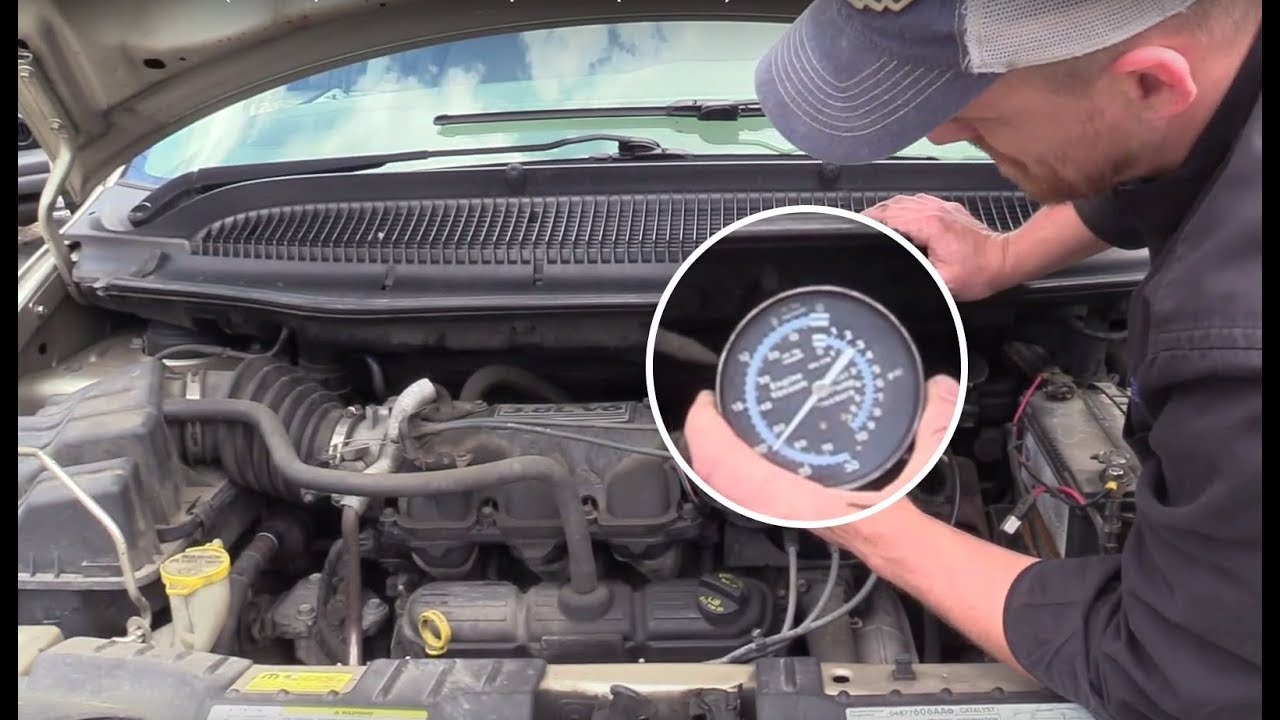
- If ignition and fuel systems show no obvious issues, measure compression in all cylinders. If compression in cylinder 5 is significantly lower than others, the problem is mechanical (valves, rings, gasket).
This approach allows you to quickly isolate the problem without unnecessary expense.
Where to buy and how to select parts by VIN:
After diagnostics, you may need to replace the spark plug, coil, or injector. To avoid mistakes:
- Use a VIN decoder on parts seller websites—enter your vehicle’s VIN to get a list of compatible parts for your engine.
- Pay attention to the OEM part number—this helps confirm compatibility. Aftermarket alternatives may be cheaper, but check reviews.
- Spark plugs: heat range, electrode material (iridium/platinum), gap. Verify the recommended gap in the manual (typically 0.031–0.043 in. (0.8–1.1 mm), depending on the engine).
- Coils: when replacing one coil, consider the age of the others. If mileage is high (over 62,000 miles (100,000 km)), it’s better to replace the set.
- Injectors: flow-matched sets (injectors with equal flow rates) are important for multi-cylinder engines. Ultrasonic cleaning can be cheaper than replacement.
Symptoms and signs of code P0305
When the PCM registers P0305, the driver usually notices several characteristic symptoms:
- Check Engine light is on or flashing. A steady light means misfires are detected but not critical. Flashing under load (acceleration, climbing) indicates severe misfires—this is a signal to stop immediately to avoid damaging the catalyst.
- The engine runs rough at idle. RPM fluctuates, the engine runs unevenly because cylinder 5 does not provide a normal impulse, and the others compensate, disrupting balance.
- Loss of power and hesitation during acceleration. The car feels sluggish, acceleration is weak, sometimes jerky—especially noticeable uphill or when passing.
- Vibration transmitted to the body. Due to uneven combustion, vibrations from the engine reach the steering wheel, pedals, and seat, felt more strongly at idle.
- Increased fuel consumption. The PCM tries to compensate for the misfire by increasing injection, plus unburned fuel from cylinder 5 exits through the exhaust.
- Smell of unburned gasoline from the exhaust. If the spark plug fails to ignite the mixture, fuel burns in the exhaust or not at all, causing a characteristic odor.
- Hard starting, especially when hot. The engine struggles to start if one cylinder is not contributing normally.
- Misfires worsen under load. On highways, uphill, or during passing, misfires become frequent, and the engine may start to stumble.
All these symptoms result from the PCM detecting improper combustion in cylinder 5. The longer the issue persists, the worse the symptoms become.
Main causes of code P0305
Causes of P0305 can be grouped. Their frequency varies, so it’s logical to start checking the most common—ignition system—and move to rarer, more complex causes (engine mechanics, PCM).
Most often, a misfire in a specific cylinder is due to either no proper spark (ignition), no fuel (injector), or an inability to build normal pressure (compression). Less commonly, the problem is air leaks, wiring issues, or PCM software faults.
It is important to understand: P0305 is always a consequence of disrupted combustion conditions.
Issue #1: Worn or defective spark plug
The spark plug is the first suspect for P0305. It operates under harsh conditions: high temperature, pressure, and constant sparking. Over time, the electrode wears, the gap increases, deposits form on the insulator, which may crack.
If the gap is too large, the coil’s energy is insufficient for a stable spark. If the insulator is cracked, the spark leaks sideways, bypassing the electrodes. Deposits or oil on the plug can short the spark, preventing it from jumping the gap. As a result, the mixture fails to ignite, and the PCM logs a misfire.
How to check the spark plug:
- Remove the plug from cylinder 5. Inspect the insulator: black oily deposits indicate a rich mixture or oil entering the combustion chamber. White deposits suggest overheating, possibly a lean mixture or incorrect heat range. Light brown or gray deposits are normal.
- Check the gap between the center and side electrodes with a feeler gauge. Compare with manufacturer specifications. If the gap is larger, the plug is worn.
- Inspect the insulator for cracks or chips. Even microcracks can cause misfires under load.
- Use the swap method: install the cylinder 5 plug in cylinder 6 and vice versa. Clear codes, start the engine. If the code changes to P0306, the plug is faulty. If P0305 remains, the plug is fine.
Replacing the spark plug is simple and inexpensive. If the misfire disappears after replacement, the cause is found. If not, proceed further.
Issue #2: Ignition coil failure
The ignition coil is the second most common cause of P0305. It converts low battery voltage into high voltage (tens of kilovolts) needed for the spark. Coils can fail due to overheating, vibration, moisture intrusion, internal winding shorts, or housing cracks.
When the coil is faulty, the spark is weak (unable to ignite the mixture under load) or absent. Sometimes the coil works at idle but fails under load, causing the code to appear only during acceleration.
How to check the coil:
Warning: do not hold the spark plug when checking for spark; disable the fuel pump before checking compression and coils; wear gloves and safety glasses; avoid rotating parts when the engine is running.
- Visually inspect the coil on cylinder 5: look for housing cracks, signs of arcing (white or black discharge marks), moisture, or oil. Check the connector and contacts for corrosion or oxidation that may impair function.
- Use the swap method: exchange the coil on cylinder 5 with a neighboring one (e.g., cylinder 6). Clear codes, start the engine, drive 10–15 minutes. If the code shifts to P0306, the coil is defective and should be replaced. If P0305 remains, the coil is fine.
- If you have an oscilloscope, check the primary or secondary waveform. Distortions may indicate coil or circuit problems.
- Check coil ground and power supply: poor ground or loss of power can cause symptoms similar to a faulty coil.
Replacing the coil resolves the issue if diagnostics point to it. Also, inspect and replace the rubber boot (spark plug boot) if cracked, as it can cause arcing.
Issue #3: Clogged or faulty fuel injector
The fuel injector supplies fuel to the cylinder. If the injector for cylinder 5 is clogged, stuck closed, or opens late, fuel either does not reach the cylinder or is sprayed improperly. Without fuel or with insufficient fuel, the mixture fails to combust, and the PCM logs a misfire.
Injector clogging usually results from poor-quality fuel, varnish, or deposits. Less commonly, electrical failure (coil winding break, short circuit) or mechanical damage (needle sticking) occurs.
How to check the injector:
- Listen to the injector with a stethoscope or by ear (engine running). A working injector clicks clearly and rhythmically. No click or muffled sound indicates a problem.
- Measure coil resistance with a multimeter. Significantly lower resistance indicates a short; infinite resistance indicates an open circuit. (Refer to the manual for exact values.)
- If you have a scanner with a balance test function, perform it: the scanner disables injectors one by one, measuring RPM changes. If disabling cylinder 5 injector does not affect RPM or changes it insignificantly, the injector is faulty or weak.
- Check power and control signals at the injector connector: battery voltage should be present with the key on, and the PCM should provide a pulsed ground signal when the engine runs.
- If clogging is suspected, remove the injector for ultrasonic cleaning or replacement.
Confirmed injector faults are resolved by cleaning or replacement.
| Method | Required tool | Expected result for a good injector | Sign of fault |
|---|---|---|---|
| Coil resistance test | Multimeter | Within manufacturer specifications (see manual) | Deviation: short circuit / open circuit |
| Listening with stethoscope | Stethoscope | Clear rhythmic clicking | No sound / muffled click – inactive injector |
| Balance test | OBD-II scanner | RPM change when injector disabled (see specs) | No RPM change – injector not working or weak |
| Power and signal check | Multimeter / oscilloscope | Battery voltage, pulsed PCM signal | No power / no signal – wiring or PCM issue |
Issue #4: Low compression in cylinder 5
Low compression means the cylinder cannot build normal pressure for combustion. This may be due to burnt valves, worn piston rings, head gasket failure, or cylinder head damage.
When compression is low, even with normal spark and fuel supply, the mixture burns incompletely or not at all. The PCM logs a misfire, triggering P0305.
How to measure compression:
- Warm up the engine to operating temperature.
- Disable fuel supply (disconnect fuel pump or injectors) and ignition (disconnect coils).
- Remove all spark plugs.
- Install a compression gauge into the spark plug hole of cylinder 5.
- Fully depress the accelerator pedal (open throttle).
- Crank the engine with the starter for 5–7 seconds and record the maximum compression value.
- Repeat for all cylinders.
Compare values and consult the manual. Differences exceeding the allowed range from the maximum indicate a problem. If compression in cylinder 5 is significantly lower than others, the issue is mechanical.
Leak-down test:
If compression is low, a leak-down test shows where pressure escapes:
- Set cylinder 5 piston at top dead center (TDC) of the compression stroke (both valves closed).
- Connect the leak-down tester adapter to the spark plug hole.
- Apply compressed air (60–100 psi).
- Zero the gauge and record the leakage percentage.
Typical leakage for a standard engine is less than 10%. If leakage is higher, listen for air escaping:
- Air from the intake manifold (or throttle body) indicates an intake valve leak.
- Air from the exhaust pipe indicates an exhaust valve leak.
- Air from the oil filler neck or crankcase breather indicates worn piston rings.
Confirmed low compression usually requires cylinder head repair (valve replacement, lapping) or bottom-end repair (ring and piston replacement).
Additional possible causes
Besides the main causes, there are less common but real reasons for P0305:
- Intake manifold air leaks. If the manifold gasket or vacuum hose connected to cylinder 5’s runner is damaged, extra air enters the cylinder. The mixture becomes lean and combustion unstable. Check with a smoke test or propane: introduce propane around suspect areas on a running engine—if RPM changes, a leak is present.
- MAF/MAP sensor issues. If the mass airflow sensor (MAF) or manifold absolute pressure sensor (MAP) gives incorrect readings, the PCM miscalculates fuel delivery. This can cause secondary misfires, often accompanied by P0171/P0174 codes (lean mixture).
- Exhaust gas recirculation (EGR) valve. If the EGR valve sticks open and directs exhaust gases into a specific cylinder runner (rare but possible), the mixture is diluted and combustion becomes unstable.
- Wiring and connectors. Damaged coil or injector connectors, oxidized contacts, or poor grounds can cause interruptions. Visually inspect wiring and test with a multimeter.
- PCM software glitches. Rarely, manufacturers release TSBs with PCM software updates to address false misfire detection or calibration issues. Check for TSBs for your model.
These causes are less frequent but should be considered if basic checks yield no results.
Step-by-step DIY diagnosis of code P0305
This information is general and does not replace professional consultation.
Diagnosing P0305 is a process of elimination, from simple to complex. Here is a step-by-step algorithm:
Step 1: Read codes and freeze-frame data.
Connect an OBD-II scanner and read all active and stored codes. Record freeze-frame data showing conditions when the code was set (RPM, load, temperature). If other codes are present (e.g., P0171, P0420), start with them as the problem may be more involved.
Step 2: Visual inspection.
Open the hood and inspect the ignition coil, connectors, and wiring for cylinder 5. Look for cracks, arcing marks, oil, moisture, or corrosion. Ensure connectors fit tightly.
Step 3: Coil swap method.
Swap the coil of cylinder 5 with a neighboring one (e.g., cylinder 6). Clear codes with the scanner. Start the engine and drive for 10–15 minutes. Read codes again. If the code changes to P0306, the coil is faulty and should be replaced. If P0305 remains, the coil is fine; proceed further.
Step 4: Spark plug swap method.
Swap spark plugs between cylinders 5 and 6. Clear codes, start the engine, drive, and read codes. If the code moves to P0306, the plug is faulty and should be replaced. If not, the plug is fine.
Step 5: Injector check.
Listen to the injector on cylinder 5 (clicks). Measure coil resistance. Check power and signal at the connector. If available, perform a balance test. If clogging is suspected, remove the injector for cleaning or replacement.
Step 6: Evaluate fuel trims and Mode 6 data.
If your scanner supports advanced data, check STFT (short-term fuel trim) and LTFT (long-term fuel trim). Values beyond normal limits may indicate mixture issues (refer to the manual for thresholds). Check misfire counters in Mode 6: a high count on cylinder 5 under various conditions (idle, load) confirms a local problem.
Step 7: Compression measurement.
If previous steps fail, measure compression in all cylinders. Low compression in cylinder 5 indicates mechanical failure. Perform a leak-down test to locate the leak.
Step 8: After repair—clear codes and test drive.
After fixing the cause, clear codes with the scanner. Drive for 20–30 minutes in various conditions (idle, city, highway, load). Read codes again. If P0305 does not return, the problem is resolved.
Tools and quick tests
For diagnosing P0305, you will need:
| Tool | Purpose | Quick test | Normal / threshold |
|---|---|---|---|
| OBD-II scanner | Read codes, freeze-frame, Mode 6 | Read P0305, check misfire counters | No other critical DTCs |
| Multimeter | Check resistance, voltage | Injector: see manual | Deviations require replacement |
| Spark plug socket and feeler gauge | Remove plug, check gap | Compare with manual | Larger gap indicates wear |
| Coil puller | Remove coil for swapping | Visual inspection for cracks, arcing | Cracks or arcing marks require replacement |
| Compression gauge | Measure cylinder compression | Crank engine, record max value | Compare with manual; difference within limits |
| Leak-down tester | Locate pressure leaks | Apply air, listen for leaks | Less than 10% leakage is typical; intake/exhaust/crankcase |
| Fuel pressure gauge | Check fuel rail pressure | Connect, turn ignition on | Within specifications (see manual) |
| Stethoscope | Listen to injector clicks | Place on injector with engine running | Clear rhythmic clicking |
| Smoke machine (smoke test) | Detect air leaks | Introduce smoke into intake, look for leaks | No smoke means no leaks |
| Oscilloscope (optional) | Check coil/injector pulse waveform | Connect to coil, record signal | Normal pattern varies by system |
Dangers of driving with P0305: consequences for the catalyst and engine
This information is general and does not replace professional consultation.
Many drivers wonder if it is safe to drive with the Check Engine light on and code P0305. The short answer is: it is not recommended, and if the light is flashing, you should stop driving as soon as it is safe to do so.
When cylinder 5 misfires, unburned fuel-air mixture is expelled into the exhaust system. It may partially combust in the exhaust manifold or catalytic converter. The problem is that the catalyst is not designed for such temperatures—it overheats, and the catalyst substrate begins to melt, fuse, and crumble. This is called catalyst overheating.
A damaged catalyst is not only an expensive repair but also causes secondary problems: a clogged catalyst creates backpressure in the exhaust, causing the engine to struggle, power drops further, and detonation may occur.
Besides the catalyst, the following can be affected:
- Spark plugs and coils. The PCM’s attempts to maintain operation in a faulty cylinder can increase ignition stress, potentially contributing to coil failure. The spark plug may also overheat or foul.
- Oil. If misfires are caused by a faulty injector that floods fuel (instead of spraying), fuel runs down the cylinder walls into the crankcase, diluting the oil. This reduces lubrication and leads to engine wear.
- Oxygen sensors. Unburned fuel in the exhaust can affect oxygen sensor readings, causing the PCM to incorrectly adjust the mixture, which can lead to secondary issues and new codes.
- Detonation. Mechanical problems (low compression, burnt valves) can cause local overheating and detonation, damaging pistons and cylinder heads.
The longer you drive with P0305, the higher the risk of serious and costly damage. A flashing Check Engine light is the PCM’s warning that catalyst damage can occur quickly.
Fixing the fault and clearing the Check Engine light
P0305 can only be resolved by finding and fixing the root cause of the misfire. The code is a symptom, not a diagnosis. Simply clearing the code without repair will cause it to return within minutes or miles.
Repair options depending on the cause:
- Faulty spark plug: replace the plug in cylinder 5. It is advisable to replace all plugs as a set, especially if mileage is high.
- Faulty coil: replace the coil. Check connectors and grounds; clean contacts if necessary.
- Clogged injector: remove the injector for ultrasonic cleaning or replacement. Check the fuel filter—clogged filters can contribute to injector problems.
- Damaged wiring: repair or replace damaged wiring or connectors. Treat contacts with dielectric grease.
- Low compression: depending on the leak source—valve replacement/lapping, head gasket replacement, piston ring replacement. This is a major repair requiring engine disassembly.
- Air leaks: replace the intake manifold gasket and damaged vacuum hoses.
How to properly clear the code:
After repair, connect an OBD-II scanner and clear fault codes using the “Clear DTC” or “Erase Codes” function. Some owners disconnect the battery for 10–15 minutes to clear codes. This works but is not recommended: disconnecting the battery resets PCM adaptations (idle settings, fuel trims), which may cause unstable operation for the first few miles after reconnection. Using a scanner is preferable.
Test drive:
After clearing codes, start the engine and let it idle for 2–3 minutes. Then drive for 20–30 minutes in various conditions: idle, city, highway, load (acceleration, climbing). This allows the PCM to run all OBD-II monitors and confirm the misfire does not return. Read codes again. If P0305 does not reappear, the problem is solved.
Important: do not clear codes before completing repairs. If you clear the code without fixing the cause, it will return, and freeze-frame data useful for diagnostics will be lost.
When to visit a repair shop and approximate costs
If you have basic skills and tools, you can diagnose P0305 yourself: read codes, swap plugs/coils, check injectors. However, some situations require professional service:
- Flashing Check Engine light. This signals severe misfires and catalyst overheating. Stop immediately, call a tow truck, or drive to the nearest repair facility at low RPM only if necessary.
- Strong vibration, fuel smell, exhaust smoke. These may indicate serious problems (burnt valve, fuel leak, catalyst damage).
- Low compression. Cylinder head or bottom-end repairs require engine disassembly, special tools, and experience. Attempting this at home is risky.
- No result after basic checks. If you replaced plugs, swapped coils, checked injectors, and the code remains, the problem is deeper. Advanced diagnostics are needed: oscilloscope, wiring checks, fuel pressure tests, Mode 6 analysis.
Questions to ask the repair shop:
- What diagnostic steps will be performed?
- Will a detailed report with test results (compression, injector balance, oscilloscope traces) be provided?
- Which parts are recommended (OEM/aftermarket) and why?
- What warranties are offered on labor and parts?
Approximate labor times:
(Note: multiply labor hours by local hourly rates for cost estimation.)
| Task | Labor time | Risks of delay | Notes |
|---|---|---|---|
| Spark plug replacement | 30–60 min | Moderate: worsening misfires, catalyst overheating | Simple replacement, OEM vs aftermarket |
| Ignition coil replacement | 1–2 hours | Moderate: worsening misfires, catalyst risk | Check connectors, other codes |
| Injector cleaning/replacement | 2–4 hours | Moderate: oil dilution, misfires | Ultrasonic cleaning vs replacement, fuel filter check |
| Air leak/electrical diagnostics | 1–2 hours | Low to moderate, depending on severity | Smoke test, multimeter |
| Compression and leak-down testing | 1–2 hours | – | Confirms mechanical issues |
| Cylinder head repair (valve replacement, lapping) | 8–20 hours | High: catalyst damage, detonation, engine wear | Engine disassembly, new gaskets |
Common mistakes when repairing P0305
During DIY diagnostics and repairs, owners often make typical mistakes:
- “Shotgun” replacement of all parts without diagnostics. The owner sees P0305, buys a new plug, coil, injector, and replaces everything. Result: wasted resources, and the problem may persist (e.g., low compression). Correct approach: diagnose by swapping and testing, then replace only the faulty part.
- Ignoring compression testing. If swapping plugs/coils yields no result, many avoid measuring compression, hoping for a “miracle.” They spend money on new parts, but the code remains. Correct approach: measure compression if basic checks fail.
- Incorrect identification of cylinder 5. Not consulting the manual, mixing up numbering, replacing the wrong cylinder’s plug. Result: wasted time. Correct approach: accurately identify cylinder 5 location before starting work.
- Skipping wiring, ground, and connector checks. Oxidized contacts or connector cracks can cause symptoms similar to a faulty coil. The owner replaces the coil, but the problem is wiring. Correct approach: visually inspect and test all connections, clean contacts.
- Clearing DTCs before completing repairs. Codes cleared, driving resumes, the code returns after 10 minutes, but freeze-frame data is lost. Correct approach: clear codes only after fixing the cause and confirming repair.
Prevention: how to avoid P0305 recurrence
After successful repair, it is important to prevent P0305 from returning. Here are some recommendations:
- Regular spark plug replacement. Follow manufacturer intervals (usually 18,000–37,000 miles (30,000–60,000 km) for standard plugs, 50,000–62,000 miles (80,000–100,000 km) for iridium/platinum). Check gap at every service.
- Use quality fuel. Poor fuel causes deposits on plugs, injector clogging, and combustion chamber buildup. Refuel at reputable stations, avoid questionable ones.
- Use quality parts. Don’t skimp on plugs, coils, or injectors. Cheap parts may fail within a few thousand miles.
- Inspect coils and boots. Check coils for cracks and arcing marks at every service. Treat connectors with dielectric grease to protect against moisture.
- Monitor air leaks and crankcase ventilation (PCV) system condition. Leaks and a faulty PCV system can cause unstable mixtures and secondary misfires. Check gaskets, hoses, and the PCV valve annually or if symptoms appear.
- Clean the intake and injectors. As mileage accumulates (every 31,000–50,000 miles (50,000–80,000 km) or if symptoms like power loss or increased fuel consumption appear), perform intake and injector cleaning (chemical or ultrasonic).
Prevention is cheaper than repair. Following these rules minimizes the risk of P0305 recurrence.
For advanced users: scanner data and Mode 6
If you have an advanced OBD-II scanner with Mode 6 support, you can obtain much more information for diagnosing P0305.
Mode 6 (system test mode) provides results of internal PCM tests performed continuously or under certain conditions. One such test is the misfire monitor. The PCM maintains misfire counters for each cylinder under different operating modes: idle, partial load, high load.
How to use misfire counters:
- Connect the scanner and access Mode 6.
- Locate Misfire Counters parameters (Test ID depends on manufacturer).
- Check the counter value for cylinder 5 and compare it with other cylinders.
If cylinder 5’s counter is significantly higher than others (e.g., many misfires versus few on others), this confirms a local problem. If counters are roughly equal, misfires may be general (mixture, fuel pressure issues).
Fuel trims (STFT/LTFT):
- STFT (Short-Term Fuel Trim) shows how much the PCM adjusts fuel delivery in real time to maintain stoichiometry (λ=1). Typically ±5–10% for a healthy engine; check specifications.
- LTFT (Long-Term Fuel Trim) is the PCM’s learned correction for persistent deviations. Typically ±10%.
If LTFT is strongly positive (above limits), the PCM adds fuel—indicating a lean mixture (air leak, weak fuel supply). If LTFT is strongly negative (below limits), the PCM reduces fuel—indicating a rich mixture (leaking injector, faulty MAF).
For P0305, check LTFT: if normal, the problem is local (plug/coil/injector/compression). If LTFT is significantly off, there may be a general mixture issue manifesting as misfires in the weakest cylinder.
Interpretation example:
| Parameter | Typical for healthy engine | Deviation | Next test |
|---|---|---|---|
| Misfire counter (cylinder 5) | Low (see specs) | High relative to others | Swap plug/coil, check injector |
| STFT | ±5–10% (see specs) | Out of range | Check injector, MAF, fuel pressure |
| LTFT | ±10% (healthy) | Significant deviation | Check air leaks, fuel filter |
| Ignition timing advance | Per specs | Constant negative correction | Detonation, fuel octane |
| MAF (mass airflow) | Per specs | Significantly high/low | Check MAF, air filter |
Dynamic load tests:
Start the engine, hold RPM at 2,000–3,000, apply load (turn on lights, A/C, press the accelerator sharply). Monitor misfire counters in real time. If misfires in cylinder 5 spike under load, this indicates a weak coil or plug that fails under high cylinder pressure.
“Mode 6 and dynamic tests provide a window into how the PCM sees the engine in real time. I always check misfire counters before replacing parts. If only one cylinder’s counter is high, the problem is local. If counters rise on all cylinders, dig deeper: mixture, pressure, leaks. This approach saves time and resources.” – master diagnostician, 12+ years experience.
Related codes and what else to check
P0305 rarely appears alone. Other codes often accompany it, providing additional information:
- P0300 – multiple cylinder misfires. If P0300 and P0305 appear together, the problem may be general (low fuel pressure, air leak, PCM issue) plus local in cylinder 5.
- P0301, P0302, P0303, P0304, P0306, P0307, P0308 – misfires in other cylinders. If multiple codes appear, check common systems (fuel, air, ignition).
- P0205 – injector circuit open for cylinder 5. If P0305 and P0205 appear, the problem is with the injector or its wiring.
- P0355 / P035X – coil circuit open/short for cylinder 5. If P0305 and P0355 appear, the coil or wiring is faulty.
- P0171 / P0174 – system too lean (bank 1 / bank 2). A lean mixture can cause secondary misfires, especially in the weakest cylinder. Check for air leaks, MAF, fuel pressure.
- P0420 / P0430 – catalyst efficiency below threshold. If P0305 and P0420 appear, misfires may have damaged the catalyst. After fixing the misfire, P0420 may clear if the catalyst is not irreparably damaged.
- P0316 – misfire detected on startup. If this code appears only at startup and disappears after warming up, the issue may be a plug, low cold compression, or a timing problem.
If multiple DTCs appear, start with general codes (P0171, P0300) as they often indicate the root cause, then proceed to specific ones (P0305, P0355).
This information is for educational purposes only and does not replace professional inspection or repair guidance.
Frequently asked questions
Is it possible to drive with code P0305?
If the Check Engine light is constantly on and the engine still runs relatively smoothly, only a short drive to a repair shop is advisable, without high RPM or hard acceleration. If the indicator is flashing, driving should be stopped: this indicates severe misfires that can quickly overheat and damage the catalytic converter.
What most often causes code P0305?
Most often the cause is in the ignition system: a worn spark plug, a faulty coil, or a poor connection at the cylinder 5 coil connector. P0305 can also be caused by a faulty injector, low compression in the cylinder, an air leak, or wiring damage. The code itself only indicates a misfire in cylinder 5 but does not show the exact cause.
What should be checked first with P0305?
First, read the codes and freeze-frame data with a scanner, then determine the exact location of cylinder 5. After that, it makes sense to start with something simple: swap the coil and spark plug from cylinder 5 with a neighboring one and see if the code 'moves'. If the code remains on the same cylinder, the next step is usually to check the injector, wiring, and compression.
Can P0305 be caused by something other than the spark plug and coil?
Yes, and this happens quite often. If swapping the spark plug and coil did not change anything, the problem may be in the injector for cylinder 5, low compression, an air leak near this cylinder, or wiring issues. Sometimes the misfire appears as a result of an overall lean mixture or fuel system problems, and cylinder 5 just turns out to be the most sensitive.
What are the dangers of ignoring code P0305?
The main danger is damage to the catalytic converter due to unburned fuel entering the exhaust and burning in the exhaust system. In addition, the spark plug, coil, and oxygen sensors may be damaged, and if the problem is with the injector, fuel can dilute the engine oil. If the cause is related to low compression, continued driving can accelerate engine wear and lead to expensive repairs.