

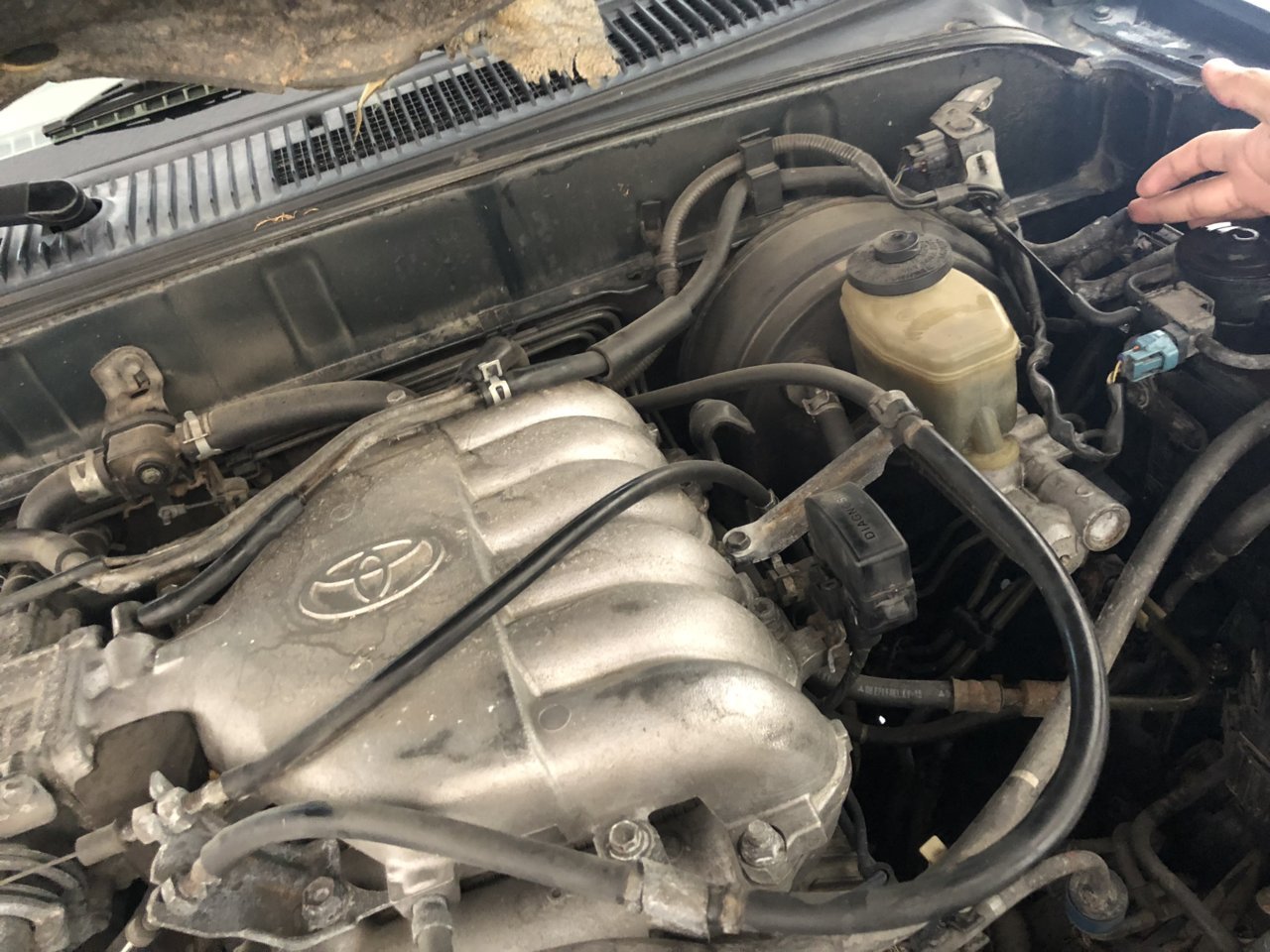
Code P0440 is a generic diagnostic trouble code (DTC) indicating a problem in the evaporative emission control system (EVAP). When the engine control module (ECM) registers DTC P0440, it means there is a leak or loss of seal in the EVAP system, ranging from a loose fuel cap to defects in hoses and valves. This triggers the Check Engine light. Although P0440 rarely affects engine performance, it violates emissions standards and disrupts EVAP system monitoring.
Page contents
Short answer: what P0440 means and what to do now
Code P0440 indicates a leak in the EVAP system. The ECM performs a vacuum test and, if it detects a leak approximately 0.020 in. (0.5 mm) or larger, it stores this code.
How urgent is it? You can usually continue driving—the engine is not directly affected. However, the Check Engine light remains on, exhaust emissions increase, and fuel economy may drop slightly. In states or regions with mandatory OBD inspections, you will fail the emissions test.
Where to start:
- Check the fuel cap: tighten it firmly until it clicks, and inspect the sealing ring for cracks.
- Visually inspect EVAP hoses under the hood and near the fuel tank for damage.
- Clear the code using an OBD-II scanner, then drive 30–60 miles (50–100 km) to complete the self-test cycle.
If the code returns: check the purge valve, perform a smoke test to find hidden leaks, and replace faulty components as needed.
How serious is the fault and can you keep driving?
Engine safety: P0440 does not directly affect engine operation. You can usually drive for one to two weeks without risk of serious damage. However, prolonged vapor leaks may eventually harm the catalytic converter due to increased unburned hydrocarbons.
Emissions and inspection: Increased fuel vapor emissions violate environmental regulations. In areas with mandatory OBD inspections (U.S., Canada, many European regions), you will fail the test while the code is active and the EVAP monitor is incomplete.
Fire safety: Gasoline vapor leaks pose a fire risk near hot engine parts or the exhaust system. If there is a persistent fuel smell inside the cabin or near the vehicle, immediate diagnostics are required.
Recommendation: Driving to a repair shop is acceptable, but the cause should be fixed within days. Do not delay diagnostics for months: besides failing inspections, prolonged leaks can damage EVAP valves, pressure sensors, or the fuel tank itself.
Error P0440: what the DTC code means
Code P0440 is a generic diagnostic trouble code indicating an “EVAP system malfunction” or a leak in the evaporative emission control system. The ECM sets this code when the EVAP system leak test detects a leak or abnormal vapor flow.
How it works: The ECM closes the EVAP vent valve, creates a vacuum through the purge valve, and monitors pressure drop via a sensor in the fuel tank. If pressure drops faster than the reference value (typically within 30–120 seconds), it indicates a leak. The code is stored when the leak size exceeds the threshold—about 0.020 in. (0.5 mm) under OBD-II standards.
The Check Engine light comes on immediately or after a failed retest. EVAP does not directly affect engine power—you may not notice any change in performance. However, the system allows fuel vapors to escape into the atmosphere instead of routing them into the engine to be burned.
What the EVAP system does and how it works
The EVAP system prevents fuel vapors from escaping the fuel tank into the atmosphere. This is required by emissions standards in many markets since the early 1990s.
When fuel temperature rises (for example, after driving or in hot weather), gasoline evaporates. Without EVAP, these vapors would vent directly into the air. Instead, vapors are routed to a charcoal canister that captures and stores hydrocarbons.
Under certain conditions (engine warmed up, moderate load, speed above idle), the ECM opens the purge valve. Vacuum draws accumulated vapors through the valve into the intake manifold, where they mix with air and burn in the cylinders as fuel.
Key system components:
- Fuel tank – source of vapors.
- Charcoal canister – vapor storage with activated carbon.
- Purge valve – controlled by the ECM, allows vapors into the intake.
- Vent valve – opens/closes atmospheric air access to the system.
- Pressure/vacuum sensor (FTP sensor) – monitors tank and canister pressure for leak testing.
- Hoses and tubes – connect all components in a sealed loop.
A properly functioning vapor capture and purge cycle reduces emissions without power loss. Returning vapors to the combustion chamber can also slightly reduce fuel loss from evaporation.
Main symptoms of code P0440
If code P0440 is active, the most obvious sign is the Check Engine light on the dashboard. Other symptoms may be subtle since EVAP does not directly affect engine operation.
Typical signs:
- Check Engine light – on constantly or after several drives.
- Fuel smell outside the vehicle or near the filler neck. Vapor leaks produce a persistent odor, especially in hot weather.
- Difficulty refueling – the fuel nozzle shuts off prematurely due to excess pressure or vacuum in the tank caused by faulty ventilation.
- Slightly increased fuel consumption – vapors that should be burned are lost. This effect is usually minor.
- Fluctuating idle or unstable engine operation – rare and often indicates related issues (e.g., a sticking purge valve causing unmetered air intake).
In most cases, the only obvious symptom is the Check Engine light. The vehicle behaves normally, and many owners postpone diagnostics. However, the code will not clear itself and will prevent passing emissions inspections in regions with OBD checks.
Main causes of error P0440
Code P0440 occurs due to leaks or malfunctioning EVAP components. The most common cause is simple oversight; the rarest is an ECM failure.
Causes ranked by frequency:
- Fuel cap – loose, worn sealing ring, damaged threads. The fuel cap accounts for a significant share of P0440 cases.
- Purge valve – sticks open, leaks when closed, or fails to operate on command.
- Cracks in EVAP hoses and tubes – rubber hoses dry out after 5–7 years, plastic quick-connects near the tank crack, clamps loosen.
- Vent valve – stuck open or closed, clogged filter, wiring break.
- Charcoal canister – activated carbon granules degrade, fuel saturation from overfilling, cracks in the housing.
- Fuel tank pressure sensor (FTP sensor) – incorrect readings, wiring breaks, connector corrosion.
- ECM or wiring faults – very rare, usually accompanied by other codes.
Always start diagnostics with the simplest checks: fuel cap and visual hose inspection. Then proceed to targeted component tests.
Tools and equipment
For basic diagnostics:
- OBD-II scanner with EVAP PIDs and Mode $06 support for advanced analysis.
- Multimeter for checking valve resistance and sensor voltages.
- Smoke machine (or smoke adapter) for leak detection.
- Set of hoses and clamps, contact cleaner for repairs.
| Tool | Purpose | Skill level | Approximate cost |
|---|---|---|---|
| OBD-II scanner | Read codes, monitor PIDs | Beginner | Options range from basic to professional |
| Multimeter | Check valves, sensors | Intermediate | Wide range of models |
| Smoke machine | Leak detection | Intermediate | Professional equipment |
| Basic kit | Replace hoses, clamps | Beginner | Standard consumables |
Step-by-step diagnostics and fixing P0440
Safety disclaimer: This information is general and does not replace professional advice. Do not work on the EVAP system near open flames. Ensure good ventilation. Use personal protective equipment (gloves, goggles). Perform smoke tests in well-ventilated areas away from heat sources.
Step 1: Check the fuel cap – the most common cause
The fuel cap is the first thing to check. It takes two minutes and requires no tools.
What to do:
- Remove the cap and inspect the sealing ring. The rubber ring should be flexible, without cracks, tears, or deformation. If hardened or misshapen, the cap is not sealing properly.
- Check the threads on the cap and filler neck. Burrs, dirt, sand, or damaged threads prevent tight sealing. Clean the threads with a soft brush.
- Tighten the cap until the ratchet mechanism clicks (usually 3–5 clicks). The cap should lock firmly without play. If there are no clicks or the cap spins freely, the mechanism is broken.
- After checking or replacing the cap, clear the code with an OBD-II scanner and drive 30–60 miles (50–100 km) to complete the EVAP monitoring cycle. The ECM will retest the seal.
Replacing the fuel cap is the quickest and most affordable fix. Use an OEM or high-quality equivalent with the correct thread type and valve opening pressure.
Step 2: How to check the purge valve (EVAP purge valve)
The purge valve is controlled by the ECM and should be closed when unpowered. Applying 12 V energizes the solenoid, opening the valve to allow vapors into the intake manifold.
Testing procedure:
- Locate the purge valve, usually on the line between the canister and intake manifold near the engine.
- Remove both hoses from the valve. In the unpowered state, try blowing air through it with your mouth or a rubber bulb. It should be closed—air should not pass.
- Apply 12 V to the valve terminals (positive and negative). A working valve clicks and allows air to flow freely.
- Inspect the connector and wiring for corrosion, breaks, or poor contact. Use a multimeter to check solenoid coil resistance (refer to the service manual for specifications).
If the valve sticks open, leaks when closed, or does not respond to voltage, replacement is necessary. Also check short-term fuel trim (STFT) at idle: unintended purge can cause a lean condition.
Step 3: Inspect and test the charcoal canister
The canister is a plastic or metal container filled with activated carbon granules, usually located under the vehicle or in the engine compartment.
Signs of failure:
- Cracks in the housing – visible damage from impacts, corrosion, or heat deformation.
- Carbon granules spilling from ports – indicates internal breakdown. Black dust or rattling sounds when shaken mean the canister is worn out.
- Fuel saturation – strong fuel odor from the canister, liquid traces. Often occurs after overfilling the tank.
Inspection:
Check the canister for cracks and leaks. If granule degradation is suspected, temporarily block the line and test system sealing without the canister. If the leak disappears, the canister is the problem.
The canister is not repairable. Mechanical damage, fuel saturation, or granule breakdown require replacement of the entire unit.
Step 4: Locate leaks in EVAP hoses and connections
Vacuum hoses and plastic tubes in the EVAP system crack, dry out, and lose their seal over time.
Visual inspection:
Check all hoses from the fuel tank to the canister and valves. Look for cracks, abrasions, kinks, loose clamps, and broken quick-connects. Pay special attention to connections near the fuel tank, where vibration and mechanical damage are common.
Smoke machine:
Use a smoke machine to detect small leaks. Connect the smoke source to the EVAP system (usually via a service port or vent valve), apply low-pressure smoke (refer to the equipment manual for recommended pressure), and watch for smoke escaping. Leaks are immediately visible as smoke rising from cracks, loose connections, or damaged valves.
If a smoke machine is unavailable, a soapy water solution and slight positive pressure from a compressor can be used, but this is less reliable and requires care to avoid damage.
Step 5: Test the vent valve (EVAP vent)
The vent valve opens the EVAP system to atmospheric air during purge and closes during leak testing.
Testing:
- Locate the valve, usually near the canister or under the vehicle.
- Ensure the valve allows air to flow freely when unpowered.
- Apply 12 V control voltage—the valve should close and block airflow.
- Check the connector and wiring for breaks.
If the valve is stuck closed, the system may not perform a proper leak test. If stuck open, the test may indicate a leak even if the system is otherwise intact.
Step 6: Fuel tank pressure/vacuum sensor
The fuel tank pressure sensor (FTP sensor) monitors pressure changes during EVAP testing.
Diagnostics:
- Connect an OBD-II scanner and read real-time sensor data (PID).
- Evaluate pressure changes during purge and vent cycles. Ranges vary by vehicle—consult the service information for your specific model.
- Compare actual values with factory reference data.
- If anomalies appear, check the sensor connector and wiring, then replace the sensor if necessary.
(Note: sensor reading ranges are specific to each vehicle model; always refer to the service information for your vehicle.)
How to clear code P0440 after repair
After fixing the cause, the code must be cleared manually. The ECM may not erase P0440 automatically until the EVAP test passes again, which may take several days.
Clearing with an OBD-II scanner:
- Connect the scanner to the diagnostic port.
- Select “Clear Codes” or “Erase DTCs.”
- Delete code P0440 and any related codes.
- Drive 30–60 miles (50–100 km) in mixed conditions (city and highway) to complete the EVAP monitoring cycle. The test usually runs when the fuel tank is at a certain level and the engine is warmed up.
Conditions for EVAP monitor activation:
Successful test completion requires several conditions:
- Fuel level within a specified range (usually around half full).
- Engine warmed to operating temperature.
- Driving in mixed conditions (combination of city and highway).
- No other active fault codes affecting the fuel system.
If the code returns after 2–3 drive cycles, the issue is unresolved or there is a related fault. Repeat diagnostics focusing on unchecked components.
Repair costs: repair shop or DIY
Typical P0440 fixes
DIY:
Often, replacing the fuel cap, tightening clamps, or swapping a couple of cracked hoses is sufficient. Labor time is 30–60 minutes. Smoke machines can be rented or homemade (at your own risk).
Repair shop:
Professional smoke diagnostics with specialized equipment can detect hidden leaks. Replacing purge valves, vent valves, or canisters may require special tools and expertise. Complexity depends on component accessibility.
OEM vs aftermarket:
Saving money with aftermarket parts is possible, but verify compatibility by VIN and check reviews. Poor-quality valves may stick within months.
| Component/work | Typical symptom | Approx. labor time | Notes |
|---|---|---|---|
| Fuel cap | Odor, leak | 5 min (DIY) | First thing to check |
| Purge valve | Sticking, code returns | 30–60 min | Usually easy access |
| EVAP hoses | Cracks, breaks | 1–2 hours | Depends on location |
| Canister | Granule breakdown | 1–3 hours | Underbody, may require a lift |
| Vent valve | Stuck valve | 30–90 min | Near canister, sometimes hard to reach |
| Smoke diagnostics at shop | Hidden leaks | 30–60 min | Varies by region and shop |
P0440 specifics on popular vehicles
Ford
Common parts: The vent valve near the canister often fails. Corrosion of metal clips and hose quick-connects is common.
Note: Some models have known issues with plastic tubes cracking under the vehicle due to road debris and road salt.
VAZ (Lada)
Common parts: Leaks in plastic tubes and hose joints are frequent causes. The fuel cap is also a common issue on budget models.
Note: Canisters on VAZ models are often easily accessible, making replacement simple. Factory clamps may be low quality, so reinforced clamps are often recommended.
Kia/Hyundai
Common parts: Cracks in quick-connects near the fuel tank. The purge valve often sticks at higher mileage.
Note: Some models have had EVAP component recalls. Check service bulletins before diagnostics.
Toyota/Lexus
Common parts: Frequent small leaks detectable only by smoke. Valve rubber seals dry out over time. Mode $06 can help pinpoint leaks.
Note: Toyota uses a specific EVAP test strategy—refer to factory diagnostic procedures.
GM (Chevrolet, Buick, etc.)
Common parts: Canister and FTP sensor issues are common. Plastic tanks sometimes have defective welds.
Note: GM uses extended diagnostics through Mode $06 with detailed TID/CID data. Review factory service information before replacing parts.
| Make | Typical parts | Notes |
|---|---|---|
| Ford | Vent valve, hose clips | Corroded mounts, underbody tubes |
| VAZ | Fuel cap, plastic tubes | High accessibility |
| Kia/Hyundai | Quick-connects near tank, purge valve | Check service bulletins |
| Toyota/Lexus | Small leaks, valve seals | Specific test strategy, use Mode $06 |
| GM | Canister, FTP sensor | Detailed diagnostics via Mode $06 |
Prevention: how to avoid code recurrence
Regularly check the fuel cap: tighten it firmly until it clicks, and inspect the seal every six months. Replace it at the first sign of wear.
Inspect hoses and clips at every service: include an EVAP visual inspection in routine maintenance. Replace brittle quick-connects at early signs of aging.
Refuel at reputable gas stations, avoid overfilling: Overfilling causes liquid fuel to enter the canister, reducing its lifespan and causing carbon saturation.
Avoid extreme temperatures: Rapid temperature changes accelerate hose aging. In hot climates, inspect the system more frequently.
Use quality parts: Cheap aftermarket valves and sensors often fail within months.
Related EVAP codes and their meanings
Code P0440 is a general leak code. The ECM may also set more specific codes that help pinpoint the issue.
| Code | Brief description | Common causes | First action |
|---|---|---|---|
| P0441 | Incorrect purge flow | Sticking purge valve, clog | Check purge valve |
| P0442 | Small leak | Minor hose cracks, fuel cap | Smoke test, inspect cap |
| P0446 | Vent system malfunction | Vent valve, wiring | Check vent valve |
| P0455 | Large leak | Open/damaged cap, cracks | Check cap, visual inspection |
| P0456 | Very small leak | Microcracks, seal leaks | High-sensitivity smoke test |
If other codes appear alongside P0440 (e.g., P0442 + P0456), start diagnostics with the most specific code to better pinpoint the problem.
Mode $06 and data for advanced diagnostics
OBD-II Mode $06 provides detailed monitor test results, including EVAP. This can help detect issues before a code becomes permanent.
How to read EVAP monitor tests:
Each test has a Test ID (TID) and Component ID (CID). The scanner shows a limit value and a test value. If the test value exceeds the limit, it indicates a problem.
Example:
- TID: leak phase test
- Limit: threshold value (arbitrary units)
- Test value: actual measurement
If the test value approaches or exceeds the limit, the monitor records a “near fail” or “fail.” Two consecutive failures typically trigger the DTC.
Interpreting “near fail”:
A value near the threshold indicates a hidden leak or worsening component condition. This is an opportunity for preventive repair before a code appears.
Use Mode $06 for in-depth diagnostics if standard code reading is inconclusive.
Common mistakes in DIY diagnostics
Replacing valves without checking the fuel cap and hoses:
Many start by replacing the purge valve, ignoring simple causes. Check the cap and perform a visual inspection first—it takes minutes.
Incorrect smoke machine connection:
Applying smoke at high pressure can damage valve diaphragms. Follow the equipment manufacturer’s instructions carefully.
Clearing codes before analyzing freeze frame data:
Freeze-frame data stores the conditions when the code was set (RPM, temperature, speed). Read it before clearing codes—it provides valuable information.
Ignoring connectors and grounds:
Corroded valve and sensor connectors or poor grounds often cause false codes. Check wiring before replacing parts.
“When dealing with code P0440, start by checking the fuel cap, then scan ECM codes and inspect fuel lines—this identifies most causes without special equipment.”
– Based on automotive diagnostic experts’ experience
The information in this article is for educational purposes only and is not a substitute for professional repair advice in critical situations. Consult a qualified technician if in doubt.
Frequently asked questions
Is it possible to drive with the P0440 error?
Yes, temporarily—for one to two weeks. The engine will not be directly affected, but fix the cause as soon as possible to pass the EVAP monitor, reduce emissions, and avoid failing inspection.
How to clear the P0440 error after repair?
Use an OBD-II scanner and delete the code using the "Clear Codes" function. After that, drive in mixed conditions to complete the EVAP monitor cycle.
Can the cause be poor quality fuel?
Indirectly, yes. Fuel with high volatility can increase vapor formation, but this is not the main cause of P0440. The primary issue is a leak in the system components.
Will the code disappear after tightly closing the cap?
Often, yes. If the cap was the only cause, the code may clear after several drive cycles or after a manual reset with a scanner. The ECM will retest the system and turn off the Check Engine light.
Is P0440 related to other codes?
Yes, it is often found together with P0441 (incorrect purge flow), P0442/P0456 (small/very small leak), P0455 (large leak), and P0446 (vent system malfunction). Start diagnostics with the most specific code.