

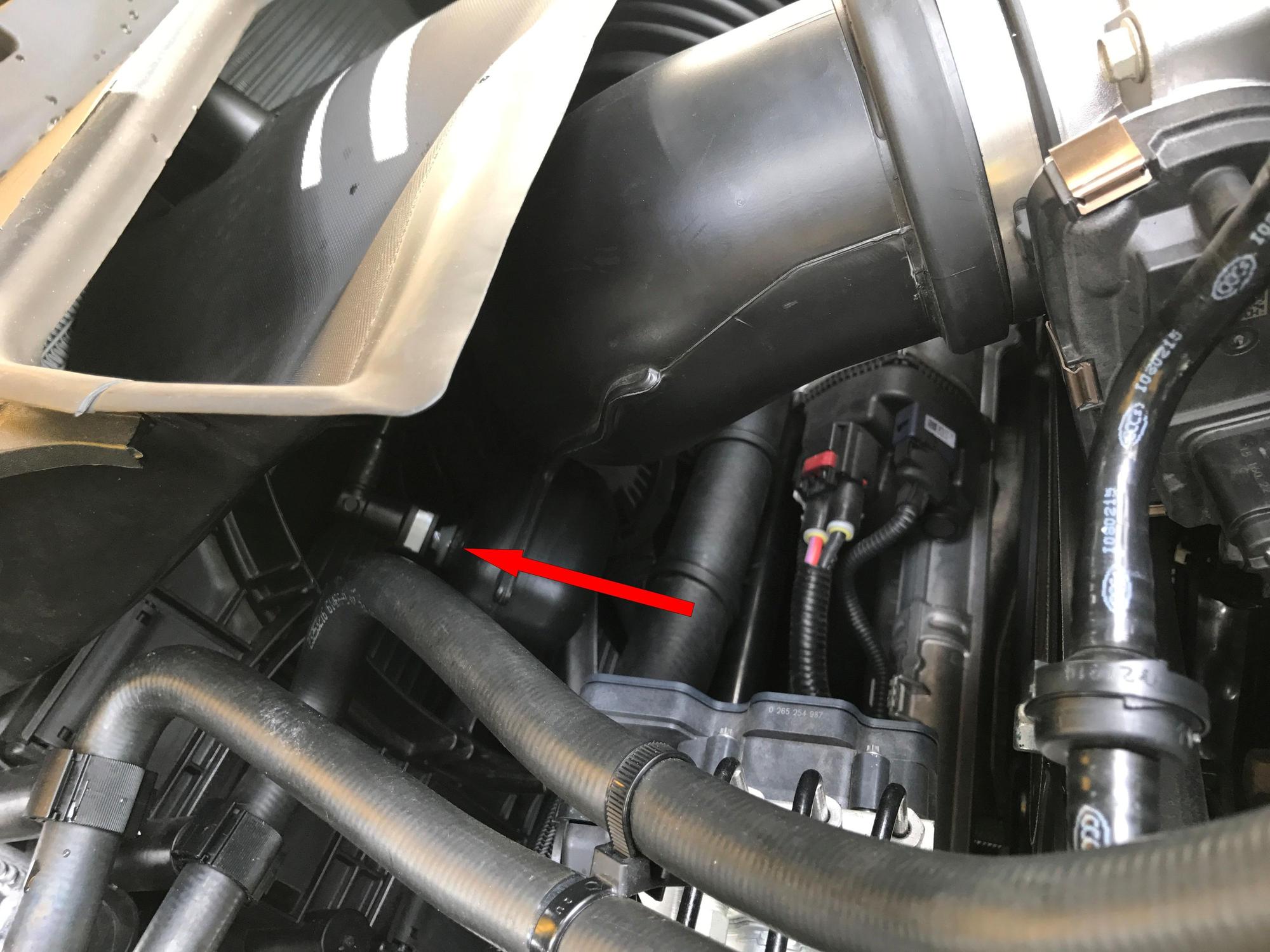
Code P0106 indicates an incorrect signal from the manifold absolute pressure (MAP/BARO) sensor, affecting fuel calculation and engine operation. Below is a quick overview, step-by-step diagnostics, and solutions from simple to complex, including PCM logic analysis, reference values, and common DIY mistakes.
“When you see P0106, the first thing to check isn’t the sensor hose but the 5V reference and ground. Often, the issue can be resolved by verifying the 5V/ground and vacuum lines if you understand how the PCM sets the code. The sensor is just a signal transmitter; the triggering logic depends on correlating pressure with RPM and throttle position. Learn to read freeze frame data, and you’ll see the code reveals more than its name.” – Daniel Brooks, DecodeAuto
This information is general and does not replace professional consultation. For automotive diagnostics and repairs related to vehicle safety, it is strongly recommended to consult qualified professionals.
Page contents
What does error code P0106 (DTC P0106) mean?
DTC P0106 stands for Manifold Absolute Pressure/Barometric Pressure Circuit Range/Performance Problem according to the OBD-II standard. The PCM records this when the MAP/BARO sensor signal falls outside the expected range or shows inconsistency with the current engine load.
The MAP sensor measures absolute pressure in the intake manifold relative to vacuum. The PCM uses this signal to calculate the air mass entering the cylinders and determine the correct fuel amount. When the MAP signal does not correspond to RPM, throttle position, or barometric pressure (BARO) readings, the PCM cannot accurately meter fuel. This results in hesitation, power loss, over-rich or lean mixtures.
Typical MAP voltage range: 1–4.5V. At idle (high vacuum) about 1–2V; at full throttle (low vacuum, pressure near atmospheric) 4–5V. If voltage fluctuates, sticks at one level, or goes beyond limits during load changes, the PCM logs P0106.
This code is often accompanied by related DTCs: P0105 (general MAP circuit fault), P0107 (low signal), P0108 (high signal), P0109 (intermittent signal). If you see these codes together, the likely issue is in the MAP circuit or vacuum system.
Quick checklist: what to do immediately
Before proceeding with more complex diagnostics, check three basic points. Often P0106 is resolved at this stage.
Step 1: Inspect the MAP vacuum hose
Locate the MAP sensor on the intake manifold—usually a small black sensor with a 3-pin connector and a thin rubber hose. Check the vacuum line for cracks, tears, or loose connections. If the hose is disconnected or damaged, air leaks distort pressure readings. Replacing the hose takes 5 minutes but often fixes P0106.
Step 2: Check the connector and wiring
Disconnect the MAP sensor connector and inspect contacts for corrosion, green deposits, or oil traces. Use a multimeter to check wiring continuity: breaks or high resistance on ground (GND) cause unstable signals. Clean contacts with electrical contact cleaner and ensure the connector latch snaps firmly.
Step 3: Read OBD-II codes and freeze frame data
Connect a scanner, read P0106 and freeze frame data: RPM, load, coolant temperature, throttle position at the time of the fault. Record these parameters—they show under what conditions the code set (idle, acceleration, partial load). Clear the code, drive 3–6 miles (5–10 km) in various modes, and scan again. If the code does not return, it was a temporary issue (condensation in connector, brief air leak). If it returns, proceed to in-depth diagnostics.
How the PCM “decides” on P0106: triggering logic
The PCM does not just read MAP voltage—it compares it with other engine parameters according to a set algorithm. Understanding this logic helps diagnose the cause more accurately.
Input parameters for evaluation:
- MAP signal – sensor voltage (1–4.5V).
- BARO – barometric pressure (atmospheric), measured by the same MAP sensor at ignition on, engine off (KOEO).
- TPS (Throttle Position Sensor) – throttle opening percentage.
- RPM – engine speed.
- MAF (if installed) – mass air flow.
Conditions for setting P0106:
The PCM expects MAP to change predictably: at idle (closed throttle, high vacuum) low voltage (~1–2V, 25–45 kPa), with sudden throttle opening a rapid rise to 4–5V (90–100 kPa). If MAP signal does not correlate with TPS and RPM—for example, throttle at 50%, RPM rising, but MAP remains at idle level or fluctuates erratically—the PCM logs a range/performance problem.
Typical triggers vary by vehicle, but may include RPM between 1300–6000, TPS below 0.2%, and MAP out of the expected range for more than several seconds. The code is typically stored if the condition repeats over two consecutive drive cycles. This helps prevent false triggers but means the problem is usually stable when P0106 appears.
Main symptoms of P0106 malfunction
Symptoms depend on how the MAP signal is distorted—stuck low/high, fluctuating, or missing. Here is what you may observe.
Check engine light
The first and only mandatory symptom is the check engine light. Without a scanner, you cannot know it is P0106, so any CEL requires code reading.
Unstable idle
RPM fluctuates between 600–1200, engine misfires or stalls at traffic lights. This happens when MAP reports incorrect pressure at idle—the PCM miscalculates fuel, causing overly rich or lean mixtures.
Hesitation and jerking on acceleration
Pressing the gas pedal causes hesitation, jerks, and uneven RPM increase. If MAP does not respond to throttle opening (stuck at idle level), the PCM assumes low load and does not add fuel, causing power dips. Backfires in the intake may occur on sudden throttle openings.
Power loss
The engine lacks power, especially during passing or uphill. It feels like running on three cylinders out of four. This results from incorrect air-fuel mixture across all load conditions.
Increased fuel consumption
If MAP shows elevated pressure (low vacuum while throttle is closed), the PCM enriches the mixture, increasing fuel consumption.
Black smoke from the exhaust
A visible sign of a rich mixture—thick black smoke appears under load, accompanied by poor fuel economy and catalytic converter contamination.
Hard starting (especially hot starts)
The engine cranks longer than usual. If MAP is faulty, the PCM cannot determine intake pressure at startup, potentially flooding spark plugs or delivering insufficient fuel.
Main causes of P0106
Understanding causes speeds up diagnostics—from common to rare.
1. Faulty MAP sensor
Internal degradation of the sensing element: the membrane with piezoresistors loses sensitivity, sticks, or sends unstable signals. Symptom: voltage does not change with throttle or jumps erratically.
2. MAP vacuum hose: cracks, slipping, tears
The rubber hose connecting the sensor to the intake manifold hardens and cracks over time due to temperature changes or slips off the fitting. Any unmetered air leak distorts pressure readings—MAP sees atmospheric pressure instead of vacuum. Visual defects may be subtle.
3. Intake air leaks
Leaks in the intake manifold, gaskets, throttle seals, valve cover (PCV system)—anything allowing air past the MAP and MAF sensors. The PCM calculates fuel based on MAP, but actual air volume is higher, causing lean codes P0171/P0172 alongside P0106.
4. EGR valve stuck open or clogged
The exhaust gas recirculation system returns exhaust gases to the intake to reduce NOx. If the valve does not close fully or is clogged with carbon, excess gases affect manifold pressure—MAP detects anomalies inconsistent with load, especially at idle and low RPM.
5. Wiring and connector issues: breaks, corrosion, poor ground
MAP sensor has three wires: 5V reference, signal, and ground. Breaks or high resistance (oxidation, wire damage) distort signal shape and level. Connector corrosion (especially from oil or moisture) is common in older vehicles.
6. 5V reference supply or 5V bus issues
The PCM supplies 5V reference to several sensors simultaneously (MAP, TPS, sometimes MAF). A short or voltage drop on this bus (for example, a faulty TPS pulling voltage down) causes all sensors to malfunction. Symptom: multiple codes at the same time (P0106 + P0121/P0122 for TPS).
7. PCM malfunction (rare)
Internal damage to PCM circuit board traces, ADC channels, or software faults. Suspect the PCM only after confirming all external components (MAP, wiring, 5V bus, vacuum) are good. This requires professional oscilloscope diagnostics and comparison with reference waveforms.
How to diagnose P0106 yourself
Follow the logic “from simple to complex, from external components to the PCM.” Each step rules out one possible cause.
Step 1: OBD-II diagnostics – read code and freeze frame
Connect an OBD-II scanner, read all active and stored codes. Record freeze frame data for P0106—a snapshot of engine parameters when the fault occurred:
- RPM
- Engine load (%)
- Coolant temperature (ECT)
- Throttle position (TPS %)
- MAP readings (kPa or V)
- Vehicle speed
Freeze frame shows conditions when the code set—idle, acceleration, full throttle. For example, if the fault occurred at idle (RPM 800, TPS 0%, MAP should be 25–45 kPa), but freeze frame shows MAP = 95 kPa, this indicates an air leak or sensor fault.
Step 2: Visual inspection
Look under the hood:
- MAP vacuum hose: check for cracks, damage, tight fit on fittings. Wiggle the hose—if stiff or cracked, replace it.
- MAP sensor connector: disconnect and inspect contacts for corrosion (green deposits), moisture, oil. Clean with contact cleaner and dry.
- Intake manifold: check for cracks, loose joints, disconnected PCV hoses.
Step 3: Measure MAP voltage with a multimeter
Use a multimeter set to DC voltage. Find the MAP connector pinout for your vehicle (usually pin 1 – 5V, pin 2 – signal, pin 3 – ground).
Check 5V reference supply:
- Ignition ON, engine OFF (KOEO).
- Disconnect MAP connector.
- Red probe to 5V reference pin, black to battery negative or chassis ground.
- Voltage should be 4.8–5.2V. Below 4.5V indicates a 5V bus or PCM issue; 0V means an open circuit.
Check ground (GND):
- Ignition OFF.
- Multimeter in continuity mode.
- One probe on MAP ground pin, other on battery negative.
- Resistance should be under 0.5 ohms. Higher resistance (>1 ohm) indicates poor ground contact, corrosion, or an open circuit.
Check MAP signal:
- Reconnect MAP connector.
- Ignition ON, engine OFF (do not start engine).
- Back-probe signal wire with a thin pin, or use proper back-probing to avoid insulation damage.
- Red probe on signal, black on ground.
- Voltage should typically be about 4.0–4.7V (atmospheric pressure ~95–101 kPa at sea level) at KOEO.
Start the engine:
- At idle, MAP voltage should drop to 1.0–2.0V (high vacuum, 25–45 kPa).
- Open the throttle smoothly—the voltage should rise to 4.2–4.8V at full throttle (WOT).
- The signal should change smoothly without jumps or dropouts. If stuck, erratic, or unresponsive to throttle, the sensor is faulty.
Step 4: Compare MAP with BARO
At KOEO (ignition ON, engine OFF), MAP readings should be close to barometric pressure (BARO). Use a scanner to view live data: MAP and BARO should be approximately equal. If MAP shows 95 kPa and BARO 101 kPa with a stable difference, a sensor calibration error is possible.
Step 5: Rule out air leaks and EGR issues
Even if the MAP sensor is good, unmetered air leaks can cause P0106.
Smoke test (recommended):
- Use a smoke machine (available for rent at some auto parts stores or repair shops).
- Connect it to the intake tract (usually via the air filter hose).
- Close all valves and create smoke pressure around 0.5 psi.
- Look for smoke escaping from the manifold, PCV hoses, or gaskets. Smoke reveals leaks immediately.
Aerosol cleaner method (caution!):
- Engine idling.
- Briefly spray carburetor cleaner or WD-40 around suspect joints (manifold flanges, hoses, throttle gasket).
- If RPM changes sharply (rises or falls), there is a leak—spray is sucked in, temporarily altering the mixture.
- Safety: work in a ventilated area, avoid open flames, do not spray on hot parts.
EGR check:
- Inspect the EGR valve (usually on the intake manifold, vacuum- or electrically operated).
- Disconnect the vacuum hose or electrical connector and plug the fitting. If P0106 disappears, EGR may be affecting manifold pressure.
- Remove the valve, check for carbon deposits and sticking. Clean with carb cleaner and check stem movement.
Step 6: Clear code, test drive, and rescan
- Clear all codes with a scanner.
- Perform a drive cycle: warm the engine to operating temperature, idle 5–10 minutes, then drive 10–15 minutes in city traffic with smooth accelerations and full stops.
- Scan again. If P0106 returns, the issue persists. If not, it was a temporary cause (condensation, brief leak).
Simultaneously monitor fuel trims (STFT/LTFT):
- STFT (Short-Term Fuel Trim) – short-term corrections.
- LTFT (Long-Term Fuel Trim) – long-term corrections.
- Typical range: ±5–10%. LTFT above +15% (PCM adding fuel constantly) indicates an air leak. LTFT below -15% (removing fuel) suggests a rich mixture, possibly due to a faulty MAP showing high pressure.
| Operating mode | Pressure (kPa) | Voltage (V) | Note |
|---|---|---|---|
| KOEO (ignition ON, engine OFF) | 95–101 | 4.0–4.7 | Corresponds to atmospheric pressure at sea level |
| Idle (~800 RPM) | 25–45 | 1.0–2.0 | High vacuum |
| Partial load (2500 RPM, 50% TPS) | 45–80 | 2.0–3.8 | Medium vacuum |
| Full throttle (WOT, 5000+ RPM) | 90–100 | 4.2–4.8 | Low vacuum, near atmospheric |
Note: values are approximate and depend on engine type (naturally aspirated/turbocharged), altitude, and PCM calibration. Always refer to the manufacturer’s service information for your specific model.
Checking 5V reference voltage and ground
Before replacing the MAP sensor, always check power and ground—experience shows many issues can be resolved without sensor replacement.
What to check:
- 5V reference: between “Vref” and “GND” pins in the MAP connector (sensor disconnected, ignition ON) should be 4.8–5.2V.
- Signal wire: at KOEO about 4–5V, dropping to 1–2V at idle.
- Ground: continuity from GND pin to battery negative should be under 0.5 ohms.
If 5V is missing or below 4.5V:
- Check the PCM circuit fuse (usually in the under-hood fuse box).
- Identify other sensors on the same 5V bus (TPS, sometimes a temperature sensor). Disconnect them one by one and measure voltage. If 5V returns after disconnecting a sensor, that sensor has a short pulling the bus down.
- If 5V is missing on all sensors, PCM malfunction is possible (rare, often due to moisture intrusion).
If ground resistance is high (>1 ohm):
- Clean the GND contact in the MAP connector.
- Locate the ground wire mounting point on the chassis or engine (usually a bolt with multiple wires). Remove it, clean the contact area with sandpaper, and retighten firmly.
How to detect air leaks: smoke and inexpensive methods
Air leaks are an invisible cause of P0106.
Smoke generator (professional method):
- Connect to the intake tract (via the air filter hose), create smoke pressure about 0.5 psi.
- Close the throttle and observe where smoke escapes: manifold, PCV hoses, gaskets, injector seals.
Aerosol method (budget but effective):
- Engine idling.
- Briefly spray carburetor cleaner or WD-40 around suspect areas: manifold flanges, hoses, throttle gasket.
- If RPM changes sharply (jumps up/down), there is a leak—spray is sucked in, temporarily altering the mixture.
- Safety: do not spray on hot parts, work in a ventilated area, avoid open flames and smoking.
Soap solution (for static leaks):
- Engine off.
- Apply a foamy soap solution to suspect joints.
- Pressurize the intake tract (connect a compressor via the air filter, about 4.4–7.3 psi (0.3–0.5 bar)).
- Look for bubbles indicating leaks.
Diagnostic features for turbo, altitude, LPG
Turbocharged engines:
Under boost, MAP shows pressure above atmospheric (>101 kPa, up to 150–200 kPa depending on boost). The PCM expects this, and if MAP does not rise with boost, P0106 may set. Check intercooler integrity, boost pipes, and the wastegate valve. Boost leaks cause MAP anomalies.
Altitude:
Barometric pressure decreases with altitude (~1 kPa per 328 ft (100 m)). At 6,562 ft (2000 m), BARO is about 80 kPa instead of 101 kPa. MAP at KOEO should match local BARO. When driving in the mountains, the PCM adapts, but a faulty MAP may fail to handle the change and trigger a code.
Weather conditions:
Sharp atmospheric pressure changes can temporarily disrupt BARO calibration in older sensors. Rare but possible.
LPG systems:
Incorrect LPG reducer calibration or leaks at gas injector fittings distort the mixture and indirectly affect MAP. The PCM detects a mismatch between expected and actual load. If P0106 appears after LPG installation, check gas system tightness and reducer settings.
Ways to fix P0106
Fix depends on the identified cause. Proceed from simple to complex.
1. Eliminate air leaks
If smoke or aerosol tests reveal leaks:
- Replace the MAP vacuum hose: remove the old hose, install a new one (usually 0.16–0.24 in. (4–6 mm) diameter), and tighten clamps. Use heat-resistant silicone or OE-style rubber.
- Seal manifold joints: if smoke escapes from the intake flange, tighten mounting bolts. If unresolved, replace the manifold gasket.
- PCV system: replace the crankcase ventilation valve and hoses if cracked.
2. Repair wiring and connector
- Clean contacts: remove the MAP connector, treat contacts with electrical contact cleaner, and dry with compressed air. Apply dielectric grease to protect against moisture.
- Replace connector: if contacts are heavily corroded or melted, buy a new connector (often sold with wire leads). Cut off the old connector, solder in the new one, and insulate with heat-shrink tubing.
- Restore ground: clean the ground wire mounting point, tighten the bolt firmly, and check continuity to the battery.
3. Clean/diagnose EGR valve
- Remove the EGR valve (usually 2–4 bolts).
- Clean inside with carb cleaner, remove carbon deposits with a brush.
- Check stem movement—it should move freely.
- If stuck or the diaphragm is torn, replace the valve.
- After installation, clear codes and test drive.
4. Replace MAP sensor
If tests confirm sensor fault (signal stuck, erratic):
- Choose an OE or quality OEM-equivalent part (Bosch, Delphi, Denso). Cheap no-name sensors often fail quickly.
- Disconnect connector, remove the sensor (usually 1–2 screws or a clip).
- Install the new sensor without overtightening—plastic housing can crack.
- Reconnect connector, ensure the latch is secure.
5. Clear code and adapt PCM
After fixing the cause:
- Clear all codes (pending, confirmed, history) with a scanner.
- Optionally disconnect the negative battery terminal for 5 minutes to reset adaptations.
- Perform a learning cycle:
- Warm the engine to operating temperature (~194°F (90°C)).
- Idle for 5–10 minutes without load.
- Drive a city cycle for 10–15 minutes: smooth accelerations up to 3000–4000 RPM, full stops, repeat 3–5 times.
- Rescan for codes. If P0106 does not return, the problem is resolved.
Monitor fuel trims after repair:
Check STFT/LTFT in live data. They should return to the typical ±5–10% range. If LTFT remains high or low, look for other leaks or fuel system issues.
How the intake pressure measurement system works
Understanding the principle helps diagnose faults more accurately.
MAP sensor: principle of operation
MAP (Manifold Absolute Pressure) is a piezoresistive or capacitive sensor measuring absolute air pressure in the intake manifold relative to an internal vacuum reference. Inside the sensor is a sealed vacuum chamber and a flexible silicon membrane with piezoresistors. When manifold pressure changes, the membrane deforms, altering resistor resistance. This change is converted to a 0.5–4.5V signal sent to the PCM.
Types of MAP sensors:
- Piezoresistive: fast response, high accuracy, compact size. Widely used in speed-density fuel injection systems.
- Capacitive: aluminum oxide membrane; deformation changes capacitance. Processed by a hybrid integrated circuit.
Connection to PCM and mixture calculation
The PCM calculates intake air mass from the MAP signal. Simplified formula: air mass ∝ (pressure × cylinder volume) / (temperature × RPM). Knowing air mass, the PCM determines fuel delivery for a stoichiometric mixture (14.7:1 for gasoline).
Role of vacuum hose
The hose connects the MAP sensor to the intake manifold, transmitting current pressure/vacuum. Any leak in this line causes the sensor to read atmospheric pressure instead of vacuum, giving the PCM incorrect data.
EGR valve and pressure influence
EGR (Exhaust Gas Recirculation) returns part of the exhaust gases to the intake, lowering combustion temperature and NOx emissions. When the EGR valve is open, manifold pressure changes—MAP detects this. The PCM adjusts the mixture considering EGR gases. If EGR is stuck open, excess gases constantly affect pressure, causing MAP to send abnormal values inconsistent with load.
Component interrelation:
Intake manifold → Vacuum hose → MAP sensor → Signal to PCM. Parallel: EGR → affects manifold pressure → indirectly changes MAP readings. If any link is broken, the PCM cannot accurately meter fuel.
Is it safe to drive with P0106?
In short: not recommended. A short drive to a repair shop (3–6 miles (5–10 km)) is acceptable if the car runs relatively smoothly without severe jerks. However, driving with P0106 carries risks.
Consequences of driving with P0106:
Unstable air-fuel mixture
The PCM lacks accurate manifold pressure data and estimates fuel delivery. The mixture may become too lean (risk of detonation, piston/valve damage) or too rich (excess fuel consumption, fouled plugs, catalytic converter contamination).
Detonation risk
A lean mixture at high RPM can cause abnormal combustion and engine knocking, potentially damaging pistons, rings, and the head gasket.
Catalyst contamination
Unburned fuel from a rich mixture overheats and damages the catalytic converter.
Increased fuel consumption
If MAP shows elevated pressure, the PCM adds more fuel.
When driving is absolutely prohibited:
- Severe hesitation on acceleration, engine stalls.
- Black smoke from the exhaust—clear over-rich condition.
- Knocking during acceleration.
- Red warning light on (critical fault).
When short driving is acceptable:
- Check engine light on, but the car runs smoothly without jerks.
- No smoke, knocking, or overheating.
- Goal: reach a repair facility or home (no more than 6–12 miles (10–20 km)).
Avoid sudden acceleration, keep RPM between 1500–3000, and do not overload the engine.
Related codes and when to suspect the PCM
Related OBD-II codes often appearing with P0106:
- P0105 – Manifold Absolute Pressure/Barometric Pressure Circuit Malfunction. General MAP circuit fault without specifying range/performance. Often precedes P0106.
- P0107 – MAP/BARO Circuit Low Input. MAP voltage below the allowed range (<1V constantly). Causes: signal wire break, short to ground, faulty sensor.
- P0108 – MAP/BARO Circuit High Input. MAP voltage above the allowed range (>4.5V constantly). Causes: ground open circuit, short to 5V, sensor stuck at WOT.
- P0109 – MAP/BARO Circuit Intermittent. Intermittent signal due to a loose contact, connector corrosion, or wire break.
- P0401/P0402 – EGR Flow Insufficient / Excessive. EGR issues affecting manifold pressure.
- P0171/P0172 – System Too Lean/Rich (Bank 1). If MAP sends incorrect data, the PCM compensates with fuel trims, resulting in lean/rich codes alongside P0106.
- P0420 – Catalyst System Efficiency Below Threshold. Result of prolonged driving with an incorrect mixture—catalytic converter contamination.
When to suspect the PCM instead of the sensor:
The PCM is suspected last, after all external causes are excluded. Signs of PCM fault:
- Multiple unrelated codes simultaneously (for example, P0106 + P0300 (misfires) + P0121 (TPS) + ABS codes). This indicates possible internal data bus or PCM power issues.
- 5V reference missing on all sensors (MAP, TPS, MAF) with intact fuses and wiring. Possible damaged 5V regulator inside the PCM.
- Confirmed MAP, wiring, and vacuum integrity, but the code returns consistently. Live data shows erratic MAP values not matching multimeter readings.
- Moisture or oil intrusion in the PCM. Visual inspection reveals corrosion, oxidized traces, or swollen capacitors.
- A PCM software update helps. Some models (VW/Audi, GM) have manufacturer-released updates that address MAP signal processing issues.
What to do if the PCM is suspected:
- Professional oscilloscope diagnostics: compare the MAP signal waveform with a reference.
- Check internal ADC channels of the PCM.
- Attempt a PCM software update (if available).
- Swap test: install a known-good PCM (from a donor or loaner). If the code disappears, the fault is in the control unit.
| Code | Name | Brief interpretation | Priority for checking |
|---|---|---|---|
| P0105 | MAP/BARO Circuit Malfunction | General MAP circuit fault | 1. Wiring, connector |
| P0106 | MAP/BARO Range/Performance | Signal out of range/inconsistent with load | 1. MAP sensor, vacuum |
| P0107 | MAP/BARO Low Input | Voltage constantly low | 1. Signal wire break, short to ground |
| P0108 | MAP/BARO High Input | Voltage constantly high | 1. Ground open circuit, short to 5V |
| P0109 | MAP/BARO Intermittent | Intermittent signal | 1. Loose contact, corrosion |
| P0401 | EGR Flow Insufficient | EGR not opening | 2. EGR valve |
| P0402 | EGR Flow Excessive | EGR not closing | 2. EGR valve, leak |
| P0171 | System Too Lean (Bank 1) | Lean mixture | 3. Air leak, MAF, MAP |
| P0172 | System Too Rich (Bank 1) | Rich mixture | 3. MAP, injectors, fuel pressure regulator |
| P0420 | Catalyst Efficiency Low | Catalyst degraded | 4. Result of prolonged driving with P0106 |
Common mistakes in DIY diagnostics
Avoid these frequent errors to save time and resources.
Mistake 1: Replacing the MAP sensor immediately without checking the hose and sealing
Often P0106 is caused by air leaks or a slipped vacuum hose. Replacing the sensor won’t fix the problem if the hose is faulty. Always start with a visual inspection and smoke test.
Mistake 2: Ignoring 5V reference and ground checks
The MAP sensor requires stable 5V and a reliable ground. If the 5V bus has a short (due to a faulty TPS or another sensor), any new MAP sensor will also trigger codes. Check power and ground before replacement—it takes 2 minutes with a multimeter.
Mistake 3: Misinterpreting MAP ≈ BARO at KOEO as “normal” despite obvious leaks
If at KOEO (ignition ON, engine OFF) MAP reads about 101 kPa (= BARO), it does not guarantee sensor health. Air leaks show up during engine operation when vacuum should be high (25–45 kPa at idle), but MAP shows elevated values due to unmetered air. Check MAP at idle and under load, not only at KOEO.
Mistake 4: Skipping EGR check with intermittent hesitation
If P0106 appears sporadically, especially at idle or low RPM, suspect EGR. A stuck-open EGR valve intermittently affects pressure but may not cause a constant fault. Inspect, remove, and clean the EGR valve.
Mistake 5: Buying cheap no-name MAP sensors
Low-cost clones often fail quickly, causing repeated P0106 codes. False economy—better to buy an OE or quality OEM part (Bosch, Delphi, Denso) for longer service life.
Sources and reliability
The material is based on OBD-II standards, widely accepted sensor operating principles, and practical diagnostic logic.
Standards and protocols:
- SAE J1979 / ISO 15031-5 – OBD-II communication protocols defining message formats, PID services, and sensor rationality checks.
- SAE J2012 – OBD-II fault codes including P0106 (Manifold Absolute Pressure/Barometric Pressure Circuit Range/Performance Problem).
Technical references:
- Bosch Automotive Handbook, 10th ed. – description of MAP sensor principles (piezoresistive, capacitive), reference pressure/voltage values.
- Sensor manufacturer documentation: Delphi Auto Parts (“Making sense of your sensors: MAP sensor,” 2023).
Limitations:
Reference MAP values (kPa, V) and PCM triggering algorithms depend on vehicle model, year, and software calibration. Always consult the factory service information for your VIN. Recommendations are general and do not replace professional diagnostics.
This information is for educational purposes only, does not replace professional advice, and is not a repair manual. For serious faults, contact a certified repair facility.
Frequently asked questions
Is it possible to drive with the P0106 error?
Briefly — it is possible for a short distance and carefully (3–6 miles (5–10 km) to a repair shop), but it is risky. Consequences include an unstable mixture, increased fuel consumption, risk of knocking, and catalytic converter contamination. If the car runs smoothly without jerks or smoke — a short drive may be acceptable. In case of severe misfires, black smoke, or knocking noises — stop driving and call a tow truck.
What factors affect the choice of MAP sensor when replacing?
Choose an original or high-quality OEM equivalent (Bosch, Delphi, Denso). Consider the engine type (naturally aspirated/turbocharged) — for turbo applications, a sensor with an extended range (up to 150–200 kPa) is required. Check compatibility by VIN or manufacturer catalog. Cheap no-name sensors often fail quickly — the savings are misleading. Compare technical specifications: pressure range (kPa), output voltage (V), operating temperature.
How to reset the P0106 error by yourself?
After fixing the cause (sensor replacement, hose repair, fixing a vacuum leak): 1. Connect an OBD-II scanner and clear all codes (pending, confirmed, history). 2. Optionally: disconnect the negative battery terminal for 5 minutes (resets PCM adaptations). 3. Perform a learning cycle: – Warm up the engine to operating temperature (about 194°F (90°C)). – Idle for 5–10 minutes. – 10–15 minutes of city driving: smooth accelerations up to 3000–4000 RPM, full stops, repeat 3–5 times. 4. Read codes again. If P0106 does not return — the repair was successful. If it returns — the cause is not fixed or there is a second problem. Without fixing the cause, the code will return — the PCM sets the code based on its logic, not randomly.
What to do if the P0106 code returns after replacing the MAP sensor?
Check: 1. Reference 5V and ground — the problem may not be the sensor but the power supply. 2. Vacuum hose — even a new MAP sensor won't help if there is a vacuum leak. 3. Wiring and connector — corrosion, an open circuit, poor contact. 4. EGR — a stuck valve affects pressure. 5. Other sensors on the 5V bus (TPS, MAF) — a short circuit in one of them can pull down the entire bus. If everything is fine but the code remains — suspect the PCM or try updating its software.