

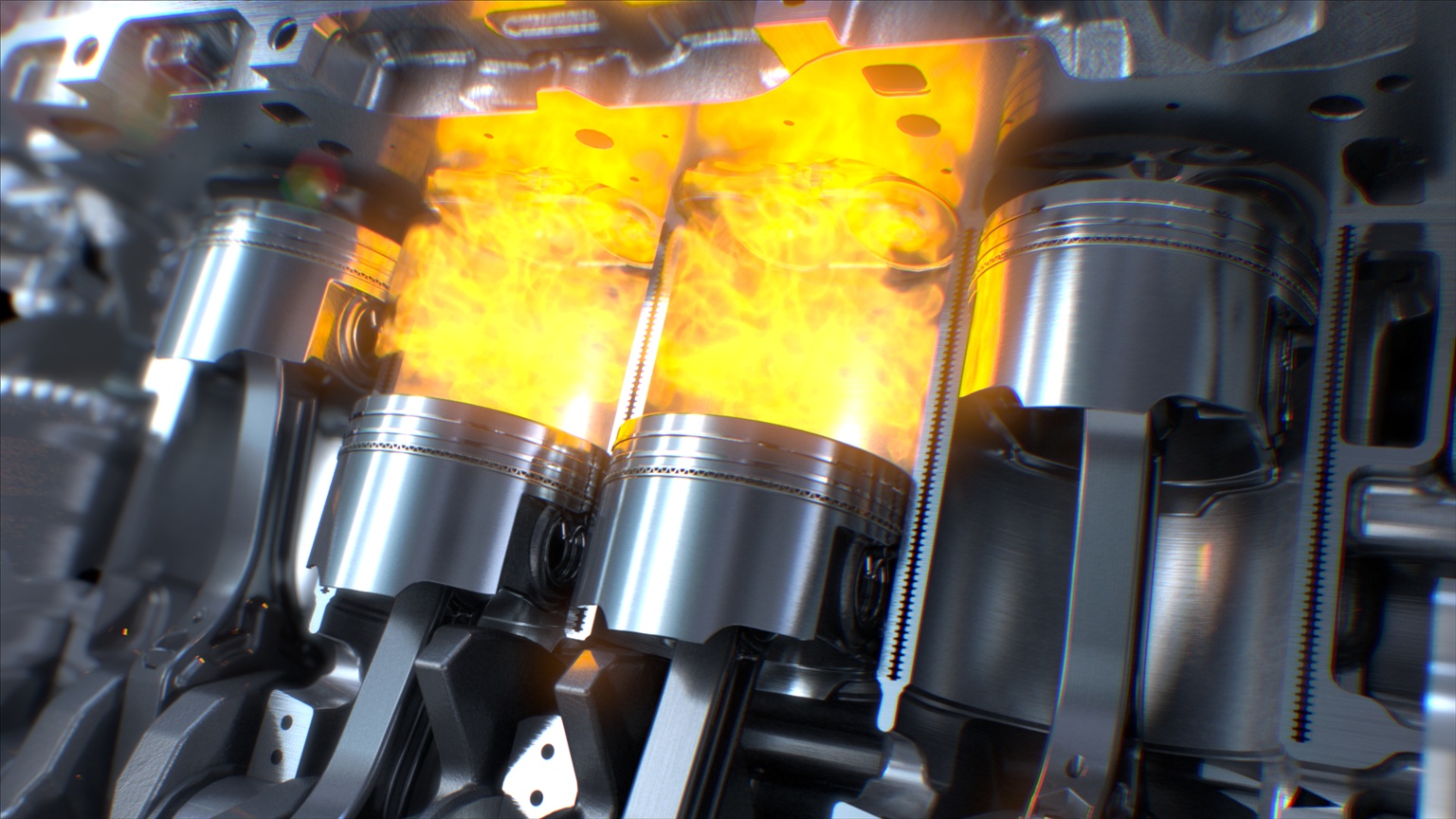
Code P0302 indicates misfires occurring in the engine’s second cylinder. For the PCM, this is a specific event: the crankshaft position sensor has detected that one of the cylinders is not functioning as it should. The mixture fails to ignite, the piston moves without producing power, balance is disrupted—the system stores the code.
Let’s examine what happens inside the engine when the Check Engine light comes on with code P0302, why the PCM decides to store it, and how to identify the actual cause.
“Code P0302 is not a verdict on a part, but information that the second cylinder is not delivering the expected torque. The PCM compares crankshaft speed after each combustion event and detects a drop. The diagnostician’s task is to understand why the air-fuel mixture did not ignite: no spark, no fuel, or unsuitable combustion conditions.” – Daniel Brooks, DecodeAuto
This information is general and does not replace professional consultation.
Page contents
Brief answer: what to do immediately when P0302 appears
If the Check Engine light illuminates and a scanner shows P0302, follow this procedure:
Reduce engine load. Avoid high RPM and abrupt acceleration. A misfiring engine runs unevenly; unburned fuel enters the exhaust, posing a risk to the catalytic converter.
Connect an OBD-II scanner and retrieve full data: the P0302 code itself, Freeze Frame (conditions when the code was stored), misfire counters per cylinder, and fuel trims. Freeze Frame will show RPM, load, and temperature at the moment the event occurred—this helps pinpoint when the second cylinder failed.
Perform a swap test—exchange the ignition coil and spark plug of the second cylinder with those of an adjacent cylinder (e.g., the third). Clear the code and start the engine. If the misfire “moves” to the third cylinder (code changes to P0303), the fault lies in the swapped part. If the code remains P0302, the problem is within the cylinder itself (compression, injector, mechanical).
Check connectors and wiring. Corrosion at the coil or injector contacts, insulation cracks, or poor grounding can interrupt control signals. Inspect connectors and wiggle wiring under load.
Inspect the intake tract. Air leaks through cracked hoses or intake manifold gaskets lean out the mixture, especially at idle. Check vacuum hoses, the PCV valve, and gaskets.
If the Check Engine light is flashing, this is a serious warning. Flashing indicates large amounts of unburned fuel entering the catalytic converter, risking damage. Stop driving, call a tow truck, or get to a repair shop at minimum RPM.
Minimum tools for quick diagnostics:
- OBD-II scanner (code reading, Freeze Frame, live data)
- Spark plug wrench (usually 5/8 in. or 16 mm)
- Multimeter (checking coil, injector, wiring resistance)
- Noid light (injector pulse check)
- Mechanic’s stethoscope (listening to injector operation)
If no scanner is available—Plan B before service:
- Listen to the misfire characteristics: at idle or under load, cold or warm engine.
- Visually inspect coil wiring and injector connectors for the second cylinder—corrosion, cracks.
- Smell the exhaust: a strong gasoline odor indicates unburned fuel and misfires.
- If you have basic tools, remove the second cylinder spark plug and check for deposits, oil, or cracks.
- Drive to the repair shop at minimum RPM, avoiding load.
What does P0302 mean: misfires in the second cylinder
P0302 (DTC P0302, Diagnostic Trouble Code P0302) is an OBD-II fault code indicating “Cylinder 2 Misfire Detected.”
How the PCM detects a misfire:
The powertrain control module continuously monitors crankshaft speed via the crankshaft position sensor (CKP). After each combustion stroke, the crankshaft receives an acceleration impulse. If the mixture ignites properly, the crankshaft speed during that cylinder’s power stroke matches the expected value. If the mixture fails to ignite or burns incompletely, the crankshaft does not receive the expected acceleration—the PCM detects this deviation.
When the deviation exceeds a threshold, the PCM logs a misfire event for that cylinder. Thresholds are calibrated by the manufacturer (OEM) and vary by model. If misfires persist over two consecutive drive cycles, the system stores code P0302 and turns on the Check Engine light.
Conditions for misfire monitor activation:
The misfire monitor is not always active—the PCM enables it under certain conditions:
- Engine coolant temperature (ECT) above warm-up threshold (usually above 140–158°F (60–70°C), OEM-dependent).
- RPM and load within operating range (typically 500–6000 RPM), load below extreme levels.
- Disabling conditions: monitor is off during fuel cut-off, rev limiter activation, or rapid load changes to prevent false triggers.
These conditions are OEM-calibrated and may differ. For example, on a cold engine or during sudden acceleration, the monitor may not detect misfires to avoid false codes.
Flashing Check Engine light:
A flashing light indicates a critical misfire level that risks catalytic converter damage. Flashing thresholds and logic vary by manufacturer and engine model. General rule: flashing = immediately reduce load or stop.
Why cylinder numbering matters:
To accurately locate the problem, it is essential to know which cylinder is considered second. Numbering depends on engine configuration and manufacturer.
General numbering principles (always consult your vehicle’s manual):
Inline 4-cylinder engine:
Numbering runs sequentially from the front (timing belt side) to the rear (transmission side): 1-2-3-4. The second cylinder follows the first.
V6 (GM 4.3L Vortec):
Driver’s side (viewed from the front): 1-3-5. Passenger side: 2-4-6. The second cylinder is the front one on the passenger side.
GM V8:
Right bank (from the front to the transmission): odd 1-3-5-7. Left bank: even 2-4-6-8. The second cylinder is the front one on the left bank.
Ford Windsor V8:
Passenger side (from the front): 1-2-3-4. Driver side: 5-6-7-8. The second cylinder is the one following the first on the passenger side.
Extended reference for popular engines (check your manual):
| Engine family | Numbering type | Where to find on engine | Notes |
|---|---|---|---|
| Renault K4M/K7M (inline I4) | 1-2-3-4 from timing belt side | Markings on valve cover or intake manifold | Second cylinder next to first, timing belt side |
| Nissan HR/QR (inline I4) | 1-2-3-4 from timing belt side | Diagram on engine cover or manual | Similar to Renault |
| Toyota 1NZ/2NR/2AR/2ZR (inline I4) | 1-2-3-4 from timing belt side | Diagram in service manual | Second cylinder follows first |
| VAG EA111/EA888 (inline I4) | 1-2-3-4 from timing belt drive | Markings on cylinder block | Second cylinder on timing belt side |
| Subaru FB/EJ (boxer) | Numbers stamped on cylinder covers | Check covers or manual | Unique layout, requires manual |
| Mazda inline I4 (Skyactiv-G) | 1-2-3-4 from timing belt side | Diagram on cover or manual | Usually counted from timing belt side |
For V6/V8:
Odd/even bank schemes depend on manufacturer. For example:
- GM V6: bank 1 (driver) 1-3-5, bank 2 (passenger) 2-4-6.
- Ford V8: bank 1 (passenger) 1-2-3-4, bank 2 (driver) 5-6-7-8.
Disclaimer: Always verify cylinder numbering in your vehicle’s service manual. Misidentifying the cylinder can lead to replacing good parts and missing the real issue.
Symptoms of P0302
Main symptoms and signs of P0302
When the second cylinder is not functioning, the engine loses balance. The PCM tries to compensate with the other cylinders but cannot fully eliminate the imbalance. Here is what you will feel and observe:
Check Engine light on or flashing:
A steady light means the code is stored in memory. A flashing Check Engine light indicates a critical condition: large amounts of unburned fuel enter the exhaust. A flashing Check Engine light means stop immediately.
Engine misfires at idle:
Noticeable vibration in the body and steering wheel, especially on a warmed-up engine. The tachometer needle may fluctuate slightly. Misfire results from one cylinder not contributing torque, causing uneven crankshaft rotation.
Power loss and jerks during acceleration:
The vehicle accelerates sluggishly, with hesitation when pressing the gas pedal. Under load (hill climb, passing), misfire worsens, and the engine fails to deliver rated power.
Idle speed fluctuates:
The PCM attempts to stabilize RPM by adjusting fuel and air, but balance is disturbed. Fluctuation range depends on PCM and engine—usually within 50–150 RPM.
Gasoline smell from exhaust, backfires on throttle release:
Unburned fuel from the second cylinder enters the exhaust. If the mixture burns in the catalytic converter or muffler, popping sounds may be audible. Gasoline odor indicates incomplete combustion.
Increased fuel consumption:
The PCM compensates for power loss by increasing fuel delivery to working cylinders. The second cylinder receives fuel but does not burn it efficiently. The exact increase depends on misfire severity and engine management strategy.
Reduced throttle response:
The vehicle responds sluggishly to pedal input; acceleration is weak and less responsive than usual.
All possible causes of code P0302
Code P0302 is set when the second cylinder fails to deliver expected torque. Causes vary and are grouped by engine systems.
Issue #1: Faulty ignition coil or spark plug
How this causes P0302:
The spark plug generates a spark to ignite the compressed mixture. The ignition coil converts low voltage (12V) to high voltage (20–40 kV) needed to jump the spark plug gap. If the plug is worn (electrode erosion, deposits, oil contamination) or the coil is faulty (insulation breakdown, cracks, internal open circuit), the spark is absent or weak and unstable.
Without spark, the mixture does not ignite. The second cylinder piston performs compression and power strokes without producing power—the crankshaft receives no acceleration impulse, and the PCM logs a misfire.
Visual signs:
- Spark plug: deposits (black, oily, white residue), electrode erosion, incorrect gap, ceramic insulator cracks, oil or coolant on threads.
- Ignition coil: cracks in housing, signs of breakdown (white or black tracks), corroded contacts, oil inside spark plug well (for coil-on-plug systems).
- High-voltage wire (if present): cracks, insulation wear, corroded terminals, breakdown marks.
Swap test diagnostics:
The swap test (part interchange) is a simple and effective method to localize faults.
- Remove the ignition coil from the second cylinder and from a neighboring working cylinder (e.g., the third).
- Swap their positions: install the second coil on the third cylinder and vice versa.
- Clear the P0302 code with a scanner.
- Start the engine and run at idle and under load.
- Read codes again.
Result:
- If the code changes to P0303 (misfire in the third cylinder), the coil is faulty. Replace the coil.
- If the code remains P0302, the coil is good. Repeat the swap test with spark plugs.
Similarly, swap the second cylinder spark plug with the third, clear the code, and start the engine. If P0302 changes to P0303, replace the plug.
Solution:
Replace the ignition coil and/or spark plug per manufacturer specifications. Use OEM parts or trusted brands (Bosch, NGK, Denso). When replacing plugs, maintain the recommended gap—refer to OEM tolerances (usually 0.031–0.043 in. (0.8–1.1 mm); check the manual). Torque plugs according to the service manual, typically 7–22 lb-ft (10–30 Nm) depending on thread size and head material; use a torque wrench.
Issue #2: Clogged or faulty fuel injector
How this causes P0302:
The injector delivers fuel to the cylinder under pressure and in a precise amount. The PCM controls injector pulse duration and injection timing. If the second cylinder injector is clogged, fuel delivery is insufficient—the mixture is lean and ignition is unstable or absent. If the injector leaks (does not close fully), the mixture is rich, the plug floods, and the spark cannot jump the gap.
Faulty injector solenoid, nozzle wear, or filter contamination disrupt spray pattern and fuel delivery.
Signs of injector malfunction:
- Uneven fuel delivery: lean or rich mixture.
- Poor spray: fuel delivered as a stream, not a fine mist.
- Detonation under load (lean mixture).
- Black deposits on spark plug (rich mixture).
Diagnostics:
- Listening with a mechanic’s stethoscope: a working injector produces distinct clicking sounds during engine operation. No sound indicates the injector does not open, lacks a control signal, or has coil failure.
- Resistance check: measure injector coil resistance with a multimeter. Range depends on injector type (usually 12–16 Ω for high-impedance, 2–5 Ω for low-impedance; check manual). Open or short circuit requires replacement.
- Balance test: using a scanner or diagnostic tool, disable injectors sequentially at idle. RPM drop varies by engine; compare the second cylinder’s response to others. If disabling the second injector does not reduce RPM or reduces it only slightly, the injector is faulty.
- Spray pattern test on a bench: remove injectors, test spray shape, sealing, and flow under pressure. Uneven spray or leakage indicates injector failure.
- Injector pulse check (noid light): connect a test light to the injector connector. Start the engine. The light should flash in sync with engine operation. No flashing means no PCM control signal—check wiring and PCM.
| External symptom | Likely injector fault | Test method | Recommended action |
|---|---|---|---|
| Rough idle, power loss | Clogged or failed injector | Listening, resistance check, noid light | Cleaning or replacement |
| Hard starting, increased fuel consumption | Power supply fault | Check 12V at connector, ground control | Wiring repair, connector cleaning |
| Backfires, gasoline smell | Insufficient fuel delivery | Injector swap test, bench test | Injector replacement |
Solution:
Ultrasonic cleaning restores spray in many cases. If the nozzle is mechanically worn or the valve leaks, replacement is necessary. Use OEM or quality aftermarket injectors (Bosch, Siemens).
Issue #3: Mechanical faults and low compression
How this causes P0302:
Proper combustion requires adequate compression. If compression in the second cylinder is below nominal, the mixture compresses poorly; temperature and pressure at the end of the compression stroke are insufficient for reliable ignition. Spark and fuel are present, but combustion conditions are compromised—misfires occur.
Causes of low compression:
- Burned exhaust or intake valve: valve does not close fully, gases leak during compression.
- Worn piston rings: rings fail to seal between piston and cylinder wall, compression leaks into the crankcase.
- Scoring on cylinder wall: scratches or scuffs disrupt sealing.
- Damaged cylinder head gasket: leaks between the second cylinder and an adjacent cylinder or coolant passage cause compression loss and gas mixing.
Diagnostics:
Compression measurement “dry/wet”:
- Dry test: remove all spark plugs, screw a compression gauge into the second cylinder spark plug hole. Disable ignition and fuel supply (remove fuel pump fuse or disconnect injectors). Crank the engine 5–7 revolutions and record the reading.
- Compare with other cylinders and OEM specs. A difference greater than 10–15% from nominal or between cylinders indicates a problem. Note: compression norms vary by engine (compression ratio, displacement, type); consult manufacturer specs. Many gasoline engines range from 145–203 psi (10–14 bar), but always verify.
- Wet test: add 0.17–0.34 fl oz. (5–10 ml) of engine oil into the cylinder through the spark plug hole. Repeat measurement. If compression increases, rings are faulty (oil temporarily seals gaps). If no increase, valves or head gasket are suspect.
Leak-down test:
Leak-down testing more precisely identifies gas leakage paths.
- Set the second cylinder piston at top dead center (TDC) of compression stroke (both valves closed).
- Apply compressed air (87–116 psi (6–8 bar)) through the spark plug hole.
- Measure leakage percentage. Thresholds vary by method and tool; roughly: up to 10% good, 10–15% acceptable, >20% serious fault. Consult tool or OEM documentation for exact values.
- Listen for air escaping:
- Hissing in exhaust pipe—burned exhaust valve.
- Hissing in intake manifold—burned intake valve.
- Hissing in crankcase (oil filler or dipstick tube)—worn rings.
- Bubbles in coolant reservoir—head gasket failure.
Solution:
Repairs depend on fault location:
- Valves: valve replacement, seat grinding, cylinder head restoration.
- Rings: ring replacement, possible cylinder boring or sleeving.
- Head gasket: gasket replacement, head and block surface machining if warped.
Mechanical repairs require professional service. Not recommended for DIY without experience and tools.
Issue #4: PCM faults and wiring damage
How this causes P0302:
Less commonly, the cause is not the actuators themselves (plug, coil, injector) but their control circuits or PCM failure. The PCM sends control pulses to the second cylinder’s coil and injector. If a wire is broken, a connector is corroded, or contact is unreliable, the signal is lost or distorted. The coil does not fire, the injector does not open—misfire occurs.
Electrical problem symptoms:
- Intermittent error: P0302 appears and disappears with vibration, temperature, or humidity changes.
- Error does not “move” during coil and plug swap tests (code remains P0302), but parts are known good.
- Wiggling the second cylinder coil/injector connector worsens or temporarily clears the misfire.
Diagnostics:
- Visual wiring inspection: look for insulation cracks, wear, overheating marks, connector corrosion.
- Ground check: ensure reliable PCM, engine, and coil/injector grounds. Corrosion or a broken ground can cause unstable signals.
- Continuity test with multimeter: measure resistance from PCM to coil/injector. Open circuit or high resistance indicates wiring issues.
- Wiggle test: start engine, gently move connectors and wiring harness for the second cylinder coil/injector. If symptoms change (RPM drops/rises, code appears/disappears), contact is unreliable.
- Oscilloscope: connect to coil primary winding or injector control wire. Expected signals:
- Coil primary: rectangular ground pulse from PCM, sharp edges, ~12V at rest, ~0V when the PCM driver switches on.
- Injector: rectangular pulse, duration varies with load (usually 2–10 ms), sharp edges without noise.
- No signal, short pulses, distortion, or noise indicate PCM or wiring faults.
Solution:
- Wiring repair: replace damaged sections, solder breaks, apply heat-shrink tubing.
- Connector cleaning and securing: remove corrosion with contact cleaner, protect contacts with dielectric grease, ensure connectors lock firmly.
- PCM repair or replacement: rare but possible with internal PCM failure (damaged traces, driver failure). Requires professional diagnostics, sometimes reflashing or PCM replacement.
Safe spark testing methods:
Never lift the coil or wire on a running engine to “check spark in the air”—this is dangerous (risk of 40 kV shock) and can damage the coil. Use an adjustable spark tester with a 0.28–0.39 in. (7–10 mm) gap, which safely simulates plug load and allows visual spark quality assessment.
Additional: Air leaks, EGR/PCV, oil in spark plug wells
Air leaks in intake manifold:
Cracked intake hoses, damaged intake manifold gasket, or throttle body leaks allow unmetered air into the engine. This leans the mixture, especially at idle and low RPM. If the leak is near the second cylinder, P0302 may result from a lean mixture in that cylinder.
Diagnostics: use a smoke machine to introduce smoke into the intake tract and visually detect leaks.
EGR valve:
A stuck-open EGR valve introduces exhaust gases into the intake during transient conditions, diluting the fresh mixture and impairing ignition. Uneven EGR distribution can cause the second cylinder to receive more inert gases, leading to misfire. Clogged EGR ports (in systems with individual cylinder channels) block flow to one cylinder, forcing all EGR gas into another, causing overload and misfire.
PCV valve:
A faulty PCV valve can create excessive vacuum or introduce too many crankcase gases (oil mist, vapors) into the intake, disrupting mixture composition.
Oil or coolant in spark plug wells:
Valve cover gasket or head gasket leaks allow oil or coolant into plug wells. Fluid accumulates around the plug and coil (in coil-on-plug systems), causing spark leakage along wet paths. Without proper spark, misfire occurs.
Diagnostics: visually inspect plug wells when removing coils/plugs. Presence of oil or coolant requires gasket replacement.
DIY diagnostics of P0302: step-by-step algorithm
This information is general and does not replace professional consultation.
The algorithm progresses from simple to complex: start with common, easily checked causes, then move to more involved diagnostics.
Step 1: Connect a scanner and perform diagnostics
- Read active and stored codes. Confirm P0302 presence.
- Open Freeze Frame—a snapshot of engine conditions when the code was stored. You will see RPM, engine load, coolant temperature, throttle position. If recorded at idle on a warm engine, suspect air leaks or mechanical issues. If under load at high RPM, suspect ignition or fuel.
- Check misfire counters per cylinder (Misfire Counters or Mode $06). If the second cylinder counter is significantly higher, localization is confirmed.
- Check fuel trims (Short Term Fuel Trim, STFT and Long Term Fuel Trim, LTFT). Note: fuel trim thresholds depend on OEM and conditions; generally, LTFT within ±10% is normal but varies. High positive LTFT (e.g., >+15%) indicates a lean mixture—check air leaks, fuel pressure, injectors. High negative LTFT (e.g., <-15%) indicates a rich mixture—check injector leaks, oxygen sensor.
Step 2: Visual inspection under the hood
- Open the hood and inspect the intake tract: hoses, clamps, gaskets. Look for cracks, wear, oil traces.
- Inspect ignition coil and injector connectors for the second cylinder. Disconnect connectors and check contacts for corrosion (green or white deposits), corrosion, moisture.
- Check spark plug wells for oil or coolant. If present, clean and fix the leak source (valve cover gasket).
- Inspect vacuum hoses (PCV, brake booster, fuel pressure regulator). Cracks or disconnected hoses cause leaks.
Step 3: Swap test of coil and spark plug
- Swap the ignition coil of the second cylinder with a neighboring one (e.g., the third). Use the correct tool (10 mm socket or Torx, depending on model).
- Clear the P0302 code with a scanner.
- Start the engine and run for 2–3 minutes at idle and light load (gentle throttle).
- Read codes again.
Result:
- Code changed to P0303 → coil is faulty, replace it.
- Code remains P0302 → coil is good, repeat swap test with spark plugs.
Spark plug swap: exchange the second cylinder plug with the third, clear code, check again.
- P0302 → P0303 → replace plug.
- P0302 remains → plug and coil are good, proceed further.
Step 4: Injector check
- Listening: start the engine, place a mechanic’s stethoscope (or screwdriver) on the second cylinder injector body. You should hear distinct clicks. No sound means the injector does not open.
- Injector pulse (noid light): disconnect injector connector, connect a test light. Start engine. Light flashes—PCM signal present, injector faulty. No flash—check wiring and PCM.
- Coil resistance: measure injector coil resistance with a multimeter. Range depends on type (see manual). Open circuit (infinite) or short (0 Ω) requires replacement.
- Balance test: disable injectors sequentially at idle using a scanner. Compare RPM drop for each cylinder. If disabling the second injector does not reduce RPM or reduces it only slightly, the injector is faulty.
- Bench test: if possible, remove injectors and check spray pattern on a test bench. Uneven spray or leakage requires cleaning or replacement.
Step 5: Compression measurement
- Remove all spark plugs.
- Install compression gauge in the second cylinder.
- Disable ignition and fuel supply.
- Crank engine 5–7 revolutions and record reading.
- Repeat for all cylinders.
Evaluation: compare with manufacturer specs and between cylinders. Differences over 10–15% or significant deviation from nominal indicate problems.
If compression in the second cylinder is low:
- Wet test: add 0.17–0.34 fl oz. (5–10 ml) oil, repeat measurement. Increased compression → ring issue. No increase → valves or head gasket.
- Leak-down test: set piston at TDC, apply air, listen for leaks (exhaust, intake, crankcase, coolant reservoir).
Step 6: Intake leak check
- Use a smoke machine to introduce smoke into the intake manifold (engine off).
- Look for smoke escaping: cracked hoses, gaskets, throttle body.
- Alternatively, spray carburetor cleaner on suspicious areas with the engine running. RPM rise indicates a leak.
Step 7: Wiring and PCM check
- Check continuity of wires from PCM to the second cylinder coil/injector with a multimeter. Look for breaks or high resistance.
- Check grounds: resistance between battery negative and engine block or PCM should be near zero.
- Use an oscilloscope to verify control signals to coil and injector. Absence or distortion indicates PCM issues.
Symptom and quick check matrix:
| Symptom / Condition | Idle (warm) | Under load / acceleration | Cold start | Likely cause | Quick check |
|---|---|---|---|---|---|
| Misfire, vibration | Strong | Weak/disappears | Weak | Air leak, PCV/EGR | Smoke test intake, PCV check |
| Misfire, vibration | Weak | Strong | Normal | Coil/plug under load | Swap test coil/plug |
| Misfire, vibration | Strong | Strong | Strong | Injector, fuel pressure | Noid light, fuel rail pressure |
| Misfire disappears when warm | Strong | Normal | Strong | Plug/gap, temperature sensors | Check plug gap, STFT cold |
| Power loss | Weak | Strong | Normal | Compression, valves | Compression test, leak-down |
When to consult a professional
Misfire persists after basic replacements and swap test:
You replaced plugs, coils, checked the injector with a swap test, but P0302 returns. This may indicate mechanical issues (low compression) or complex electrical faults.
Low compression or conflicting data:
Compression in the second cylinder is low, but the wet test does not clearly localize the fault (rings or valves). Leak-down test, cylinder borescope inspection, or head removal may be needed.
Fuel trims at extreme values:
LTFT above +20% or below -20% indicate serious mixture issues beyond PCM compensation. This requires fuel system diagnostics (pressure, pump performance, regulator), sensors (MAF, MAP, oxygen sensors), and air leaks.
Oil or coolant traces in cylinder:
If plugs show oil or coolant on threads, wells, or electrodes, this indicates head gasket failure or cracks in the head or block. Head removal, defect inspection, and possibly block pressure testing are required.
Need for oscilloscope, smoke machine, injector bench, or leak-down:
These tools are available only in professional repair shops. Without an oscilloscope, it is difficult to check PCM control signals; without a smoke machine, precise leak detection is impossible; without a bench, injector spray cannot be verified; without leak-down, gas leakage paths cannot be identified.
“Engine repairs must be performed by qualified mechanics. Quality repair of modern engines is difficult in a home garage—it requires borescope inspection, computer diagnostics, and special tools.”
How to fix P0302 and clear the Check Engine light
To fix P0302, eliminate the cause of the misfire.
Replace faulty components:
- Spark plug: use plugs per manufacturer specs (type, gap, heat range). Torque per manual (usually 7–22 lb-ft (10–30 Nm) depending on thread/material); use a torque wrench.
- Ignition coil: OEM or trusted brand (Bosch, NGK). Ensure connector fits tightly and contacts are clean.
- Injector: clean on a bench or replace. When replacing, check and lubricate seals with clean engine oil before installation.
Restore intake sealing:
- Replace damaged hoses, tighten clamps.
- Replace intake manifold gasket if damaged or deformed.
- Check PCV valve and replace if necessary.
Address compression issues:
- Valve replacement, seat grinding (if burned).
- Ring replacement, cylinder boring or sleeving (if worn).
- Head gasket replacement, surface machining (if leakage or warping).
Crankshaft relearn (CKP relearn): when and how
When needed: after replacing/removing the crankshaft, flywheel, CKP sensor, timing belt/chain, PCM, or after major engine repairs. Symptom: false misfires (including P0302) after repair when parts are known good.
How to perform:
- Warm up engine to operating temperature, turn off all accessories (A/C, lights, audio).
- Connect scanner, select Crankshaft Variation Relearn (CKP Relearn, CKP Learn) in the special functions menu.
- Follow scanner prompts: usually hold brake (automatic in Park or neutral), smoothly raise RPM to the specified value (often 3000–4000 RPM), hold for several seconds, then release throttle.
- Wait for “Procedure Completed” message, clear trouble codes, perform a 10–15 minute test drive in various conditions.
Note: exact steps and menu names depend on scanner and vehicle model; consult scanner instructions or the OEM service manual.
Clearing the code:
- OBD-II scanner: connect and select “Clear codes” or “Erase DTCs.” This is the proper method.
- Battery disconnect: remove the negative terminal for 10–15 minutes. The code may clear, but PCM adaptive memory (idle, fuel trims) will reset. After reconnecting, a drive cycle is required.
Test drive:
After fixing the fault, perform a 10–15 minute drive at various RPM and loads. Then read codes again. Ensure P0302 does not return, misfire counters reset or remain low, and fuel trims are within normal limits (refer to OEM specs).
| Cause | Repair method | Difficulty level (1–5) |
|---|---|---|
| Spark plug | Replace plug | 1 |
| Ignition coil | Replace coil | 2 |
| Injector | Bench cleaning | 3 |
| Injector | Replace injector | 3 |
| Low compression (valves) | Cylinder head repair | 5 |
| Low compression (rings) | Ring replacement, boring | 5 |
| Intake manifold gasket | Replace gasket | 2 |
| Wiring/connectors | Harness repair, cleaning | 2 |
Safety disclaimer:
Driving with an active misfire is dangerous for the catalytic converter. Unburned fuel enters the exhaust, burns in the converter, overheating and potentially melting the ceramic core. Replacing the catalytic converter is expensive (typically $300 to $2,000+ depending on the vehicle and region). If the Check Engine light flashes, stop and call a tow truck.
Consequences of driving with a misfire: why it is dangerous
Is it possible to drive with P0302?
Technically, the engine will run. Three cylinders (of four) or more (of six/eight) continue to produce power. But it is dangerous and costly.
Catalytic converter damage:
Unburned fuel from the second cylinder enters the exhaust. Fuel burns in the converter; excessive fuel causes temperature spikes. The ceramic core melts, the honeycomb structure collapses, and the converter fails. Replacement can be expensive.
Increased fuel consumption:
The PCM detects insufficient power and compensates by increasing fuel delivery to working cylinders. Consumption rises, while the second cylinder continues to receive fuel without burning it.
Exhaust system overheating:
Fuel combustion in the exhaust overheats the manifold, catalytic converter, and oxygen sensors, accelerating wear and sensor failure.
Accelerated engine wear:
The second cylinder does not contribute fully, but fuel continues to flow. The mixture may partially combust during the exhaust stroke, causing damaging pressure spikes. Rings and cylinder walls operate with poor lubrication (fuel washes away the oil film). Piston and cylinder wear accelerates.
Operational instability:
Vibrations transmit to engine mounts and transmission, accelerating mount wear and causing additional cabin vibrations.
Risk with flashing Check Engine:
Flashing indicates critical misfire levels and maximum catalytic converter damage risk. Stop, turn off the engine, arrange towing, or drive to a repair shop at minimum RPM and load.
Common mistakes in DIY diagnostics
Replacing parts “at random” without swap tests and basic checks:
The most frequent mistake is buying a new coil, installing it without effect, then plugs, then injectors… Money is wasted, and the problem remains. Swap tests take 10 minutes and accurately identify faulty parts.
Ignoring compression measurement:
If swap tests do not reveal the problem and the code persists, the next step is compression. Many skip this and continue replacing parts. Low compression cannot be fixed by plugs or coils.
Not checking grounds, connectors, and wiring integrity:
Corroded connectors or poor grounds cause intermittent symptoms. This is fixed by cleaning contacts, not replacing expensive parts.
Using incorrect plugs or gaps:
Installing plugs with the wrong heat range, gap, or thread reach can cause misfires or engine damage. Always consult the manufacturer’s catalog.
Saving on coils and wires:
Cheap no-name coils and wires often fail after a few thousand miles. Savings lead to repeated repairs.
Skipping intake leak and EGR/PCV valve checks:
Air leaks commonly cause lean mixtures and idle misfires. Faulty PCV or EGR valves disrupt mixture during transient conditions. These are easy to check but often ignored.
Omitting crankshaft relearn after major repairs:
Sometimes the PCM continues to detect misfires where none exist due to outdated crankshaft position variation data.
Prevention: how to avoid P0302 in the future
Timely spark plug replacement:
Replace plugs per manufacturer schedule. Usually 12,000–18,000 miles (20,000–30,000 km) for standard plugs, 37,000–62,000 miles (60,000–100,000 km) for iridium/platinum. Check gap when replacing.
Air filter replacement:
A clogged air filter can affect the air-fuel mixture and worsen combustion. Replace every 6,000–9,000 miles (10,000–15,000 km) or per schedule.
Quality fuel:
Use fuel from reputable stations. Low-octane fuel, additives, and dirt can clog injectors and degrade combustion.
Periodic injector cleaning:
Every 25,000–37,000 miles (40,000–60,000 km), consider preventive ultrasonic injector cleaning to help prevent deposits.
Intake sealing control:
Monitor hose, gasket, and clamp condition. Cracks and leaks cause lean mixtures and misfires.
PCV valve check:
A faulty PCV valve introduces excessive crankcase gases and oil mist. Check every 18,000–25,000 miles (30,000–40,000 km) and replace if needed.
Spark plug well inspection:
When replacing plugs, inspect wells. Oil or coolant presence signals valve cover or head gasket replacement.
Do not ignore minor symptoms:
Light vibrations at idle or occasional jerks during acceleration are early signs of ignition or fuel issues. Early detection reduces repair costs.
Related OBD-II trouble codes
| Code | Meaning | Primary checks |
|---|---|---|
| P0300 | Random/multiple cylinder misfires detected | Common causes for all cylinders: low fuel pressure (check rail pressure with gauge, see manual specs), air leaks (smoke test intake), faulty crankshaft sensor (CKP, check waveform with oscilloscope), weak plugs/coils (swap test), clogged air filter |
| P0301 | Cylinder 1 misfire detected | Swap test coil/plug cylinder 1, injector check (noid light, listening), compression |
| P0303 | Cylinder 3 misfire detected | Swap test coil/plug cylinder 3, injector check, compression |
| P0304 | Cylinder 4 misfire detected | Swap test coil/plug cylinder 4, injector check, compression |
| P0202 | Injector circuit malfunction – cylinder 2 | Check injector wiring cylinder 2 (multimeter continuity), connectors (corrosion, corrosion), injector coil resistance, PCM control signal (noid light) |
| P0171 | System too lean – bank 1 | Intake air leak (smoke test), low fuel pressure (rail gauge), faulty MAF sensor (live data), clogged injectors (bench), PCV system leak |
| P0172 | System too rich – bank 1 | Injector flooding (bench, resistance check), faulty oxygen sensor (live data), high fuel pressure (rail gauge), clogged air filter |
| P0420 | Catalyst system efficiency below threshold – bank 1 | Result of prolonged misfires (catalyst damage by unburned fuel), oxygen sensor check (pre- and post-catalyst, live data), catalyst inspection (borescope inspection, exhaust backpressure) |
| P0351–P0356 | Ignition coil primary/secondary circuit malfunction | Check coil wiring for corresponding cylinder (multimeter continuity), connectors (corrosion), coil primary and secondary resistance, PCM control signal (oscilloscope) |
What to do if the scanner shows multiple misfire codes simultaneously (e.g., P0300 + P0302 + P0303)?
P0300 (random/multiple misfires) plus specific cylinder codes:
This indicates a general cause affecting all cylinders but more pronounced in specific ones.
Check:
- Low fuel pressure: connect a gauge to the rail, measure pressure at idle and under load. Refer to OEM specs (typically around 43–58 psi (3.0–4.0 bar) for many systems, but exact values depend on the injection system—see manual). Below spec—check pump, filter, regulator.
- Air leaks: smoke machine or carb cleaner on running engine. Look for cracked hoses, intake manifold gaskets.
- Faulty crankshaft sensor (CKP): unstable CKP signal prevents the PCM from accurately determining ignition timing. Check CKP waveform with an oscilloscope.
- General plug/coil contamination: old or fouled plugs can cause multiple cylinder misfires. Replace the entire plug set.
If P0302 and P0303 appear simultaneously and consistently, but P0300 does not, check the shared coil (if a dual-output coil serves cylinders 2 and 3, common in older DIS systems) or a shared wiring section.
Disclaimer:
This article is for educational purposes only and does not replace professional diagnostics and repair. For serious faults, consult qualified specialists. DecodeAuto is not responsible for consequences of DIY repairs.
Frequently asked questions
Is it possible to drive with error P0302?
Briefly: it is not recommended, especially if the Check Engine light is flashing. There is a risk of damaging the catalytic converter and the engine. More details: If the light is steady and the engine runs relatively smoothly, you can drive to a repair shop in a gentle mode: without high revs, sharp acceleration, or prolonged loads. But this is only a temporary measure. Unburned fuel enters the catalytic converter, overheats it, and reduces its lifespan. If the Check Engine light is flashing, stop immediately. Flashing indicates a critical level of misfires. The catalytic converter can melt within minutes under these conditions. The cost of replacing the catalytic converter is several times higher than the cost of a spark plug or coil.
How to determine which cylinder is the second one?
Refer to the cylinder numbering diagram for your engine type. Inline engine: usually numbering goes from front (timing belt side) to back (transmission side): 1-2-3-4. The second cylinder is the one after the first. V-type engine: it depends on the manufacturer. Usually, odd cylinders (1-3-5…) are on one side, even cylinders (2-4-6…) on the other. The first cylinder is at the front, and the second is the next on the opposite side. Always check the cylinder numbering diagram in the service manual. Sometimes there is a marking on the engine cover or intake manifold.
Will the error reset itself after repair?
Briefly: yes, but not immediately. More details: After the fault is fixed, the PCM continues to monitor misfires. If during several drives (the number of drive cycles depends on the OEM and monitor type; usually 2–5 cycles) misfires do not recur, the code automatically changes from "active" to "stored" (pending or history), and then clears. However, the Check Engine light will turn off only after the PCM completes a full self-diagnostic cycle and confirms the problem is resolved. The distance before reset varies depending on operating conditions and OEM calibration (approximately 12–31 miles (20–50 km) in various modes). Faster reset is possible by clearing the code with a scanner immediately after repair, then performing a drive cycle and ensuring the code does not return.