

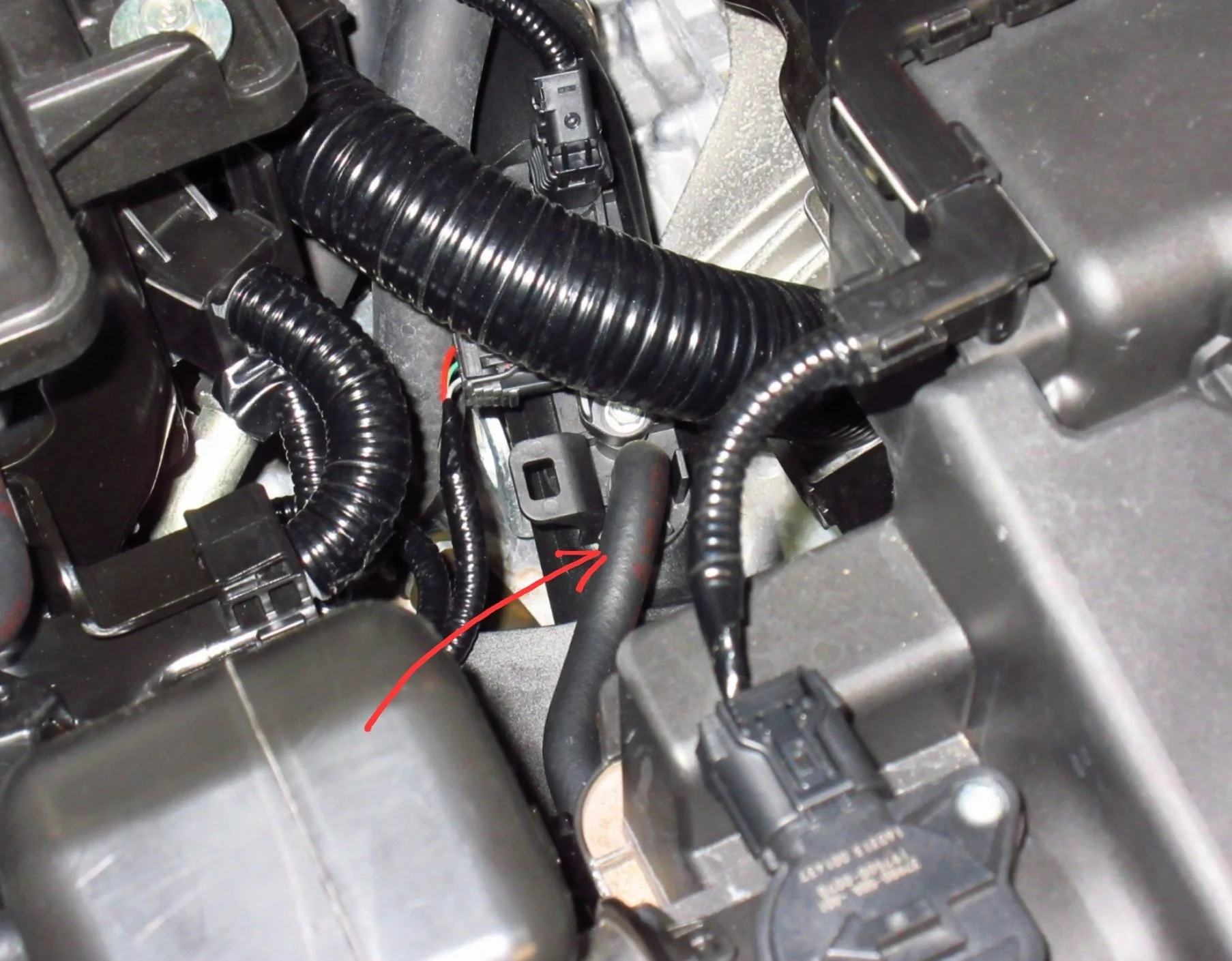
Code P0441 signals a malfunction in the evaporative emission control system (EVAP), indicating incorrect purge flow. While the issue is not always critical, it should not be ignored: the consequences can affect the environment, component life, and safety. This page explains what happens inside the system, why the PCM registers the code, and how to fix the fault without guesswork.
Page contents
Error P0441 (DTC P0441): what the fault code means
“P0441 means incorrect purge flow in the evaporative emission control system (EVAP).”
P0441 is a diagnostic trouble code (DTC) from the OBD-II standard, which stands for “Evaporative Emission Control System Incorrect Purge Flow.”
The PCM records this code when it detects a mismatch between the expected and actual fuel vapor flow through the purge valve. The logic is straightforward: the control module opens the canister purge valve, expecting a certain pressure change in the EVAP system or an adjustment in the fuel mixture. If the fuel tank pressure sensor (FTP sensor) does not show the expected vacuum, or the oxygen sensors do not detect mixture enrichment, the PCM determines that the purge flow is incorrect.
The EVAP system consists of several key components: fuel tank, charcoal canister, purge valve, vent valve, pressure sensor, and a network of vacuum hoses. Fuel vapors from the tank enter the canister, where they are stored until purging. When the engine runs, the PCM opens the purge valve, creating a vacuum that draws vapors into the intake manifold for combustion. If any part of this chain has a leak, clog, or valve malfunction, the flow is disrupted, triggering P0441.
The code is not set instantly. The PCM performs the EVAP test under specific conditions: the engine is warmed up, and the vehicle is moving at a steady speed. If these conditions are not met, the test is postponed. That is why the code sometimes appears not immediately after the problem arises, but after several driving cycles.
“P0441 does not confirm the exact failed part. It indicates that the PCM detected a deviation in the purge system. The code means the actual system response did not match the expected response. The goal is to find exactly where the system does not meet the control module’s expectations.” – Daniel Brooks
This information is general and does not replace professional consultation.
How the evaporative emission control system (EVAP) works
The EVAP system is designed to prevent gasoline vapors from escaping into the atmosphere. Instead, vapors are captured, stored, and then burned in the engine. The process is as follows.
Step 1. Vapor capture.
Fuel in the tank naturally evaporates, especially when heated. Vapors exit through the vent line and enter the charcoal canister, a component filled with activated carbon pellets. The carbon adsorbs hydrocarbon molecules, preventing them from escaping.
Step 2. Canister purge.
When the engine is running and EVAP test conditions are met, the PCM signals the purge valve to open. Vacuum from the intake manifold pulls vapors from the canister into the engine, where they mix with air and fuel and burn in the cylinders like a normal mixture. The PCM regulates the flow to maintain fuel mixture balance.
Step 3. Pressure monitoring.
The fuel tank pressure sensor (FTP) continuously monitors vacuum and positive pressure. With the purge valve closed, the system should be sealed; the sensor shows slight positive or negative pressure. When the valve opens, pressure should shift toward vacuum. If there is no change or it is too abrupt or weak, the PCM records a fault.
Step 4. Ventilation.
The vent valve allows atmospheric air into the system during normal operation. During the EVAP leak test, this valve closes to isolate the system, making any leak detectable by pressure changes. If the vent valve sticks closed, purging is impossible because the flow is blocked.
This design allows the system to operate without affecting engine power if all components are functioning properly. However, any leak in hoses, clog in the canister, or valve sticking causes the PCM to detect a mismatch between expected and actual parameters. This mismatch is recorded as P0441.
How serious is error P0441
Code P0441 is of moderate severity. It does not cause immediate engine failure or loss of control, but it should not be ignored.
Is it safe to drive?
Yes, if there are no obvious danger signs such as a strong gasoline smell inside the cabin or visible leaks under the vehicle. The vehicle remains drivable, and the engine usually runs normally. However, it is recommended to perform diagnostics within a week.
Possible consequences of ignoring the code:
- Increased hydrocarbon emissions. Fuel vapors that should burn in the engine escape into the atmosphere, violating environmental regulations and causing an emissions test failure in regions with mandatory inspections.
- Reduced fuel economy. Ignoring P0441 can lead to uncontrolled evaporation and suboptimal purge system operation.
- Accelerated canister wear. If the purge valve sticks open, liquid fuel may enter the canister, damaging the carbon pellets and requiring replacement of the entire unit.
- Fuel odor. Vapor leaks create an unpleasant and potentially hazardous smell. In enclosed spaces (garage, cabin), vapor concentration can reach explosive levels.
- Masking of new codes. A constantly lit Check Engine light may prevent noticing a new, more serious fault.
When not to drive:
- Strong, persistent gasoline smell inside or outside the vehicle.
- Visible fuel leaks under the vehicle.
- Difficulty starting the engine immediately after refueling (sign of a serious vent valve or canister malfunction).
| Symptom | Safe to drive? | Recommendation |
|---|---|---|
| Only Check Engine light on, no other signs | Yes | Diagnostics within a week |
| Mild fuel odor after refueling | Yes | Diagnostics within 3–5 days |
| Reduced fuel economy + emissions test failure | Yes | Visit a repair shop soon |
| Strong odor inside cabin, visible leaks | No | Immediate diagnostics |
“P0441 rarely prevents driving, but delaying inspection is unwise: fuel vapors affect safety and EVAP system life. Ignoring it leads to component degradation, and what today requires replacing one valve may in six months mean replacing the entire canister.” – Daniel Brooks
Symptoms associated with error P0441
Code P0441 can show up differently depending on which EVAP component has failed. Here is a complete list of symptoms, from obvious to subtle.
Obvious signs:
- Check Engine light is on. This is the primary and mandatory indicator. The light comes on after the PCM completes the EVAP test and detects a fault.
- Gasoline odor. A mild fuel smell near the vehicle or after refueling is a typical vapor leak symptom. The odor may intensify in hot weather or after prolonged sun exposure.
Hidden and indirect symptoms:
- Fluctuating idle speed. If the purge valve sticks open, fuel vapors continuously enter the engine, enriching the mixture. The PCM compensates by adjusting fuel delivery, causing unstable idle. This symptom is uncommon but possible.
- Difficulty starting after refueling. When the tank is full, vapor pressure is highest. A faulty vent valve or clogged canister can interfere with normal EVAP operation. The engine may start only on the second or third attempt.
- Slight increase in fuel consumption. If purging fails, vapors escape into the atmosphere instead of being burned.
- Additional EVAP codes stored in the PCM. P0441 often appears alongside other codes: P0440 (general EVAP fault), P0442/P0456 (small leak), P0455 (large leak). Their combination helps pinpoint the issue.
Main causes of code P0441
“Common causes: loose or faulty gas cap, defective purge valve, clogged canister, cracked hoses.”
Causes of P0441 range from simple and inexpensive to complex and costly. Diagnostics always start with the most likely options.
Most frequent faults
1. Loose or damaged fuel tank cap.
The cap is part of the sealed EVAP system. If it is not tightened until it clicks, or if the sealing ring is worn or cracked, the system loses integrity. The PCM may detect this as a leak, which can affect purge flow. Checking the cap is the first step.
2. Purge valve malfunction.
The valve may stick open or closed, or operate intermittently due to contamination or solenoid coil wear. Sticking closed blocks purging completely; sticking open causes continuous vapor flow, disrupting the fuel mixture.
3. Leak or crack in EVAP vacuum hoses.
EVAP hoses run from the tank to the canister, from the canister to the purge valve, and then to the intake manifold. Over time, rubber ages and cracks; hoses may disconnect from fittings or rub against the body. Even a small crack causes air to enter, disrupting vacuum and pressure sensor readings.
4. Clogged or damaged charcoal canister.
The canister contains activated carbon pellets. If liquid fuel enters it (due to overfilling or a faulty purge valve), the pellets can break down into dust. A clogged canister physically blocks vapor flow, making purging impossible.
Rare but possible causes
5. Faulty fuel tank pressure sensor (FTP sensor).
The sensor may give incorrect readings due to mechanical wear, corrosion, or wiring breaks. The PCM receives false data and determines purge flow is incorrect, even though purging may physically be working.
6. Crack in filler neck or fuel tank.
A rare issue, but it can occur after accidents, corrosion, or mechanical damage. The crack causes a constant vapor leak that the system cannot compensate for.
7. Wiring or connector problems.
Oxidized contacts, broken power or ground wires to the purge valve, and short circuits can all keep the valve from receiving PCM commands. P0441 may set because the system cannot control purging correctly.
8. Faulty vent valve.
If the vent valve sticks closed, the system becomes sealed even when purging is commanded. Vapor flow is blocked, and the PCM does not detect the expected pressure changes.
9. Incorrect PCM firmware or logic fault.
Rarely, after unsuccessful tuning or software updates, the PCM may use incorrect thresholds for the EVAP test, causing false codes.
10. Mechanical damage after service or accidents.
Improper jacking points or underbody damage can cause hose ruptures or component misalignment in the EVAP system.
Step-by-step EVAP system diagnostics for error P0441
Diagnosing P0441 requires a systematic approach. Start with simple, free checks and gradually move to specialized equipment.
Required tools and alternatives
Essential tools:
- OBD-II scanner with bi-directional control to activate the purge valve and read EVAP PIDs
- Multimeter to check valve coil resistance and wiring integrity
- Basic set of wrenches and screwdrivers
Recommended tools:
- Smoke machine for detecting EVAP system leaks
- Hand vacuum pump to test valve sealing
Budget alternatives:
- Instead of a professional smoke machine, homemade smoke can be used (not recommended due to low effectiveness)
- Instead of a hand vacuum pump, vacuum can be applied by mouth (works but is unhygienic)
- When applying 12V to the valve, always use a fused jumper (10A fuse) to avoid short circuits
Safety precautions:
- Work in a well-ventilated area
- Do not smoke or use open flames near the vehicle
- Wear protective gloves when handling fuel lines
Step 1. Check fuel tank cap and seal
Unscrew the cap and inspect the rubber sealing ring inside. Look for cracks, deformation, or wear. If the ring is dry and stiff, lubricate it with silicone grease. Reinstall the cap, tightening it until it clicks (usually 2–3 clicks). Connect the OBD-II scanner, clear code P0441, and take a 12–19 mile (20–30 km) test drive. If the code does not return, the problem is resolved.
Step 2. Visual inspection of EVAP hoses and lines
Trace all hoses from the fuel tank to the canister, from the canister to the purge valve, and then to the intake manifold. Look for cracks, kinks, signs of rubbing against the body, or disconnected fittings. Check clips and clamps; they should be present and undamaged. Inspect tees and connectors carefully, as cracks often occur there.
Step 3. Purge valve check
Activation test via scanner:
Connect an OBD-II scanner with bi-directional control. Navigate to the EVAP actuator control section and activate the purge valve. A working valve produces a distinct click when opening and closing. No click indicates a faulty valve.
Multimeter test:
Disconnect the valve connector. Measure the solenoid coil resistance between the terminals. Typical values are 20–50 ohms (check your vehicle’s service manual). Infinite resistance indicates an open coil; near zero indicates a short circuit.
12V power test:
“When 12V was applied, the valve clicked; in the closed state, air did not pass.”
Disconnect the valve from the hoses and connector. Briefly (2–3 seconds) apply 12V from the battery to the valve terminals through a fused jumper. A working valve should open with a clear click. Try blowing air through the valve by mouth or with shop air: air should not pass when closed and should flow freely when open (12V applied).
Updated: For safety during the 12V test, use a fused jumper (10A fuse). Do not apply voltage through the vehicle’s wiring harness to avoid backfeed and PCM damage.
Step 4. Fuel tank pressure sensor (FTP sensor) evaluation
Connect the scanner and access live data. Find the EVAP Pressure or Fuel Tank Pressure parameter. With the engine off and the cap closed, readings should be near atmospheric pressure (around 0 kPa or 0 in. H2O). Start the engine and activate the purge valve via the scanner. Pressure should drop into the negative range (vacuum). If readings do not change, the sensor may be faulty or there may be a major system leak.
Note: Expected pressure changes vary by OEM. Refer to your vehicle’s service manual or Mode $06 for exact specifications.
Step 5. Smoke test
A smoke machine is a specialized tool for detecting even minor leaks in sealed systems. Procedure:
- Connect the smoke machine to the EVAP service port (usually on or near the canister).
- Inject smoke into the system.
- Watch for smoke escaping. Leaks appear as smoke streams at cracks, loose connections, or damaged hoses.
Common leak points: fuel cap, canister fittings, vent valve, filler neck cracks, damaged hoses.
Step 6. Wiring and connector inspection
Inspect connectors for the purge valve and pressure sensor. Look for oxidation, corrosion, or moisture. Use a multimeter to check power, ground, and signal lines. Wiggle the wiring harness while monitoring scanner readings; intermittent contacts often show up this way.
Step 7. Clear code and drive cycle
After repairs, connect the scanner and clear all fault codes from PCM memory. Perform a drive cycle, a specific sequence of driving conditions under which the PCM runs the EVAP test. Conditions vary by manufacturer. If the code does not return after the test, the issue is resolved.
Where to find your drive cycle: consult your vehicle’s service manual or search online for your brand’s drive cycle procedure in TSB (Technical Service Bulletin) databases.
How to fix error P0441: repair methods
The goal of repair is to restore correct purge flow and system integrity. The approach depends on which component has failed.
Replacing the fuel tank cap
Signs: sealing ring cracked, cap does not click when tightened, visible deformation.
Actions:
- Select an original (OEM) or high-quality replacement cap. Verify compatibility by VIN or old cap part number.
- Remove the old cap and install the new one, tightening until 2–3 clicks.
- Clear code P0441 with a scanner and perform a test drive.
Replacing the cap is the cheapest and quickest way to fix P0441. Cap cost: typically $10–$30 depending on the vehicle and region.
Repair or replacement of the purge valve
Signs: no click when activated by scanner, coil resistance out of range, valve does not open when 12V is applied.
Actions:
- Disconnect the valve connector and hoses.
- Remove the valve (usually secured by one or two bolts or clips).
- Install a new valve, reconnect hoses and connector. Pay attention to flow direction; valves usually have IN (from canister) and OUT (to intake) markings.
- Activate the valve via the scanner to confirm operation.
- Clear codes and perform a drive cycle.
Important: make sure the hoses fit tightly on the fittings. Use new clamps if needed.
Purge valve cost varies widely depending on the vehicle make and brand.
Fixing leaks in EVAP lines and components
Signs: smoke test reveals a leak in a specific area, visible cracks, or disconnected hoses.
Actions:
- Replace the damaged hose with fuel-resistant vacuum hose of the correct diameter. Do not use regular rubber hose; it will degrade from fuel vapors.
- Restore fasteners: replace broken clips, install new clamps.
- If the leak is in a tee or fitting, replace the entire unit.
- If the crack is in the filler neck or tank, component replacement at a repair facility is required.
Replacing the fuel tank pressure sensor (FTP sensor)
Signs: sensor readings do not change when the purge valve activates, scanner shows incorrect pressure values.
Actions:
- Locate the sensor (usually on the tank or near the canister).
- Disconnect the connector and remove the sensor (often threaded or retained by a lock ring, depending on the vehicle).
- Install the new sensor and reconnect it.
- Clear codes and perform a drive cycle.
FTP sensor cost depends on the vehicle and supplier and can vary significantly.
Clearing the error after repair
After all work, perform a full diagnostic cycle:
- Connect the scanner and clear all PCM codes.
- Perform the drive cycle according to manufacturer instructions.
- Check EVAP monitor status via the scanner. “Ready” status means the EVAP test passed successfully.
Without a scanner, the code may clear automatically after several start-warm-up-drive cycles, but this can take 3–7 days. Using a scanner speeds up the process and helps confirm the repair.
Safety warning:
Work in a well-ventilated area. Do not use open flames or smoke near the vehicle. Gasoline vapors are explosive. Wear protective gloves and safety glasses when working with fuel lines.
Features of error P0441 on popular vehicles
Code P0441 occurs on vehicles of all brands, but it has model-specific nuances related to EVAP system design and component location.
VAG (Volkswagen, Audi, Skoda, Seat)
Feature: The purge valve is often labeled N80. Located in the engine bay, usually near the intake manifold or fuel line. Common fault: valve sticking due to contamination. Access is easy; replacement typically takes 10–15 minutes.
Typical issue: microcracks in plastic EVAP tees. Careful inspection of all connections is often required.
Example N80 valve part number: OEM 06L133781M, used on some VW/Skoda/Audi 1.8 TSI applications.
Ford
Feature: On many Ford models, the EVAP system is sensitive to the vent valve located near the canister. If the vent valve sticks, purging is blocked. The canister is usually near the right frame rail, accessible from under the vehicle.
Typical issue: cracks in tubes near the right frame rail due to salt exposure and vibrations.
Kia/Hyundai
Feature: The fuel tank pressure sensor (FTP) is often integrated into a module on the fuel tank. Replacement may require tank removal or access through an interior service panel, if equipped.
Typical issue: EVAP hose damage near the tank due to weak clamps. Check fasteners after maintenance.
Toyota/Lexus
Feature: P0441 often results from worn fuel cap seals.
Typical issue: canister clogging caused by topping off fuel after the automatic nozzle shuts off. Liquid fuel enters the canister, destroying carbon pellets.
Lada and Renault-Nissan alliance vehicles
Feature: Lower-cost EVAP components and frequent hose rubbing against the body due to insufficient fastening. Clips and clamps may be weak.
Typical issue: cracks in hoses near the canister and tank. Replacing them with quality parts is often effective and inexpensive.
“Replaced cap, hose, cleared code—did not return after a week.”
Common mistakes in diagnosing and repairing P0441
A systematic approach and understanding PCM logic help avoid typical errors.
1. Replacing parts blindly without diagnostics.
The most common mistake is buying and installing a new purge valve without checking other components. The code returns, and money is wasted. Always start with simple checks: cap and visual inspection.
2. Ignoring small leaks.
Small cracks in hoses or fittings are often invisible. Without a smoke test, they remain undetected, and the code persists. Smoke testing is strongly recommended for EVAP diagnostics.
3. Incorrect polarity when testing the purge valve.
Applying 12V to the valve requires correct polarity. Reversing positive and negative can damage the valve or yield false test results.
4. Skipping wiring and connector checks.
Oxidized contacts and intermittent wire breaks are common causes of false P0441 triggers. Checking wiring with a multimeter and inspecting connectors is essential.
5. Clearing the code without performing a drive cycle.
Simply erasing the code does not fix the problem. The PCM must complete the EVAP test under normal conditions. Clearing the code without a drive cycle can result in the code returning at the next test.
6. Diagnosing under improper conditions.
With a full or nearly empty tank, the EVAP test may not run correctly.
Related EVAP system fault codes
“P0441 often appears with P0455—large EVAP leak.”
P0441 rarely appears alone. Other EVAP-related codes often accompany it in PCM memory. Their combination helps localize the fault faster.
| Code | Description | First check |
|---|---|---|
| P0440 | General EVAP system fault | System integrity, pressure sensor |
| P0442 | Small EVAP leak (~0.040 in.) | Fuel cap, small hose cracks |
| P0455 | Large EVAP leak | Loose fuel cap, major hose or tank crack |
| P0456 | Very small EVAP leak | Microcracks, cap seal |
| P0443 | Purge valve electrical circuit fault | Wiring, valve connector |
| P0444 | Open purge valve circuit | Wire break, oxidized contacts |
Relation to P0441:
- P0441 + P0442/P0456 indicates a leak plus incorrect purge flow. Likely cause: hose crack between the canister and valve.
- P0441 + P0455 indicates a large leak affecting purge flow. Often a loose cap or hose rupture.
- P0441 + P0443/P0444 indicates an electrical issue with the purge valve. Check wiring and connectors.
Code combinations are diagnostic clues from the PCM. Analyze them before starting repairs.
Prevention: how to avoid P0441 in the future
Prevention is easier and cheaper than repair. A few simple habits help keep the EVAP system working properly.
1. The “until it clicks” rule when tightening the fuel cap.
Always tighten the cap until 2–3 distinct clicks after refueling. This helps ensure a proper seal. Inspect the cap’s sealing ring every 2–3 months; replace the cap if cracked.
2. Avoid topping off fuel after the automatic nozzle shuts off.
When the nozzle stops automatically, the tank is filled to the correct level. Overfilling can cause liquid fuel to enter the canister, damaging it. This is especially relevant for Toyota and Lexus.
3. Periodic inspection of hoses and clips.
Every 6–12 months, especially after winter or rough service, inspect EVAP hoses under the hood and beneath the vehicle. Look for rubbing marks, cracks, or loose clamps. Early detection helps prevent costly repairs.
4. Protect connectors from moisture and corrosion.
Annually clean purge valve and pressure sensor connectors if needed. Use contact cleaner and dielectric grease for protection.
5. Use quality parts when replacing.
Cheap aftermarket purge valves and sensors often fail within 6–12 months. OEM parts or trusted brands (Bosch, Denso, Pierburg) often last longer.
Content created by the DecodeAuto team. This material is for educational purposes only and does not replace professional inspection or serve as a repair manual.
Frequently asked questions
Is it possible to drive with the P0441 error?
Yes, you can continue driving if there is no strong fuel smell inside the cabin, no signs of leakage under the vehicle, or problems starting the engine. The P0441 code does not directly affect handling or power. However, it is recommended to perform diagnostics within a week, as ignoring the issue can lead to increased emissions, accelerated canister wear, and a possible emissions test failure.
How much does it cost to repair or replace the purge valve?
The cost of the part varies depending on the vehicle and brand. Labor charges also vary by location and vehicle layout. On cars with easy access to the valve (for example, VAG), replacement can sometimes be done in about 15 minutes.
How to reset the P0441 error after repair?
Connect an OBD-II scanner to the vehicle’s diagnostic port, go to the “Clear Codes” or “Erase DTC” section, and erase the code from PCM memory. After that, be sure to perform a drive cycle—a sequence of driving conditions during which the PCM runs the EVAP test. Check the EVAP monitor status via the scanner; a “Ready” status means the test passed successfully. Without a scanner, auto-reset is possible but may take several days and multiple start-warm-up-drive cycles.
What to do if the P0441 code returns after repair?
If the code returns after replacing a component, it means either the fault was not completely fixed or the problem lies in another system component. Repeat diagnostics using a smoke machine, check related codes (P0440, P0442, P0455), and test electrical circuits. Often the code returns because of a missed small leak or a corroded connector.
Can P0441 appear due to poor quality fuel?
No, fuel quality does not directly affect EVAP system operation. The P0441 code is related to mechanical and electrical components of the vapor recovery system, not gasoline composition. However, overfilling the tank during refueling can cause liquid fuel to enter the canister, which can indirectly trigger the fault.