

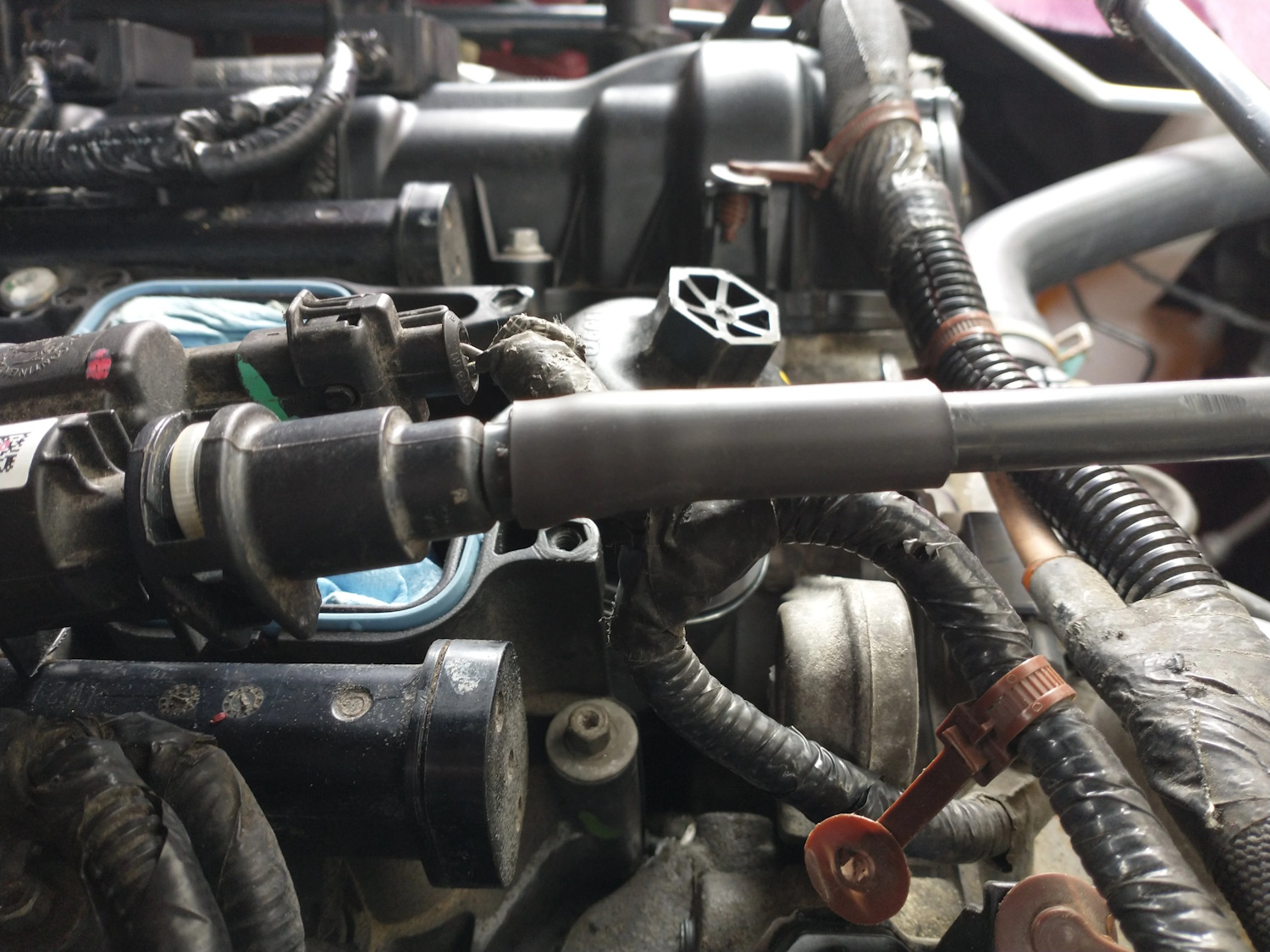
In brief: P0456 indicates a very small leak in the evaporative emission control system (EVAP). Most often, the culprit is the gas cap. Start with simple checks, and in most cases, you can resolve the issue within minutes.
“Over years of diagnostics, I’ve found that P0456 unnecessarily alarms drivers. This code signals a micro-leak detected by the PCM during the EVAP system’s self-test. Usually, checking the gas cap and visually inspecting the hoses is enough. The module doesn’t guess—it detects that the system vacuum is not holding as it should. Let’s explore how it detects this and what to do next.” – Daniel Brooks, DecodeAuto
What you need to know about P0456
- What it is: A diagnostic trouble code (DTC) indicating a very small leak in the evaporative emission control system (EVAP).
- Main symptom: Check Engine light is on; vehicle behavior usually remains unchanged.
- Most common causes: Loose or damaged gas cap, micro-cracks in EVAP hoses, faulty purge or vent valves.
- First diagnostic step: Inspect the gas cap—clean the filler neck, check the seal, tighten until it clicks. Clear the code and drive 12–19 miles (20–30 km).
Page contents
What does code P0456 (DTC P0456) mean?
Code P0456 is a diagnostic trouble code (DTC) indicating a very small leak in the evaporative emission control system (EVAP). The powertrain control module (PCM) detects a minimal loss of system integrity and turns on the Check Engine light.
The EVAP system captures gasoline vapors from the fuel tank and routes them to be burned in the engine. When the PCM initiates a leak test, it closes the vent valve and creates a slight vacuum in the system. The fuel tank pressure sensor (FTP) monitors how quickly the pressure changes.
If the vacuum does not hold, the PCM determines there is a leak.
P0456 means the leak is very small—typically about 0.020–0.040 in. (0.5–1 mm) in diameter. For comparison, code P0455 indicates a large leak where the loss of seal is obvious. P0456 usually points to a micro-crack, a loose clamp, or a worn gas cap seal.
This is generally not critical for driving safety but requires attention: gasoline vapors escape into the atmosphere, harming the environment and potentially causing a failed inspection.
How does the PCM determine the leak is “small”?
The control module analyzes the rate of vacuum decay. If pressure drops slowly but steadily, it registers P0456. If vacuum is lost quickly, it triggers P0455 (large leak). If the sensor shows the system cannot seal at all, code P0440 (general EVAP system fault) may appear. The code is typically set only after two consecutive failed tests.
Important note on EVAP leak detection methods:
Different manufacturers use various leak detection techniques:
- FTP method (fuel tank pressure sensor) – used by most manufacturers such as Toyota, Nissan, Subaru, Hyundai/Kia. The PCM creates a vacuum via the purge valve and monitors pressure change via the FTP sensor.
- LDP (Leak Detection Pump) – found on some older Chrysler/Dodge/Jeep models. A mechanical pump pressurizes the system, and a sensor detects leaks.
- NVLD/ESIM (Natural Vacuum Leak Detection / Evaporative System Integrity Monitor) – used in many Stellantis vehicles (Jeep/Dodge/Chrysler/Ram). This system relies on natural vacuum created by vapor cooling after engine shutdown. Diagnosing P0456 on these vehicles requires checking the ESIM switch and bypass valve rather than the FTP sensor.
When diagnosing P0456 on vehicles such as the Jeep Grand Cherokee (2014+), Ram 1500 (2013+), and Chrysler 300, this difference must be considered.
Symptoms of code P0456
Main symptoms of P0456
With a small leak, symptoms are often minimal. The Check Engine light is on, but vehicle behavior usually remains unchanged.
What you might notice:
- Check Engine light is the only obvious symptom most drivers see.
- A faint gasoline smell near the rear of the vehicle or after extended parking—fuel vapors escape through the leak.
- Refueling issues—the gas pump nozzle may shut off prematurely due to disrupted EVAP system ventilation.
- Slight increase in fuel consumption under some conditions—PCM fuel trim may be affected by unmetered vapor flow.
- Difficulty passing the EVAP readiness test during inspection—the EVAP monitor will not show “ready” status if the leak is unresolved.
Important: P0456 almost never affects acceleration, idle quality, or engine start. If you experience these symptoms, another fault is likely present.
7 common causes of code P0456
Causes of P0456 can be ranked from the simplest and most frequent to more complex. Start checking from the top—most issues are resolved by addressing the first two points.
1) Loose or damaged gas cap
Worn seal, cracked cap body, incorrect cap type (non-OEM or incorrect application). This is the most common cause of P0456. Caps cost $10–40 and inspection takes 2 minutes.
Specifics for capless systems (Ford Easy Fuel and similar):
Ford vehicles (Mustang 2015+, F-150 2009+, Escape 2013+), Lincoln, and some Chevrolet models use capless fuel fillers. Instead of a cap, there is a spring-loaded flap with a seal. For P0456, check:
- Condition of the flap’s sealing ring (wear, deformation).
- Presence of dirt or sand preventing full closure.
- Proper use of adapters when refueling from a container (incorrect adapters may damage the seal).
2) Micro-cracks or tears in EVAP hoses/tubes, loose clamps
Rubber and plastic hoses age over time, cracking from heat and vibration. A very small crack is enough to trigger P0456. Clamps may loosen or shift. In regions using road salt, corrosion of metal clips can accelerate—check underbody hose mounts.
3) Purge valve sticking open
If the purge valve does not close fully, the system cannot create a vacuum during the leak test, and the PCM may interpret this as a leak. The purge valve is controlled by an electromagnetic solenoid; contamination or wear can cause sticking.
4) Vent valve stuck or clogged with dust
The vent valve must close on PCM command to create vacuum. If it remains open (due to dirt, corroded contacts, or mechanical failure), the system cannot seal.
5) Damaged charcoal canister
Cracked canister housing, activated carbon saturated with fuel (canister “flooded” by overfilling). The canister is usually located near the rear of the vehicle. Many vehicles have a replaceable canister vent filter; clogging can cause flow issues and EVAP faults.
6) Faulty fuel tank pressure sensor (FTP)
A malfunctioning FTP sensor may report a false leak to the PCM despite a sealed system. This is less common but can occur on higher-mileage vehicles.
7) Corrosion or cracks in filler neck, loose fuel pump access cover, rare tank damage
Cracks in the metal filler neck from corrosion (especially on older vehicles in salted regions), damaged seal on the fuel pump service cover, or micro-cracks in the tank.
How to find a leak in the EVAP system: step-by-step diagnostics
Disclaimer: This information is general and does not replace professional consultation. When working with the fuel system, observe safety precautions: work outdoors or in a well-ventilated area, avoid sparks, and do not smoke near the vehicle.
Diagnosing P0456 follows the principle “from simple to complex.” If you are a beginner, start with a visual inspection. If the code returns after basic checks, proceed to a smoke test or professional diagnostics.
Step 1. Visual inspection of the gas cap
Inspect the gas cap: the seal should be soft, without cracks or deformation. Clean dirt from the filler neck, tighten the cap until 2–3 distinct clicks. If the seal is hard or cracked, replace the cap.
What to check:
- The sealing ring is not flattened or hardened.
- The cap body is free of cracks.
- The cap tightens with resistance and clicks.
For capless systems:
- Inspect the flap for dirt and seal deformation.
- Ensure the flap fully closes under spring tension.
- Clean sand or dirt from the filler neck if necessary.
Step 2. Inspect EVAP lines
Trace the EVAP hose/tube from the tank to the canister and then to the purge and vent valves. Look for:
- Fuel traces on hoses or under clamps.
- Cracks, abrasions (especially where hoses contact the body or exhaust).
- Loose clamps—try to rotate the hose by hand; if it moves, the clamp is loose.
- Condition of plastic clips and mounts (including corrosion of metal clips in salted regions).
Note: Many EVAP hoses run under the vehicle and can be damaged by stones, exhaust heat, or vibration.
Step 3. Check purge and vent valves
How to read scanner data: PIDs and Mode $06 for EVAP
If you have an advanced OBD scanner, use these PIDs for diagnostics:
- FTP (fuel tank pressure) – tank pressure. Normal values vary by vehicle, but readings near 0 inH2O at rest are common. When purge is active and vent is closed, vacuum (negative pressure) should form.
- Purge duty cycle (%) – purge valve opening percentage. Usually 0% at idle, increasing under the right operating conditions.
- Vent command (On/Off) – PCM command to the vent valve. During a leak test: Off (closed) on some scan tools.
Mode $06 (Continuous Monitoring Test Results):
This mode shows the latest EVAP test results and how close the system is to the failure threshold.
- TID/CID for EVAP small leak (for example, TID $01, CID $31 on some Toyota applications; values vary by brand).
- Compare the test value with the threshold (Min/Max Limit). If the test is near the limit, a leak may exist even if a code has not set yet.
Interpretation example:
If FTP does not show vacuum with vent closed and purge open, or vacuum slowly dissipates, this supports a leak diagnosis. Mode $06 can indicate how close the system is to the failure limit.
With an OBD scanner supporting active tests, command the purge and vent valves to open/close. Watch the FTP sensor graph: vacuum should form when vent is closed and purge is open.
If the scanner lacks active test support:
- Ensure the valves show no visible damage.
- Check electrical connectors for corrosion and secure contact.
- If needed, remove the valve and blow through it—a good purge valve does not allow airflow when closed.
Step 4. Smoke test
Introduce smoke into the EVAP system via the service port or directly through the vent valve. Close the vent valve (manually or via scanner). Smoke under low pressure, typically about 0.5 psi (35 mbar), fills the system. Observe where smoke escapes—that is the leak location.
Procedure:
- Connect the smoke generator to the EVAP system.
- Close the vent valve (via active test or manually).
- Introduce smoke and inspect hoses, clamps, canister, filler neck, and gas cap.
- Mark the smoke exit point—it indicates the leak.
Safety when working with EVAP and fuel systems:
Based on MOTORVAC Technologies EVAP Tester Manual and AVI OnDemand EVAP Diagnostics:
- Use equipment strictly according to manufacturer instructions.
- Connect smoke generator power correctly: positive to battery, negative to chassis.
- Use only recommended smoke fluids (e.g., UltraTraceUV™ Smoke Solution).
- When replacing the Schrader valve in the EVAP port, note the left-hand thread (turn clockwise to loosen).
- Use nitrogen, not compressed air, for pressure testing—compressed air may contain moisture and oxygen, increasing fire risk when contacting fuel vapors.
- Work outdoors or in ventilated areas. Avoid sparks, smoking, and open flames.
Step 5. Retest after repair
Clear codes with a scanner. Perform a short drive cycle (specific driving conditions—see section below). Check EVAP monitor readiness via scanner. If the code does not return and the monitor shows “ready,” the issue is resolved.
Ways to fix code P0456
Replacing the gas cap
The quickest fix: a new OEM or quality aftermarket cap with a good seal. Clean dirt and corrosion from the filler neck, tighten the cap until 2–3 clicks.
Cost: $10–40 depending on vehicle make.
Difficulty: ⭐ (1 out of 5) – any driver can do it in 2 minutes.
Repair or replacement of EVAP hoses and tubes
If cracks or damage are found, replace the affected EVAP hose section. Use fuel-resistant hose (standard vacuum hose is unsuitable—it degrades from fuel vapors). Check clamps: tighten or replace with new ones. Avoid sharp bends and contact points with the body.
Cost: $5–30 per hose section plus clamps.
Difficulty: ⭐⭐ (2 out of 5) – requires access under the vehicle and basic tools.
Inspection and replacement of purge and vent valves
Technical description of purge and vent valves:
Purge solenoid valve:
An electromagnetic valve with a movable core and spring, normally closed. When energized by the PCM, the solenoid opens, allowing fuel vapors from the canister into the intake manifold. Control depends on engine temperature, RPM, and O2 sensor feedback. It is typically located in the engine bay between the canister and intake manifold.
Common faults:
- Sticking open (dirt, carbon buildup) – constant vapor draw, idle issues, leak detected during EVAP test.
- Sticking closed – canister not purged, excess tank pressure, possible P0441 code.
- Corrosion or broken contacts – valve not controlled by the PCM.
Vent solenoid valve:
A normally open electromagnetic valve located near the canister (often near the rear of the vehicle). It allows air into the canister during purge. During an EVAP leak test, the PCM closes the vent valve to isolate the system and create vacuum.
Common faults:
- Sticking open – system cannot seal, false leak codes (P0456, P0455).
- Clogged with dust or dirt – vent does not close fully.
- Electrical faults – wiring breaks, corroded contacts.
If the purge or vent valve does not hold vacuum, replace it with OEM or quality aftermarket parts. Inspect connectors and wiring harnesses—corroded contacts can cause solenoid malfunction. If the canister housing is cracked, replace the entire canister.
Cost:
- Purge valve: $25–120
- Vent valve: $25–100
- Canister: $120–300+
Difficulty:
- Purge valve: ⭐⭐⭐ (3 out of 5) – usually in the engine bay, requires removing fasteners.
- Vent valve: ⭐⭐ (2 out of 5) – located near the canister under the vehicle.
- Canister: ⭐⭐⭐ (3 out of 5) – requires lifting the vehicle, removing fasteners and hoses.
Finally, clear the code and perform a drive cycle to verify EVAP monitor readiness.
| Issue | Symptom | Solution | Approximate cost (USD) | Difficulty |
|---|---|---|---|---|
| Loose gas cap | Gasoline smell, Check Engine light | Replace cap | 10–40 | ⭐ |
| EVAP hose crack | Visible crack, fuel odor | Replace hose section + clamps | 5–30 | ⭐⭐ |
| Purge valve sticking | Code won’t clear, idle issues | Replace purge valve | 25–120 | ⭐⭐⭐ |
| Vent valve fault | Code returns, smoke test shows leak near canister | Replace vent valve | 25–100 | ⭐⭐ |
| Canister damage | Gas smell under vehicle, cracked canister housing | Replace canister | 120–300+ | ⭐⭐⭐ |
| False FTP readings | Code appears with sealed system | Replace fuel tank pressure sensor | 30–120 | ⭐⭐⭐ |
How to clear code P0456 after repair?
Clearing via OBD scanner
Connect the scanner, select “Clear Codes” or “Erase DTCs.” After clearing, perform 1–2 drive cycles to complete EVAP monitor readiness tests. The scanner will show “Ready” or “Complete” when the monitor passes self-diagnostics.
Alternative: disconnecting the battery terminal
Disconnect the negative battery terminal for 5–10 minutes. This resets all PCM adaptations, including stored trouble codes.
Risks for modern vehicles:
Not recommended for vehicles with sensitive electronics (modern BMW, Mercedes, VW/Audi, Volvo) because it may reset:
- Radio, clock, and power window settings.
- Transmission adaptations, throttle position.
- Key memory and learned settings on some models.
When safe:
Older vehicles (pre-2005), simple systems without complex electronics.
Important: Without fixing the leak, the code will likely return within 12–62 miles (20–100 km), and the EVAP monitor will not become “ready”—you may fail inspection.
How serious is code P0456 and can you drive with it?
P0456 is low severity: it hardly affects driving safety or engine performance. You typically won’t notice power loss, starting issues, or drivability problems.
What happens if ignored:
- Environment: gasoline vapors escape into the atmosphere, increasing hydrocarbon (HC) emissions. In regions with strict emissions regulations, this can violate standards.
- Inspection: EVAP readiness monitor remains “Not Ready.” Many US states allow only one “Not Ready” monitor, so inspection may fail depending on the vehicle model year and local rules.
- Gasoline smell: the leak may worsen over time, causing a persistent odor.
- Fuel consumption: a slight increase is possible, but usually unnoticed.
Controversial question: is it dangerous?
Competitor Avtopro claims: “…fire risk, especially if the leak is near hot exhaust or wiring.”
Our position: Fuel vapors in the EVAP system are normally contained within a sealed circuit; local vapor emissions at the leak site could theoretically increase risk if they contact an ignition source, but this is uncommon. Recommendation: inspect exhaust and wiring near the leak; if strong fuel odor or visible liquid fuel is present, do not operate the vehicle until repaired.
Can you drive? Yes, short-term driving is usually possible. But don’t delay: fix the cause and confirm monitor readiness. Otherwise, you risk failing inspection in regulated areas.
Cost of diagnostics and repair
Diagnostics
- DIY: basic OBD scanner ($20–60) plus visual inspection. Smoke generator rental or purchase: $50–200.
- Repair shop: basic OBD diagnostics plus smoke test – $60–150 depending on region.
Repair (approximate prices, USA, 2026)
| Part / labor | OEM price range (USD) | Aftermarket (USD) | Labor hours |
|---|---|---|---|
| Gas cap | 15–40 | 10–25 | 0.1 (5–10 min) |
| EVAP hose / clamps (section) | 10–30 | 5–20 | 0.3–0.5 |
| Purge valve | 40–120 | 25–80 | 0.5–1.0 |
| Vent valve | 40–100 | 25–70 | 0.5–1.0 |
| Canister | 150–300+ | 120–250 | 1.0–2.0 |
| FTP sensor | 50–120 | 30–80 | 0.5–1.0 |
| Smoke test (repair shop) | – | – | 60–100 USD |
Note: prices are approximate and depend on vehicle model and region. Labor rates at US repair shops range from $80 to $150 per hour.
Related codes and how to distinguish: P0455 vs P0456 vs P0457 vs P0442
Codes in the P04xx series describe EVAP system faults. They differ by leak size and detection conditions.
| Code | Official description | Leak type | Most typical cause |
|---|---|---|---|
| P0442 | EVAP leak detected (small leak) | Small/medium leak | Loose gas cap or micro-crack in hose |
| P0455 | EVAP leak detected (gross leak) | Large leak | Missing or loose gas cap, large crack in tank or hose |
| P0456 | EVAP leak detected (very small leak) | Very small leak (0.020–0.040 in. / 0.5–1 mm) | Worn gas cap seal, micro-crack in hose |
| P0457 | Leak detected – loose gas cap | Large leak after refueling | Loose or missing gas cap |
How the PCM differentiates codes:
The control module analyzes vacuum decay rate. P0456 is the slowest leak (very small); P0442 is medium; P0455 is fast (large). P0457 often appears immediately after refueling if the cap was not tightened.
What to do if codes appear together:
If P0456 and P0455 appear simultaneously, multiple faults may be present (for example, a gas cap issue plus a hose crack). If P0456 alternates with P0442, the leak may be intermittent (such as a hose rubbing or a clamp loosening with vibration).
Brand-specific features and TSBs (common scenarios)
Some manufacturers have known EVAP system vulnerabilities. Below are typical brand scenarios based on technical service bulletins (TSBs) and diagnostic experience.
Ford / Mazda
Typical issue: frequent vent valve failure and leaking hose near the canister. On some 2005–2017 models (Mustang, Focus, Fusion, Escape), purge valve sticking is common.
Ford TSBs:
- TSB 07-3-9 (2007, Mustang 2005–2006): enlarged hole in fuel pump – pump replacement.
- TSB 17-0047 (2017, Mustang GTDI 2016): purge valve sticking – valve replacement.
- TSB 17-0051 (2017, 1.5L/2.0L/2.3L engines up to 01/24/2017): EVAP canister and purge valve replacement.
- MC-10162068-0001 (2019, C-Max/Fusion Hybrid/MKZ Hybrid 2013–2017): PCM reprogramming + purge valve replacement.
Capless system specifics (Ford Easy Fuel):
Ford models (Mustang 2015+, F-150 2009+, Escape 2013+) often use capless filler necks. For P0456, check the flap seal and dirt preventing closure.
Tip: For Ford/Mazda, start by checking the purge valve and hoses near the canister.
Jeep / Dodge / Chrysler (Stellantis)
Typical issue: leaks around the LDP (Leak Detection Pump, used instead of FTP on older models) and canister housing cracks. Common on Jeep Grand Cherokee, Ram, and Chrysler 300.
NVLD/ESIM system (Natural Vacuum Leak Detection / Evaporative System Integrity Monitor):
On many newer Jeep, Dodge, Chrysler, and Ram models, ESIM is used. It operates differently: after engine shutdown, natural cooling of vapors creates vacuum monitored by the ESIM switch and bypass valve. The FTP sensor may not be the primary component used for leak detection.
P0456 diagnostics on Stellantis with ESIM:
- Check the ESIM switch (located near the canister).
- Inspect the bypass valve for sticking.
- On older models with LDP, check pump diaphragm wear.
Tip: Check the gas cap, LDP hoses, and canister. LDP diaphragms can wear out.
Toyota / Lexus
Typical issue: purge valve sticking open or closed. On Camry, RAV4, Highlander, and Lexus RX, purge valve sticking due to contamination is common.
Tip: Check vacuum via the FTP sensor after closing the vent valve. If vacuum does not form, the purge valve is likely faulty.
GM (Chevrolet, GMC, Buick, Cadillac)
Typical issue: corrosion of filler neck and hose fittings, weak plastic EVAP hose clips. Silverado, Tahoe, and Equinox models often have hose cracking from temperature changes.
Tip: Inspect the filler neck for corrosion and check hose clips—they often break.
VW / Audi (VAG Group)
Typical issue: cracking of thin vacuum tubes near the firewall. Golf, Passat, Audi A4, and A6 models often have cracks in plastic tees and connectors.
Tip: Inspect thin tubes in the engine bay—they are fragile and crack from vibration.
Prevention: how to avoid P0456 recurrence
Preventing P0456 is easier than diagnosing it. Follow these simple rules:
- Use a quality gas cap: do not overtighten (2–3 clicks are enough), replace it at the first sign of seal wear.
- Do not overfill the tank: stop refueling when the pump nozzle clicks off. Overfilling can flood the canister with liquid fuel, damaging the charcoal.
- Periodically inspect EVAP hoses and clips: at least once a year during oil changes, ask the technician to check visible EVAP parts under the vehicle.
- Replace the canister vent filter according to the manufacturer schedule, if applicable.
- For capless systems (Ford Easy Fuel and similar): regularly clean the filler neck and inspect the flap seal.
- In regions with road salt: check metal clips and clamps for corrosion; replace as needed.
Step-by-step HowTo cards (quick fixes)
Quick gas cap check (2 minutes)
- Open the fuel door and remove the gas cap.
- Inspect the sealing ring—it should be soft and crack-free.
- Wipe dirt from the filler neck.
- Tighten the cap until 2–3 distinct clicks.
- Clear the code with a scanner, drive 12–19 miles (20–30 km), and check if the code returns.
Mini hose inspection (5–10 minutes)
- Lift the vehicle with a jack or drive onto ramps/lift.
- Inspect visible EVAP hose sections near the canister (usually near the rear wheel).
- Check clamps—try to rotate the hose by hand; if it moves, the clamp is loose.
- Look for fuel traces, cracks, abrasions.
- If damage is found, replace the hose section and clamps.
When to get a smoke test
If P0456 returns after checking the gas cap and visually inspecting hoses, visit a repair shop for a smoke test. This is a fast and accurate way to find very small leaks without extensive disassembly.
Related EVAP fault codes:
- P0455 – large EVAP leak
- P0457 – leak due to loose gas cap
- P0442 – small/medium EVAP leak
- P0440 – general EVAP system fault
Frequently asked questions
Is it possible to drive with a Check Engine light on due to P0456?
Yes, temporarily. P0456 usually does not affect drivability or driving safety. However, fuel vapors harm the environment, the smell of gasoline may increase, and you risk failing inspection (the EVAP monitor may not be ready). Do not delay repairs.
How does code P0456 affect fuel consumption?
[Disputed] A competitor MazdaCars claims: "…fuel consumption will not change." Our position: A slight increase in fuel consumption is possible under some conditions, but usually the impact is small and may go unnoticed.
Is code P0456 dangerous? Fire risk?
[Disputed] A competitor Avtopro states: "…fire risk, especially if the leak is near hot exhaust or wiring." Our position: Fuel vapors in the EVAP system are normally contained in a sealed circuit; local vapor release at the leak site could theoretically increase risk if it contacts an ignition source, but this is uncommon. Check the exhaust area and wiring near the leak. If there is a strong fuel smell or visible liquid fuel—do not operate the vehicle until fixed.
Will the P0456 code disappear by itself?
If the cause is a loose gas cap, after properly tightening it and several drive cycles, the Check Engine light may go off by itself. But if the leak is caused by a crack, faulty valve, or damaged canister, the code will likely return. Diagnosis is required.
How much does P0456 repair cost?
It depends on the cause. Gas cap—$10–40. Hose and clamps—$5–30. Purge or vent valve—$25–120. Canister—$120–300+. Repair shop diagnostics with smoke test—$60–150.