

The information is general and does not replace professional consultation.
Code P0123 is a diagnostic signal from the PCM indicating that the voltage in the throttle position sensor circuit exceeds the allowable threshold. Simply put, the powertrain control module detects a “fully open” throttle where it shouldn’t be. We will analyze what exactly happened in the circuit, why the PCM made this decision, and how to quickly pinpoint the problem step by step.
“When I first encountered P0123, the main mistake was that I only checked the sensor. The problem was actually in the connector—three out of four pins were covered with green corrosion. Since then, I always start with the wiring before looking at the sensor itself. The PCM doesn’t lie—it just reports what it sees on the signal line.” – Daniel Brooks, DecodeAuto
Page contents
Brief answer: what it is and what to do right now
Code P0123 means that the signal voltage from the throttle position sensor (TPS) or accelerator pedal position sensor (APP) has exceeded the manufacturer’s set threshold—usually in the range of 4.5–4.9 V for more than 1–3 seconds. Exact values depend on the vehicle make and manufacturer strategy. The PCM interprets this as “throttle constantly open,” even though the driver is not pressing the accelerator pedal.
Channel “A” in the code: TPS or APP?
According to SAE J1979, code P0123 indicates a problem with sensor “A.” In practice, this can be:
- TPS “A” – the first track of a dual-track throttle position sensor (often labeled VTA1).
- APP “A” – the first channel of the accelerator pedal position sensor on vehicles with electronic throttle control.
To determine which sensor you are dealing with:
- Check the PIDs in Live Data mode on the scanner: look for “TPS A %” and “APP A %” (or “Accelerator Pedal Position A”). If TPS readings are close to 100% with the pedal released, the issue is with the throttle sensor; if APP readings are abnormally high, the problem lies with the pedal sensor.
- Consult the wiring diagram for your vehicle: on cable-operated throttle systems, it is always the TPS; on electronic throttles (ETC/drive-by-wire), it can be either TPS or APP.
Is it possible to drive with P0123?
Technically yes, but only for a short distance and carefully. The engine will likely enter limp mode, limiting RPM and power to prevent damage. You may experience jerks, acceleration drops, increased fuel consumption, and unstable idle. Driving to a repair shop is acceptable, but do not delay diagnostics—persistent high signal can cause incorrect fuel mixture, fouled spark plugs, or overheating.
First steps:
- Read fault codes with an OBD-II scanner and record the freeze frame (conditions when the code was stored).
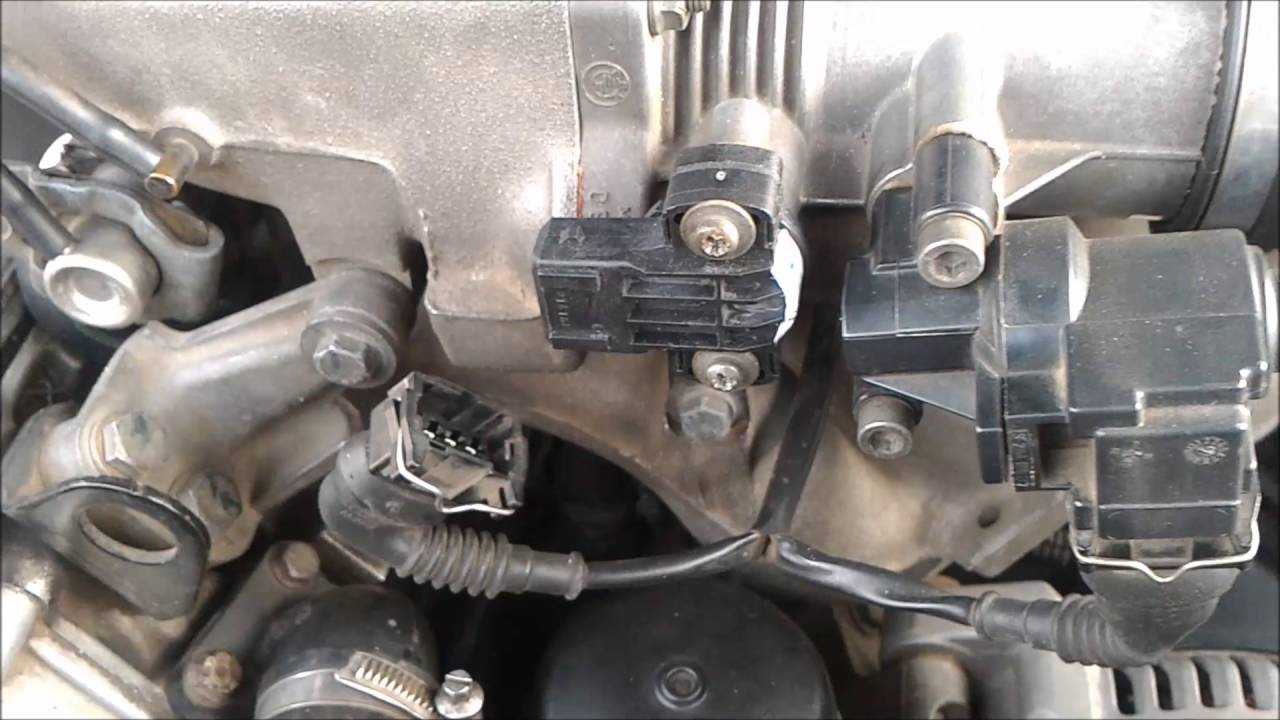
- Visually inspect the TPS/APP connector and wiring for corrosion, insulation cracks, or abrasion from vibration.
- Check with a multimeter:
- Reference voltage (VREF) between the 5 V pin and ground—should be 4.8–5.2 V with ignition on.
- Ground integrity (GND)—voltage drop close to 0 V (no more than 0.1–0.2 V).
- Signal voltage (SIG) with closed throttle—approximately 0.4–0.7 V; should smoothly increase to 4.2–4.7 V when opening the throttle without sudden jumps.
- If detected:
- Broken or shorted wiring → repair with solder and heat-shrink tubing.
- Corroded connector → clean with contact cleaner.
- Noisy or sticking sensor → replace TPS/APP.
- After repair: clear the code with a scanner, perform throttle adaptation (if required by the vehicle), conduct a test drive, and recheck codes.
Important: safety when working with electrical equipment
Always turn off the ignition before connecting probes to the sensor connector (except when measuring reference voltage with ignition on). Handle sharp probes carefully—accidentally shorting the 5 V VREF line to ground can damage the PCM. Work with dry gloves and avoid contact with hot engine parts.
Example freeze frame for P0123:
DTC: P0123
Conditions recorded:
RPM: 780 rpm
ECT (coolant temp): 190°F (88°C)
TPS_A (VTA1): 4.82 V
APP: 0%
MAP: 4.4 psi (30 kPa)
Pedal status: released
Interpretation: With the pedal released (APP 0%), TPS_A shows 4.82 V—this does not match the expected idle range of 0.4–0.7 V. The PCM records P0123 because the TPS signal does not correlate with pedal position and airflow (MAP 4.4 psi (30 kPa) is typical for idle).
Reading the freeze frame helps understand under what conditions the code was stored: idle, acceleration, hot or cold engine. This allows reproducing the issue and checking if it is constant or intermittent.
What does error code P0123 (DTC P0123) mean?
Code P0123 is a Diagnostic Trouble Code stored by the PCM when the voltage on the throttle position sensor or accelerator pedal sensor signal line exceeds the upper allowable threshold. According to OBD-II and SAE J1979 standards, it means: Throttle/Pedal Position Sensor “A” Circuit High—high signal level in sensor “A” circuit.
What does this mean in practice?
The PCM continuously monitors the voltage arriving via the signal wire from the TPS or APP. If this voltage remains above 4.5–4.9 V (threshold varies by manufacturer; some systems trigger the code above 4.65 V) for a certain time (usually 1–3 seconds depending on strategy), the PCM interprets this as: “the sensor reports the throttle is almost fully open, although other parameters (pedal position, airflow) indicate otherwise.” This discrepancy triggers code P0123.
The cause can be in several places:
- The TPS or APP sensor itself: wear of the resistive track, dead zones, sticking slider.
- Wiring: signal line shorted to positive (e.g., to 5 V VREF), open ground, insulation damage.
- Connector: corroded contacts, oxidized pins, loose locking tab.
- Incorrect calibration: after sensor replacement or throttle cleaning without PCM adaptation, incorrect values may be recorded.
The PCM does not “guess”—it follows a monitoring algorithm defined by the manufacturer. If conditions for code storage are met, the PCM switches to limp mode to protect the engine from incorrect fuel mixture and potential damage.
How the throttle position sensor (TPS) works and its connection to the PCM
The throttle position sensor is a potentiometer (in most vehicles) or a contactless Hall sensor (in newer models) that converts the mechanical throttle position into an electrical signal. The PCM uses this signal to determine how open the throttle is and calculates fuel mixture, ignition timing, idle speed, and engine load accordingly.
Step-by-step operation:
- The driver presses the accelerator pedal → mechanical linkage (cable or electronic drive) rotates the throttle plate.
- The throttle changes angle → the sensor shaft rotates with the throttle.
- The PCM supplies reference voltage (usually 5 V) to the TPS via the VREF line.
- The TPS returns a variable signal proportional to the throttle angle:
- Closed (~0°) → voltage ~0.3–0.7 V.
- Fully open (~90°) → voltage ~3.7–4.8 V.
- The PCM compares the TPS signal with other data:
- Pedal position (from APP sensor).
- Airflow (from MAF or MAP sensor).
- Engine speed and load.
If all parameters agree, the PCM calculates the optimal fuel mixture. If the TPS voltage is too high with the pedal released and low airflow, the PCM detects a mismatch and records code P0123.
Why is this important to understand?
Because the sensor is not just a component to be replaced randomly. It is part of the conditions the PCM checks every millisecond. If the TPS signal does not match engine logic, the PCM cannot trust it and switches to protection mode.
Types of TPS:
- Contact potentiometric: resistive track with slider; track wear is the main cause of P0123 on older vehicles.
- Contactless (Hall sensor): uses a magnetic field, more durable but more expensive; found on many newer vehicles.
- Dual-track: two independent potentiometers (VTA1 and VTA2) for redundancy; the PCM compares their signals, and if the difference exceeds the calibrated limit, code P0121 may be recorded.
Monitoring principle:
The sensor signal monitoring principles and threshold values are defined in SAE J1979 (OBD-II Diagnostic Test Modes, SAE International, 2017) and ISO 15031-5. More details are in manufacturer service information on engine electronic control systems (e.g., Bosch Automotive Handbook, section “Sensors and Actuators”).
Main symptoms and signs of error P0123
When the PCM records P0123, it does not just store the code—it changes engine behavior to protect the system from damage. Symptoms appear quickly and are noticeable even without a diagnostic scanner.
Main signs:
- Check engine light is constantly on or lights up after engine warm-up.
This is the first and most obvious signal. Freeze frame mode shows the conditions (RPM, load, temperature) when the code was stored. - Unstable RPM and fluctuating idle.
The PCM cannot correctly calculate fuel mixture because the TPS signal contradicts the actual throttle position. RPM may jump between 500 and 1200 rpm without driver input. - Power loss and sluggish throttle response.
The PCM limits fuel delivery to avoid an over-rich mixture. The vehicle accelerates slowly and does not respond well to the pedal. - Jerks, acceleration drops, automatic transmission jerking.
Sudden TPS signal fluctuations cause PCM calculation spikes. The automatic transmission may shift improperly due to incorrect load data. - Entering limp mode.
The PCM fixes the throttle at a minimally open position (~6°) and limits RPM according to manufacturer strategy (often 2000–3000 rpm, exact value depends on make). The vehicle “limps” to the repair shop. - Increased fuel consumption.
Incorrect mixture can lead to incomplete combustion, increasing fuel use.
Important: symptoms may worsen with engine warm-up, vibrations (rough roads), or humidity (connector condensation). If the vehicle runs normally after a cold start but jerks appear after 10–15 minutes, check the TPS connector for oxidation.
Main causes of code P0123
P0123 is mostly an electrical issue. The sensor itself fails less often than wiring or connectors because modern potentiometric TPS sensors are quite reliable. The main enemies are corrosion, vibration, and mechanical damage to the harness.
Ranked list of causes (from common to rare):
- Wiring and connector issues—most common.
- Signal line (SIG) shorted to reference voltage (VREF 5 V): insulation worn through, harness pinched by a metal part.
- Ground (GND) open: oxidized grounding bolt, wire crack.
- Connector corrosion: green or white deposits on pins, moisture inside the connector after engine washing.
- Loose connector latch: vibration causes intermittent contact.
- TPS or APP sensor malfunction.
- Resistive track wear: the sensor slider passes the same section repeatedly, creating a “dead zone” with high resistance.
- Slider sticking: contamination with oil, carbon deposits, moisture ingress inside the housing.
- Poor-quality aftermarket sensor with noisy signal: cheap sensors often have voltage spikes instead of smooth curves.
- Incorrect installation or adjustment.
- Sensor installed crookedly: shaft misaligned with throttle shaft.
- Throttle assembly contamination: carbon and oil can cause sticking, resulting in a constantly high signal.
- Damage to the VREF line—rare.
- Short circuit in the harness: VREF rises above 5 V due to voltage from another source.
- PCM voltage regulator failure (extremely rare).
- PCM internal fault—very rare.
- Failure of the analog-to-digital converter (ADC) reading the TPS signal.
- Damage to the input stage after a short circuit or voltage spike in the electrical system.
What is important to understand:
Even if the sensor is good, corrosion in the connector or an open ground will create conditions for P0123. The PCM cannot distinguish between a “bad sensor” and a “bad contact”—it simply records high voltage at the input. Therefore, diagnostics always start with checking the circuit, not replacing the component.
Step-by-step diagnosis of P0123: from scanner to multimeter
Proper diagnosis of P0123 is not guessing “what it could be” but sequentially verifying the conditions the PCM analyzes when storing the code. We break down each step from the PCM logic perspective.
Step 1. Scanner diagnosis
What to do:
- Connect an OBD-II scanner to the diagnostic port.
- Read all fault codes (not only P0123 but related ones: P0120, P0121, P0122, P0124).
- Record freeze frame—conditions when the code was stored: RPM, load, engine temperature, pedal position.
- Switch to Live Data mode and compare readings:
- TPS % (Throttle Position Sensor): with pedal released should be 0–5%; fully pressed—85–100%.
- APP % (Accelerator Pedal Position): should generally track TPS if the system is functioning properly.
- TPS A signal voltage: ~0.5 V closed throttle, ~4.5 V open throttle.
What to check:
- If with pedal released the scanner shows TPS = 80–100% or voltage close to 5 V—suspect the signal line shorted to VREF.
- If the value “jumps” from 10% to 90% without pedal movement—likely poor contact or a sensor dead zone.
Action:
Clear codes with the scanner, start the engine, and perform a short test drive (3–6 miles (5–10 km)). If P0123 returns under the same conditions (e.g., after warm-up), proceed to physical inspection.
Step 2. Visual inspection of wiring and connector
What to look for:
- TPS/APP connector:
- Latch engagement: should hold firmly without play.
- Contact color: copper or silver. Green/white deposits indicate corrosion.
- Moisture inside the connector: droplets, condensation after washing or rain.
- Wiring harness:
- Insulation: cracks, abrasion from vibration, signs of melting.
- Mounting points: the harness should not be pinched by metal parts or sharp edges.
- Ground point: grounding bolt on the engine should be tight and rust-free.
What to do:
- Disconnect the connector, then blow out the contacts with compressed air.
- If oxidation is present, treat it with contact cleaner (not WD-40, but a specialized electronics cleaner).
- Check for oil on the harness (oil damages insulation).
Step 3. Multimeter check (key ON, engine OFF)
Preparation:
- Turn the ignition on without starting the engine.
- Disconnect the TPS connector (or test at the connector if you can backprobe it safely).
Measurements:
- Reference voltage (VREF):
- Positive probe → VREF pin (usually the middle pin on 3-pin sensors; check the wiring diagram for 4-pin sensors).
- Negative probe → chassis ground.
- Normal: 4.8–5.2 V.
- If >5.2 V—problem with the PCM regulator (rare) or a short in the harness.
- If <4.5 V—weak contact or open VREF line.
- Ground integrity (GND):
- Positive probe → GND pin.
- Negative probe → battery negative terminal.
- Normal: 0–0.1 V.
- If >0.5 V—poor ground contact, oxidized grounding bolt.
- Signal voltage (SIG):
- Reconnect the connector.
- Positive probe → SIG pin at the PCM connector (if accessible) or sensor.
- Negative probe → ground.
- Closed throttle: 0.4–0.7 V.
- Slow manual opening: voltage should rise smoothly to 4.2–4.7 V.
- If SIG ≈ VREF (~5 V) with closed throttle—signal line shorted to reference voltage.
“Wiggle test” (intermittent contact test):
Move the wiring harness by hand while watching the multimeter readings. If voltage “jumps” or disappears, locate the break point (usually at a harness bend near the sensor or connector).
TPS oscilloscope waveforms (for advanced diagnostics):
If you have access to an oscilloscope, capture the TPS signal during smooth throttle opening:
- Good sensor: smooth ramp from 0.5 V to 4.5 V without spikes or steps.
- Faulty sensor: sharp jumps, dead zones (voltage unchanged during rotation), spikes above 5 V.
Oscilloscope settings:
- Channel: 1 (connect to the TPS signal wire).
- Time base: set as needed for a slow throttle sweep.
- Voltage range: 0–5 V.
Advanced step: resistor test for PCM input check
If wiring and sensor are verified but doubts remain, you can emulate the sensor signal by applying a set voltage to the PCM input via a voltage divider:
- Assemble a resistor divider: 5 kΩ (to VREF) and 1 kΩ (to ground) to get ~0.8 V output.
- Connect the divider output to the TPS signal input at the PCM connector (with the sensor disconnected).
- Turn the ignition on and check Live Data: if the scanner shows TPS ~10–15%, the PCM input is functional—the problem is in the sensor or harness.
- Swap resistors to 1 kΩ (to VREF) and 5 kΩ (to ground) to get ~4.2 V. Check if the scanner shows TPS ~85–90%.
Warning: this test requires caution—do not short VREF directly to ground.
Step 4. Isolating a short on the 5-volt reference “bus”
If the reference voltage VREF on all sensors (TPS, MAP, APP, fuel rail pressure sensor) is abnormally high or unstable, this may indicate a short circuit in one of the sensors connected to the common 5 V line.
Procedure:
- Sequentially disconnect other 5 V sensors: MAP, A/C pressure sensor, fuel rail pressure sensor, second APP channel (if present).
- After each disconnection, measure VREF on the TPS with a multimeter.
- If after disconnecting a sensor VREF returns to normal (5 V ±0.2 V), that sensor is the source of the short.
Typical “bus” sensors on 5 V VREF:
- MAP (Manifold Absolute Pressure Sensor)
- APP A/B (Accelerator Pedal Position Sensor channels A and B)
- TPS A/B (Throttle Position Sensor channels A and B)
- Fuel Rail Pressure Sensor
- A/C Pressure Sensor
Methods for repairing and resolving P0123
After diagnosis, it becomes clear where the problem lies: wiring, connector, or sensor itself. Fixing P0123 is not just replacing a component but restoring the integrity of the entire circuit so the PCM can trust the signal again.
Option 1. Wiring repair and contact cleaning
When to apply:
Detected insulation damage, connector corrosion, poor ground, or noisy signal during a wiggle test.
What to do:
- Repair breaks or shorts:
- Strip the damaged wire section.
- Solder the repair.
- Insulate with heat-shrink tubing.
- Secure the harness with ties to avoid contact with sharp edges.
- Clean connector contacts:
- Open the connector latch.
- Remove corrosion with a fine brush.
- Treat with contact cleaner.
- Apply a thin layer of dielectric grease for moisture protection.
- Check latch engagement—replace the connector if necessary.
- Restore ground:
- Locate the TPS harness ground bolt (usually on the engine block).
- Remove it and clean the contact surface with a wire brush.
- Apply an appropriate electrical contact protectant if needed.
- Tighten the bolt (torque depends on model and bolt type—see the manufacturer service manual).
Post-repair check:
Measure all three lines (VREF, GND, SIG) under load (engine running) with a multimeter. Voltages should be stable without drops.
Option 2. Replacing the TPS or APP sensor
When to apply:
Wiring is intact, but the sensor signal “jumps,” has dead zones, or remains constantly high even after connector cleaning.
What to do:
- Select the sensor:
- Original part by vehicle VIN—most reliable option.
- Quality aftermarket (Bosch, Denso, Delphi)—acceptable alternative.
- Avoid no-name parts—frequent complaints about noisy signals and short lifespan.
- Installation:
- Turn off the ignition.
- Disconnect the TPS connector.
- Remove the 2–3 mounting screws (usually Torx T20 or Phillips).
- Remove the old sensor carefully without damaging the throttle body gasket if equipped.
- Install the new sensor, aligning the marks on the housing and throttle shaft.
- Tighten the screws diagonally (torque depends on model—see the OEM service manual; do not overtighten to avoid breaking the sensor housing).
- Post-installation check:
- Reconnect the connector.
- Turn the ignition on (engine off).
- Use a multimeter to verify smooth signal change when manually opening the throttle.
Step 3. Clearing the code and final check
What to do:
- Clear the code with a scanner:
- Connect the OBD-II scanner.
- Perform “Clear Codes.”
- Verify P0123 is removed from active and pending codes.
- Throttle adaptation (if required by the vehicle):
- Many models require PCM relearn of throttle limits after TPS replacement or throttle cleaning.
- Important: no universal adaptation procedure exists—the method depends on vehicle make and scanner type. Always consult the manufacturer service manual or use a scanner with “Throttle Body Relearn” / “Reset Adaptations” / “Basic Settings 060” (for VAG).
- Example procedure (may vary by make):
- Turn the ignition on, engine off.
- Hold the accelerator pedal fully pressed for 10 seconds.
- Release the pedal, turn off the ignition for 10 seconds.
- Start the engine and let it idle for 2–3 minutes.
- Check idle RPM: normal speed depends on engine and PCM type; typical values are 700–850 rpm ±50 rpm.
- Test drive:
- Drive 6–9 miles (10–15 km) in various conditions (city, highway).
- Ensure smooth pedal response without jerks.
- Re-scan for codes—P0123 should not return.
- Signal control measurements:
- Check live data: TPS % should smoothly increase from 0% to 100% when pressing the pedal.
- Freeze frame should be empty (no new code records).
| Task | Time | Tools | Risk notes |
|---|---|---|---|
| Connector cleaning | 10–15 min | Contact cleaner, brush | Do not use WD-40—it leaves residue |
| Wiring repair | 30–60 min | Soldering iron, heat shrink, multimeter | Be careful around hot engine parts |
| TPS replacement | 20–40 min | Torx T20/Phillips screwdriver, multimeter | Do not overtighten screws—sensor housing can break; see OEM manual for torque |
| Adaptation + test drive | 20–30 min | OBD-II scanner | Follow the manufacturer procedure for your vehicle |
APP↔TPS correlation: how to check sensor consistency
On vehicles with electronic accelerator pedals, the PCM compares signals from APP (pedal sensor) and TPS (throttle sensor). Discrepancies between them can cause P0123 even if the TPS itself is fine.
Check procedure:
- Connect the scanner and enter Live Data mode.
- Compare APP % and TPS % readings at various pedal positions:
- Idle (pedal released): APP ≈ 0%, TPS ≈ 0–5%.
- At 50% pedal travel: APP ≈ 50%, TPS should increase smoothly without gaps (e.g., if APP = 50%, TPS should be in the 45–55% range).
- Full pedal travel: APP ≈ 100%, TPS ≈ 85–100%.
- If TPS does not follow APP (e.g., APP = 50%, but TPS stays at 10% or jumps to 90%), the problem may be:
- Faulty APP sensor.
- Wiring fault between APP and the PCM.
- Throttle actuator malfunction (on electronic throttles).
Mini-table of expected values:
| APP % | Expected TPS % |
|---|---|
| 0% | 0–5% |
| 25% | 20–30% |
| 50% | 45–55% |
| 75% | 70–80% |
| 100% | 85–100% |
If the gap between APP and TPS exceeds 10–15% at any point, this indicates sensor inconsistency.
Cost: parts and labor
The cost of fixing P0123 depends on several factors: vehicle model, sensor type (separate TPS or integrated in the throttle body), region, and choice between DIY repair and professional service.
Factors affecting price:
- Sensor type:
- Separate TPS (mounted with two screws)—cheaper, easy to replace yourself.
- Integrated in the throttle body—requires replacing the entire assembly, cost is 3–5 times higher.
- Part brand:
- OEM original: price varies by vehicle make.
- Quality aftermarket (Bosch, Denso, Delphi): affordable alternatives.
- No-name: low price but high risk of a recurring code within 3–6 months.
- Region:
- Big cities vs. small towns—up to a 30% price difference.
Approximate cost ranges (general, without specific year or currency):
| Operation | Time range | Comment | Warranty |
|---|---|---|---|
| OBD-II scanner diagnostics | 0.5–1.0 hour | Time depends on complexity | No warranty on diagnostics |
| Wiring repair | 0.5–1.0 hour | Depends on harness accessibility | Varies |
| TPS replacement (separate) | 0.3–0.7 hour | Includes replacement labor | Varies |
| Throttle body replacement (integrated sensor) | 1.5–3.0 hours | May require adaptation and programming | Varies |
| Throttle adaptation | 0.2–0.5 hour | If done separately from replacement | None |
Cost calculation method for your region:
- Determine sensor type (separate or integrated) using a parts catalog for your vehicle model.
- Find the local labor rate per hour at repair shops (usually on websites or by phone).
- Multiply labor hours (see table) by the rate.
- Add parts cost (check local stores or online catalogs).
Recommendations:
- Prefer reputable manufacturers: Bosch, Denso, Delphi have strict quality control of resistive tracks.
- Avoid no-name parts: sensors with unstable characteristics often produce noisy signals, causing repeated P0123 shortly after installation.
- Compare prices: large chain stores may offer discounts when ordering online.
Important:
The indicated time frames and approaches are general and may vary by region, vehicle make, and local service pricing. Always consult local repair shops and OEM catalogs before deciding. DecodeAuto does not guarantee calculation accuracy and is not responsible for changes in parts or service costs.
Common mistakes in diagnosis and repair
Even experienced technicians sometimes make errors leading to repeated P0123 or worsening vehicle condition. Here are the five most frequent mistakes.
1. Replacing the sensor without checking wiring, ground, and reference voltage
This is the classic “repair by code” mistake. The owner sees P0123, reads “sensor problem,” and immediately buys a new TPS. The sensor may be fine, but the issue is a corroded connector or open ground. Result: the new sensor does not fix the problem, and the code returns after 30–60 miles (50–100 km).
How to avoid:
Always start with multimeter measurements: VREF (should be 5 V), GND (0 V), SIG (smooth change from 0.5 to 4.5 V). Only if all lines are good and the sensor signal “jumps” should you replace the sensor.
2. Ignoring connector corrosion and harness microcracks
The connector may look normal externally, but inside there can be green deposits on the contacts. Microcracks in insulation are invisible but cause intermittent contact under vibration.
How to avoid:
Disconnect the connector, blow it out with compressed air, inspect each pin with a flashlight. Perform a wiggle test on the harness with the multimeter on—if the signal “jumps,” locate the damage.
3. Not performing throttle adaptation after TPS replacement
After installing a new sensor, the PCM does not know the component was replaced. It continues using old idle and throttle position adaptations. After some time (60–300 miles (100–500 km)), idle fluctuates or the code returns.
How to avoid:
After TPS replacement or throttle cleaning, always perform throttle body relearn if required. Each make has its own procedure—check the manual or use a scanner with a “Reset Adaptations” function.
4. Confusing VREF/SIG pins and damaging the PCM by short circuit
During multimeter measurements, some accidentally short the 5 V VREF line to ground. This can damage the PCM voltage regulator, causing P0123 and other sensor errors.
How to avoid:
Work carefully. If unsure about pinout, consult the wiring diagram in the manual. Never insert probes randomly. Important warning: sensor pinouts are not universal—they vary by make, year, and sensor type (3-pin, 4-pin). Safe ways to identify pinout:
- Check the manufacturer service manual (service information, wiring diagram).
- Verify wire colors according to the diagram.
- Perform voltage checks on all connector pins with the ignition on—pin with ~5 V is VREF, 0 V is ground, variable voltage is signal.
5. Using low-quality parts with noisy signals
Cheap sensors from unknown sources often have sharp voltage jumps instead of smooth curves. The PCM records this as “out of range” and logs P0123 again.
How to avoid:
Buy sensors from reputable brands. If budget is limited, it is better to repair the wiring and keep the old sensor than install a no-name part.
Preventive measures: how to avoid recurrence of the error
After fixing P0123, it is important not just to forget the problem but to take steps to prevent the code from returning in a few months. Prevention means maintaining conditions under which the PCM can trust the TPS signal.
Main recommendations:
- Periodic inspection of the harness and connector (every 6–12 months):
- Check the TPS connector for moisture, corrosion, and latch cracks.
- Inspect the harness for insulation abrasion, especially at bends and mounting points.
- Apply dielectric grease to the connector seal area if appropriate.
- Throttle body cleaning and adaptation check:
- Carbon and oil contamination can cause sticking, leading to a constantly high signal.
- Clean the throttle body with throttle body or intake cleaner according to the manufacturer schedule.
- Always perform throttle adaptation after cleaning if required.
- Quality parts and trusted brands:
- Use sensors from Bosch, Denso, Delphi, or OEM sources.
- Avoid no-name parts with unknown resistive track characteristics.
- Use heat-shrink and quality insulation when repairing wiring.
- Regular scheduled maintenance:
- Follow the vehicle service schedule: check wiring, grounds, and connector condition.
- After any work on the throttle body, verify signal stability with a scanner.
- Protection against moisture and salt:
- Do not wash the engine with high-pressure water—water can enter connectors.
- Treat the body and engine bay with anti-corrosion compounds, especially in regions with salted winter roads.
Related codes for this error
P0123 is part of a group of codes related to the throttle position sensor (TPS). If you encounter P0123, it is useful to know which other codes may appear and how they differ.
| DTC code | Description | Typical symptom | Key difference from P0123 |
|---|---|---|---|
| P0120 | Throttle position sensor “A” circuit malfunction | Jerks, unstable RPM, limp mode | VTA1 quickly goes out of the lower/upper thresholds (not fixed at a high level) for a certain time |
| P0121 | Throttle position sensor “A” range/performance problem | Fluctuating RPM, sluggish pedal response | Difference between VTA1 and VTA2 signals exceeds allowed limits for a certain time (used in dual-sensor systems) |
| P0122 | Throttle position sensor “A” low input | Engine stalls, power loss, jerks | VTA1 too low (threshold depends on manufacturer), opposite of P0123 |
| P0124 | Intermittent TPS/pedal “A” circuit | Sharp RPM jumps, acceleration drops | Intermittent signal without a stable high level (typical of poor contact) |
Related sensors:
- APP (Accelerator Pedal Position Sensor): responsible for accelerator pedal position; the PCM compares APP signal with TPS to detect discrepancies.
- MAF (Mass Air Flow Sensor): measures airflow; with P0123, MAF may show low flow, reinforcing suspicion of a false TPS signal.
- MAP (Manifold Absolute Pressure Sensor): used for load calculation in systems without MAF; a mismatch between MAP and TPS signals can also trigger fault codes.
Notes:
- The information in this article is for educational purposes only and does not replace professional inspection at a repair shop.
- The author is not responsible for errors during self-repair or vehicle damage.
- All procedures, models, and recommendations are current at the time of writing and may vary by region and vehicle make.
Frequently asked questions
Is it possible to continue driving with error P0123?
Technically yes, but it is highly undesirable. The PCM may switch the engine to limp mode, limiting RPM and power. Possible consequences include power loss, jerking, increased fuel consumption, and spark plug fouling due to an incorrect mixture. A short trip to a repair shop with careful driving is acceptable, but delaying diagnostics is not recommended.
On which cars is this problem more common?
P0123 is a universal OBD-II code found across many makes. The issue is more often seen on vehicles more than about 8 years old and/or operated in harsh conditions (humidity, road salt, vibrations from rough roads). In practice, it can occur on many makes, including Hyundai, Nissan, Ford, Mazda, Kia, Peugeot, Toyota, and others. Regardless of brand, the integrity of the wiring harness and connector is critical—they are often the first to suffer from corrosion and mechanical damage.
How much does it cost to replace the TPS sensor?
The cost depends on the vehicle model and sensor type. Approximate labor time ranges: separate TPS: 0.3–0.7 labor hour plus sensor cost. Integrated in the throttle body: 1.5–3.0 labor hours plus assembly cost. To calculate the exact amount, multiply labor hours by your local shop rate and add the part cost (check local stores or online catalogs). More details are in the "Cost: parts and labor" section.
What is throttle body adaptation and why is it needed?
Adaptation (throttle body relearn) is a procedure where the PCM relearns the throttle body's end positions (fully open and closed) and correlates them with accelerator pedal position. After replacing the TPS or cleaning the throttle body, the PCM may retain old data, causing fluctuating RPM or a recurring P0123 code. Adaptation resets this data and allows the control module to relearn. The procedure varies by vehicle make—always consult the manufacturer's service information.
Is it possible to fix P0123 by yourself?
Yes, if you have basic skills with a multimeter and screwdriver. Diagnosing wiring, cleaning the connector, and replacing the sensor are often doable at home. Difficulty arises when throttle body adaptation is required—for some models, a professional scanner is needed. If you are unsure, contact a repair shop to avoid PCM damage.