

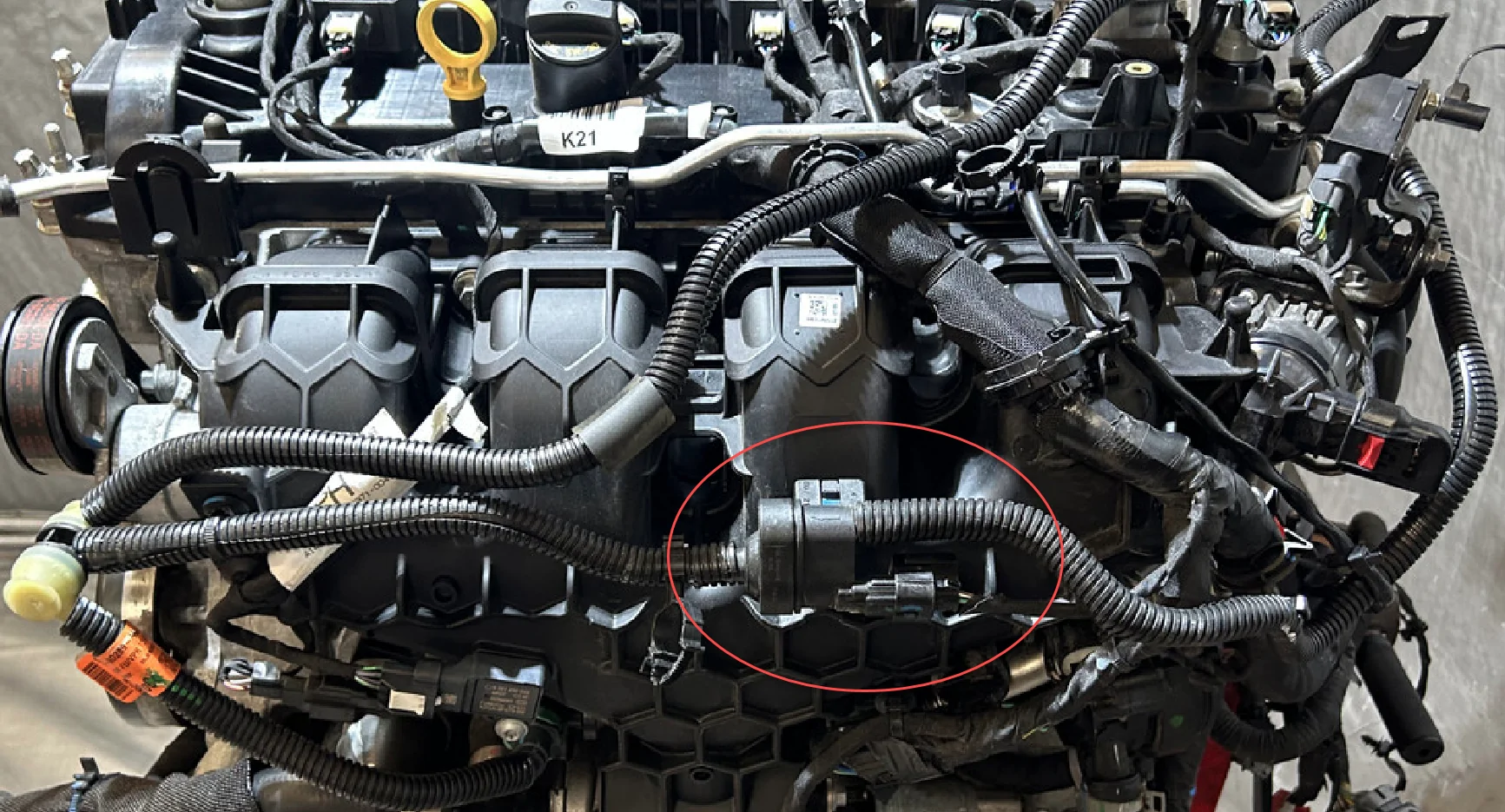
When the Check Engine light illuminates on the dashboard, most car owners feel concerned. Has something broken? Is it safe to keep driving? The P0446 code can be particularly confusing, as it seemingly does not affect engine performance but stubbornly stays on the dashboard and can prevent the vehicle from passing inspection.
Let’s analyze what exactly the PCM monitors, why this code appears, and what to do about it—from a quick check of the fuel cap to a full diagnosis of the vent valve.
“P0446 is one of those codes that car owners often ignore until they encounter refueling issues or fail an emissions test. Understanding how the PCM decides to register this code helps avoid unnecessary part replacements and focus on the real cause. In many cases, the problem is localized to a single component—the vent valve or its wiring—and can be resolved without costly repairs.”
– Daniel Brooks, automotive diagnostics engineer
Page contents
Brief answer and immediate actions
What it is: P0446 is a diagnostic trouble code (DTC) indicating a malfunction in the EVAP system vent control circuit. This system captures fuel vapors from the tank and routes them to the engine for combustion instead of releasing them into the atmosphere.
Important note about the fuel cap: Although a loose or faulty fuel cap is one of the most common causes of EVAP codes in general, it is rarely the primary cause of P0446. This code is set when the PCM cannot control the vent valve—an electromechanical issue rather than a seal leak. The fuel cap more often triggers codes P0455 (large leak) or P0456 (small leak).
Nevertheless, checking the fuel cap is a quick exclusion step that takes 30 seconds and can prevent unnecessary diagnostics.
What to check first:
- Fuel cap—ensure it is tightened until it clicks and the sealing ring is undamaged (quick exclusion step)
- Vent valve connector—inspect for corrosion on the terminals
- Hoses and fittings near the charcoal canister—check for cracks, leaks, or loose clamps
- Read OBD-II codes with a scanner—record freeze frame data (conditions when the fault occurred)
Potential consequences:
This information is general and does not replace professional consultation.
The code itself does not affect power, drivability, or safety in the short term. However:
- Emissions of volatile organic compounds (VOCs) increase, harming the environment and health
- Fuel odor may be noticeable near the rear of the vehicle due to vapor leaks
- The fuel nozzle may shut off prematurely during refueling because of disrupted tank ventilation
- The vehicle will fail emissions testing during inspection
Quick actions:
- Tighten or check the fuel cap (quick exclusion step, though rarely the root cause for P0446)
- Visually inspect hoses and wiring under the vehicle or near the fuel tank
- Read codes with a scanner and review freeze frame data to understand the conditions when the PCM detected the fault
- If there is a strong fuel smell or visible leak—stop driving until repaired
What does code P0446 mean (DTC P0446)?
P0446 is a diagnostic trouble code (DTC) set by the PCM when it detects a malfunction in the vent control circuit of the EVAP system’s charcoal canister vent valve. This valve (vent valve / vent solenoid) is a key component responsible for venting the canister during leak tests and fuel vapor purging.
When the PCM runs EVAP self-diagnostics (usually under certain conditions—stable engine temperature, partial load driving), it commands the vent valve to close. The system pressure sensor should detect a change in pressure or vacuum.
If the valve does not respond—fails to close or open on command—the PCM registers P0446 and turns on the Check Engine light.
What the PCM specifically monitors:
- The control circuit of the valve and feedback from the system
- The valve’s ability to create a sealed closure on command
- Pressure sensor feedback—whether system pressure changes when the valve opens/closes
- System response to control commands within specified timeframes
The PCM stores freeze frame data about the cycle when the fault occurred: speed, engine temperature, load, fuel level. This data helps identify the conditions under which the system failed the test and localize the problem.
| Code | Description | System | Fault type | Common accompanying codes |
|---|---|---|---|---|
| P0446 | EVAP system vent control circuit malfunction | EVAP | Vent control circuit failure | P0440, P0441, P0455 |
| P0440 | EVAP system malfunction (general) | EVAP | General system failure | P0446, P0456 |
| P0441 | EVAP system incorrect purge flow | EVAP | Incorrect purge flow | P0446, P0455 |
| P0455 | EVAP system leak detected (gross/large leak) | EVAP | Large leak | P0446, P0456 |
| P0456 | EVAP system leak detected (small leak) | EVAP | Small leak | P0440, P0455 |
How the fuel vapor capture system (EVAP) works
The EVAP system is an emissions-control system designed to prevent fuel vapor emissions into the atmosphere. Its operation is based on capturing vapors with activated charcoal in the canister and subsequently burning them in the engine.
Main components and their roles:
- Charcoal canister—container filled with activated charcoal that captures and holds fuel vapors from the tank. The charcoal adsorbs hydrocarbon molecules, temporarily storing them.
- Vent valve (vent valve / vent solenoid)—an electromagnetic valve controlled by the PCM. When open, the system vents to the atmosphere, allowing air to flow in and out through the canister. When closed, the system is sealed for leak testing.
- Purge valve (purge valve / purge solenoid)—valve between the canister and intake manifold. The PCM opens it during engine operation (under certain RPM, load, temperature conditions), allowing vapors from the canister to enter the intake and burn with the air-fuel mixture.
- Fuel tank pressure sensor (FTP)—measures pressure or vacuum in the EVAP system. The PCM uses its readings to assess system integrity: if pressure does not change during leak tests, a leak may be present.
- Fuel cap—seals the fuel tank. A faulty or loose cap (worn sealing ring, crack) breaks system integrity and triggers leak codes.
- Hoses and fittings—connect components. Cracks, loose clamps, or rubber degradation cause vapor and air leaks.
Three stages of EVAP operation:
1. Vapor accumulation (vehicle parked, engine off):
Fuel vapors from the tank flow through a hose into the canister, where they are adsorbed by activated charcoal. The vent valve is open—air exits the canister to the atmosphere, while vapors remain inside. – Honda Service Manual, EVAP System Operation, 2024.
2. Canister purge (engine running):
The PCM opens the purge valve. Intake manifold vacuum draws air through the canister, purging stored vapors and pulling them into the engine for combustion. The vent valve remains open, allowing fresh air to enter from below, ensuring flow through the canister.
3. Leak test (EVAP leak test):
The PCM closes the vent valve and briefly opens the purge valve to create a vacuum in the system. Then both valves close. The pressure sensor monitors how quickly pressure or vacuum returns to atmospheric levels. If no leak exists, pressure holds steady. If a leak is present, pressure equalizes quickly, and the PCM sets a fault code. – Mazda Technical Service Bulletin, EVAP Leak Detection, 2023.
A properly functioning EVAP system reduces volatile organic compound (VOC) emissions. The system does not affect engine power or fuel consumption under normal operation.
Symptoms and impact on operation
Symptoms associated with code P0446
P0446 rarely manifests dramatically—the engine continues to run normally, but there are characteristic signs that help point to the issue.
Typical symptoms:
- Check Engine light illuminated—usually the first and only universal sign noticed by the driver when the PCM detects a vent valve circuit fault.
- Fuel or vapor odor—noticeable near the rear of the vehicle, under the chassis, or even inside the cabin while driving. Occurs when the vent valve sticks open, allowing vapors to escape instead of being captured by the canister.
- Fuel nozzle shuts off prematurely during refueling—the nozzle clicks off as if the tank is full despite a low fuel level. Refueling is slow with frequent stops. This happens when the vent valve sticks closed, preventing tank ventilation and causing pressure buildup that triggers the nozzle’s automatic shutoff.
- Increased fuel consumption—less common, usually with accompanying faults (e.g., vapor leak plus incorrect purge flow P0441). Vapor leaks mean loss of fuel that otherwise would have been burned in the engine.
- Fluctuating idle speed—rare, occurs with severe leaks or a malfunctioning purge valve. Excess air or uncontrolled fuel vapors can cause an unstable mixture.
- Failed emissions test—during inspection or emissions testing. The EVAP system is tested separately, and an active P0446 code results in automatic failure in many areas.
- Intermittent Check Engine light—code may appear and disappear depending on conditions (temperature, humidity, fuel level). Typical for early valve failure or wiring issues (corroded contacts).
Frequency of symptom occurrence:
- Check Engine light—most common
- Refueling problems—frequent (with stuck closed valve)
- Fuel odor—frequent (with stuck open valve or hose leaks)
- Increased fuel consumption—rare (with other EVAP codes)
- Fluctuating idle—very rare (only with severe leaks)
Important: symptoms may be mild or absent except for the Check Engine light. Many owners drive for months unaware of the issue until inspection or a fuel odor appears.
Main causes of code P0446
P0446 is set when the PCM loses control of the vent valve or does not receive expected feedback from the system. Here are the seven most common causes, ranked by likelihood.
1. Faulty vent valve (vent valve / vent solenoid)
The most common cause is mechanical sticking or coil failure of the valve. The valve is usually located under the vehicle near the canister or fuel tank, exposed to dirt, moisture, and road chemicals.
“Vent valve sticking is classic in vehicles operated in regions with heavy use of road salts. The valve connector is vulnerable, and contact corrosion can develop within a single winter season. Cleaning and applying dielectric grease often extend valve life by years, but many owners are unaware and replace the part immediately.” – EVAP diagnostics experience, automotive forums, 2024–2026.
Mechanism: The PCM supplies power to the valve coil, but no magnetic field forms (open coil) or the valve physically cannot open/close (dirt, rust, blockage). The pressure sensor detects no change, and the PCM registers a fault.
Manifestation: valve does not respond to commands, no characteristic click during testing, or valve remains permanently open/closed regardless of command.
Typical for: Toyota/Lexus (valve near wheel arch), GM (valve under chassis, vulnerable to dirt), Nissan (connector corrosion).
2. Wiring and connector damage
Wiring to the vent valve often runs through vulnerable areas—under the chassis, wheel arches—subject to vibration, abrasion against suspension parts, water, dirt, and road chemicals. This leads to insulation wear, wire breaks, connector terminal corrosion, or a short to ground.
Mechanism: an open circuit means the PCM cannot supply power to the valve. A short to ground causes constant current flow, making the valve always active or burning it out. Terminal corrosion increases circuit resistance—voltage drops, and the coil fails to actuate.
Manifestation: P0446 appears after driving on wet roads or in winter (when connectors are exposed to moisture and salt). Multimeter checks show no voltage at the connector or infinite resistance.
3. Faulty or clogged charcoal canister
The canister contains activated charcoal that degrades over time—granules turn to dust, especially if liquid fuel enters (tank overfill, faulty check valve). Dirt, moisture, or oil may also contaminate the canister.
Mechanism: degraded charcoal or clogging disrupts airflow through the canister. When the PCM performs a leak test (closes vent valve, creates vacuum), the pressure sensor does not detect expected pressure changes. The PCM may interpret this as a vent valve fault.
Manifestation: P0446 appears with other EVAP codes (P0440, P0441). Visual inspection may reveal charcoal dust at the bottom, moisture, or black residue at the outlet.
4. Cracks and damage in hoses/fittings
EVAP hoses—rubber or plastic tubes connecting the canister, valves, tank, and intake manifold—age over time, cracking due to temperature, ozone, and vibration. Fittings (plastic connectors, tees) may break or clamps loosen.
Mechanism: air leaks through cracks prevent the system from holding vacuum during tests. The PCM closes the vent valve, but pressure equalizes quickly due to air ingress. The pressure sensor detects this, and the PCM may set P0446 (if interpreted as a valve fault) or P0455/P0456 (if recognized as a leak).
Manifestation: fuel odor near connections, visible hose cracks, hissing when opening the fuel cap.
5. Faulty fuel tank pressure sensor (FTP sensor)
The pressure sensor measures vacuum/pressure in the EVAP system. If it provides incorrect readings (stuck, clogged membrane, failed electronics), the PCM receives false system status.
Mechanism: the sensor shows no pressure change despite the vent valve closing and vacuum creation. The PCM interprets this as a valve fault (P0446), though the valve may be functional and the sensor faulty.
Manifestation: P0446 appears with a functional valve (confirmed by multimeter and actuation test). Replacing the sensor clears the code.
6. Faulty or incompatible fuel cap
The fuel cap is part of the EVAP system. Its sealing ring wears out, cracks, or loses elasticity over time. If the cap is not tightened properly (not until it clicks) or is the wrong type (e.g., without a pressure valve), system integrity is compromised.
Mechanism: vapor leaks through the cap disrupt pressure balance. During leak tests, pressure drops quickly, and the PCM may set P0446 (if it interprets the result as the vent valve not closing) or P0455 (large leak).
Manifestation: fuel odor near the filler neck, hissing when opening the cap, visible seal damage.
7. Rarely—PCM malfunction or incorrect calibration
In rare cases, the issue is software-related—after firmware updates, parameter changes, or memory faults.
Mechanism: the PCM misinterprets sensor or valve signals, setting codes despite functional components. “Phantom” codes may appear after adaptation resets or PCM replacement without proper programming.
Manifestation: all EVAP components check out fine, but the code returns immediately after clearing. Reprogramming may be required.
| Cause | Manifestation | How to confirm | Quick fix |
|---|---|---|---|
| Faulty vent valve | No click, valve unresponsive to commands | Multimeter test (see manual), apply 12 V | Replace valve |
| Wiring/connector damage | Code after wet road driving, terminal corrosion | Check voltage and resistance in circuit | Clean contacts, repair wiring |
| Faulty canister | Charcoal dust, moisture, other EVAP codes (P0440/P0441) | Visual inspection, smoke test | Replace canister |
| Cracked hoses/fittings | Fuel odor, hissing, visible cracks | Visual inspection, smoke test | Replace hose/clamp |
| Faulty FTP sensor | P0446 with functional valve | Compare sensor readings via live data | Replace pressure sensor |
| Faulty fuel cap | Fuel odor at filler neck, visible seal damage | Visual seal inspection, pressure test | Replace cap |
Step-by-step diagnosis of code P0446
Diagnosing P0446 involves sequentially ruling out causes from simple to complex. The goal is to pinpoint the exact fault location: valve, wiring, hoses, or sensor.
Step 1. Read codes and freeze frame data
Connect an OBD-II scanner and read all active and stored codes. Check freeze frame data—a snapshot of conditions when the PCM detected the fault: speed, engine temperature, load, fuel level, engine run time.
What to look for:
- Presence of accompanying codes (P0440, P0441, P0455, P0456) indicating the problem area
- If freeze frame shows specific speed/load—these are EVAP test conditions
Tool: OBD-II scanner with live data (bidirectional scanner recommended for valve activation).
Step 2. Visual inspection
Start with the simplest and most common—fuel cap and external components.
Check:
- Fuel cap: tightened until it clicks (usually 2–3 clicks), sealing ring intact, elastic, crack-free. Replace if worn.
- Hoses and fittings: inspect all accessible sections for cracks, leaks, loose clamps. Pay special attention to connections near the canister and vent valve.
- Vent valve connector: check for corrosion, moisture. Usually located under the chassis or wheel arch—disconnect, inspect terminals, clean with electrical contact cleaner if needed, and apply dielectric grease.
Step 3. Electrical circuit check of the vent valve
Important note on valve control:
Most modern vehicles use low-side control of the vent solenoid—the PCM switches ground to the valve coil, while +12 V power is supplied directly from the battery or relay. This means:
- With ignition off, one valve terminal has +12 V (from battery), the other is floating.
- When ignition is on and the PCM commands valve closure, it grounds the second terminal—completing the circuit and actuating the valve.
Some manufacturers (e.g., certain Ford, Honda models) use high-side control—the PCM switches +12 V, and ground is constant. Check your vehicle’s wiring diagram before testing to avoid misinterpretation.
Procedure:
- Disconnect the valve connector.
- Turn ignition on (do not start engine).
- Measure voltage at the harness side of the connector with a multimeter:
- For low-side control: one terminal should show ~12 V (constant power), the other may show 0 V only when ground is applied by the PCM on command.
- For high-side control: one terminal is constant ground (0 V), the other may show battery voltage only when power is applied by the PCM on command.
- If no voltage on the power terminal—check wiring to battery/relay and fuses.
- Turn off ignition and measure coil resistance between valve terminals: compare with service manual specs (exact values vary by vehicle). Infinite resistance means an open coil—replace valve. Near zero means a shorted coil.
Tool: multimeter.
Step 4. Valve actuation test
Check if the valve responds to power supply.
Procedure:
- Connect jumper wires from a 12 V battery directly to the valve terminals (positive and negative).
- When 12 V is applied, the valve should click and close (airflow through the valve stops).
- Try blowing through the valve with your mouth or with compressed air at low pressure, max 7 psi (0.5 bar): when powered, air should not pass; when unpowered, air should flow freely.
If the valve does not click or close—it is faulty (stuck, corroded, mechanically damaged). Replace it.
Tools: 12 V battery, jumper wires.
Step 5. EVAP system leak test with smoke generator
If valve and wiring are good but the code persists—search for leaks in hoses, canister, seals.
Procedure:
- Connect a smoke machine to the EVAP service port (usually on the hose between the canister and tank) or vent hose.
- Close the fuel cap and seal all open system points.
- Introduce smoke at low pressure (follow smoke machine manufacturer’s guidelines; typical pressure 0.5–1 psi (0.03–0.07 bar)).
- Inspect all connections, hoses, canister, and valves—smoke will reveal leak locations.
Common leak points: cracks in rubber hoses, plastic fittings/tees, canister seals, fuel cap gasket.
Tool: EVAP smoke machine.
Step 6. Fuel tank pressure sensor (FTP) check
Important note on pressure sensor types:
FTP sensors can be:
- Absolute—measure pressure relative to vacuum. Readings in kPa or inHg; at atmospheric pressure, the sensor typically shows about 101 kPa (or about 0 inHg vacuum).
- Gauge—measure pressure relative to atmospheric. With the fuel cap open, readings are near 0 kPa (no excess pressure or vacuum).
Sensor type and range depend on manufacturer. Check your vehicle’s service manual to interpret live data correctly.
If all components check out but P0446 returns—test the pressure sensor.
Procedure:
- Connect scanner and open live data.
- Locate “Fuel Tank Pressure” or “EVAP Pressure” parameter.
- With the engine off and fuel cap open, readings should be near atmospheric pressure (depending on sensor type).
- Start the engine and command vent valve closure via scanner (“Close Vent Valve”). The sensor should show a pressure change.
- Command purge valve opening (“Open Purge Valve”)—vacuum (negative pressure) should appear.
- If sensor readings do not change or are out of range—the sensor is faulty.
Tool: bidirectional OBD-II scanner with component activation.
Step 7. Clear codes and verify results
After fixing the cause:
- Clear codes using the scanner.
- Perform an EVAP drive cycle (see “After repair” section).
- Check the EVAP readiness monitor—it should switch to “Ready” after a successful test.
- If the code does not return after several cycles—the issue is resolved.
Tools and consumables
| Tool | Purpose | Skill level |
|---|---|---|
| OBD-II scanner with live data | Read codes, freeze frame, activate valves | Basic |
| Multimeter | Measure voltage, resistance, check circuits | Basic |
| EVAP smoke machine | Locate leaks in EVAP system | Intermediate |
| Jumper wires / 12 V battery | Valve actuation test | Basic |
| Electrical contact cleaner | Clean connector corrosion | Basic |
| Hose and clamp kit | Replace damaged sections | Basic |
Methods to fix P0446 fault
Repair method depends on the cause identified during diagnosis. Below are specific actions for each scenario.
1. Replace vent valve
If the valve does not actuate (no click, open coil, stuck)—replacement is required.
Procedure:
- Locate the valve (usually under the vehicle near the canister or wheel arch—see service manual for your model).
- Disconnect the electrical connector.
- Disconnect hoses on both sides of the valve (may have clips or clamps).
- Install the new valve, reconnect hoses and connector.
- Check connection tightness (hoses should fit snugly, clamps tightened).
- Clean connector terminals and apply dielectric grease to help prevent corrosion.
Important: when purchasing a new valve, ensure it matches vehicle specifications. Aftermarket valves are acceptable if verified for compatibility and quality.
2. Repair or replace wiring
If breaks, shorts, or connector corrosion are found—restore the circuit.
Procedure:
- Clean corroded connector terminals with a suitable terminal brush or cleaner.
- Apply electrical contact cleaner and dry.
- Apply dielectric grease to protect contacts from moisture.
- For wire breaks—strip ends, solder if appropriate, and insulate with heat-shrink tubing.
- Check valve ground—ensure reliable chassis contact (no rust, tight bolt).
Important: do not use regular electrical tape for insulation—it does not hold up well to vibration and temperature cycles under the vehicle. Use heat-shrink or automotive-grade harness tape.
3. Replace or service charcoal canister
If the canister is degraded (charcoal dust), clogged, or damaged—replacement is necessary. Cleaning is possible only for minor contamination.
Replacement procedure:
- Locate the canister (usually under the rear of the vehicle near the tank or in the wheel arch).
- Disconnect all hoses (mark or photograph connections).
- Remove mounting bolts and take out the canister.
- Install the new canister, reconnect hoses correctly.
- Check for leaks at connections.
Important: do not blow compressed air through the canister at high pressure—it destroys charcoal granules and renders the canister useless. Also, do not reuse a canister contaminated with liquid fuel or water—it must be replaced.
4. Replace or repair hoses and fittings
If cracks, leaks, or loose clamps are found—replace damaged sections.
Procedure:
- Cut out the damaged hose section.
- Install a new hose of the same diameter and type (commonly about 0.20–0.31 in. (5–8 mm) EVAP/vacuum hose).
- Secure with clamps on both ends (tighten firmly but avoid over-tightening to prevent rubber deformation).
- Check for leaks using a smoke test or soapy water (with the engine running, where applicable).
Important: use only hoses designed for fuel vapor or EVAP systems—regular vacuum hoses may degrade from fuel vapors.
5. Replace fuel cap
If the sealing ring is damaged or the cap is incompatible—replace it.
Procedure:
- Purchase a cap matching the vehicle model (with pressure valve if required).
- Install the new cap, tightening until it clicks (usually 2–3 clicks).
- Check seal integrity: after refueling, no major hissing should occur when opening the cap (minor hissing can be normal).
Important: do not use universal caps without valves—they can disrupt EVAP system operation.
6. Replace fuel tank pressure sensor (FTP sensor)
If the sensor provides incorrect readings—replace it.
Procedure:
- Locate the sensor (usually on the fuel tank or canister).
- Disconnect the electrical connector.
- Remove the sensor (threaded or clip-in).
- Install the new sensor and check the sealing ring.
- Reconnect connector, clear codes, and perform a drive cycle.
How serious is the fault and can you keep driving?
P0446 is a moderate/low severity code. It does not directly affect engine operation, drivability, or safety, but it does have environmental and operational consequences.
Can you keep driving:
Yes, in most cases the vehicle can be driven short-term without engine risk. P0446 does not affect ignition, fuel delivery, or cooling systems—the engine runs normally, and power is unaffected.
Risks of continued driving:
- Environmental risks: a faulty EVAP system releases fuel vapors into the atmosphere. Gasoline vapors (volatile organic compounds, VOCs) can harm health—causing headaches and respiratory irritation with prolonged exposure.
- Failed inspection: in many areas, a vehicle with an active P0446 code will fail emissions testing. The EVAP system is tested separately, and this code causes automatic failure.
- Fuel odor: if the vent valve sticks open or hoses leak, fuel smell may enter the cabin or surround the vehicle. This is unpleasant and can be dangerous—high vapor concentration in an enclosed space (garage) poses a fire risk.
- Refueling issues: if the valve sticks closed, the tank cannot vent—the fuel nozzle shuts off prematurely, prolonging refueling.
- Masking other faults: an active P0446 code may accompany other EVAP codes or make diagnosis of the root cause more difficult.
Conditions requiring immediate cessation of driving:
- Strong fuel odor near or inside the vehicle—indicates significant vapor or liquid fuel leak. Fire hazard.
- Visible fuel leak under the vehicle—requires an immediate stop and towing to a repair shop.
- Additional symptoms (fluctuating idle, power loss, other codes)—possible complex fuel system fault.
Recommendations:
- Short-term (1–2 weeks): driving is acceptable if there is no fuel odor or refueling issues. Schedule diagnostics.
- Medium-term (up to a month): fix the issue before inspection or scheduled maintenance.
- Immediately: stop driving if fuel odor or a leak is present.
Vehicles commonly affected by P0446
P0446 is a generic OBD-II code found on all makes with EVAP systems. However, some models and platforms experience this fault more frequently due to design features or component locations.
| Make/Platform | Typical vent valve location | Common weak point | Notes |
|---|---|---|---|
| Toyota/Lexus | Near canister, under rear, in wheel arch | Vent valve (VSV), hoses, canister | Often P0446 + P0441; may require VSV and canister replacement |
| GM (Chevrolet, GMC) | Under chassis, near fuel tank | Fuel tank pressure sensor (FTP) | Valve vulnerable to dirt and road chemicals |
| Ford (older models) | Wheel arch, near canister | Mechanical clogging of canister or vent valve | Common on some models before 2010 |
| Nissan | Under chassis, near tank | Vent valve connector corrosion | Typical in regions with heavy road salt use |
| Peugeot/Citroën | Under chassis, rear section | Cracked rubber hoses | Rubber aging, especially in climates with sharp temperature changes |
Make-specific notes:
- Toyota/Lexus (Camry, Corolla, Avalon, RAV4, Tacoma): frequent vent valve (VSV), canister, and vacuum hose replacements. Valve located near fuel tank, often requiring a vehicle lift for access.
- GM (Chevrolet, GMC, Buick, Cadillac): a common cause is a faulty fuel tank pressure sensor on the tank. Also dirt clogging or valve sticking due to grime. Valve under chassis exposed to road dirt.
- Ford (Focus, Escape, F-150 older generations): mechanical clogging of canister or vent valve—typical on some pre-2010 models. Canister located in wheel arch exposed to dirt and water.
- Nissan (Altima, Sentra, Rogue): vent valve connector corrosion is a weak point. Connector located low, exposed to moisture and salt. Cleaning contacts and applying dielectric grease often resolves the issue without valve replacement.
- Peugeot/Citroën: aging EVAP rubber hoses—cracks at bends or under clamps. Requires hose section replacement.
How to locate components on a specific vehicle:
Vent valve, canister, and hose locations vary by model and year. To identify precisely:
- Use the service manual for the specific model (available in Mitchell, ALLDATA, Haynes).
- Check VIN-based online parts catalogs (RockAuto, PartsGeek) showing EVAP component diagrams.
- Watch model-specific video guides on YouTube—often show valve and canister access.
Codes commonly found with P0446
P0446 rarely appears alone—the PCM often records multiple EVAP codes, helping narrow down the fault area.
P0440—EVAP system malfunction (general system failure)
Indicates the EVAP system failed to achieve the required vacuum or pressure during testing. Could be a leak, faulty valve, or sensor. When P0440 appears with P0446, it points to a complex issue—not only the vent valve but overall system integrity may be in question.
Where to check: all hoses, fittings, fuel cap, canister. Perform a smoke test to find leaks.
P0441—EVAP system incorrect purge flow
Means the purge flow from the canister does not match expected values—either too little or too much vapor. Causes include a clogged canister, faulty purge valve, or PCM control issues.
Combination P0446 + P0441:
Indicates malfunction of the purge flow switching valve (VSV for Purge Flow Switching) or canister close valve (CCV). P0441 signals incorrect purge flow, while P0446 indicates a vent control circuit fault. – Toyota EVAP Diagnostics, 2024.
Check:
- Power and control of both valves (wiring, connectors)
- Coil resistance with multimeter
- Mechanical actuation (click when 12 V is applied)
Where to check: vent valve + purge valve + hose between canister and intake manifold.
P0455—EVAP system leak detected (gross/large leak)
Indicates a large leak in the EVAP system—hole larger than 0.040 in. (~1 mm). Could be a loose fuel cap, disconnected hose, or canister crack.
Combination P0446 + P0455:
Indicates a vent valve fault combined with a large system leak. Check:
- Fuel cap (tightness and seal condition)
- Hoses for breaks, cracks, disconnected fittings
- Canister for housing damage
Where to check: fuel cap → hoses → canister → vent valve.
P0456—EVAP system leak detected (small leak)
Indicates a small leak—hole smaller than 0.020 in. (~0.5 mm). Could be microcracks in hoses, loose fittings, or worn seals.
Combination P0446 + P0456:
The vent valve may be faulty, and a small leak exists somewhere in the system. The leak may be secondary (due to valve malfunction) or independent.
Where to check: microcracks in hoses (especially at bends), fitting seals, canister gasket.
Logic of combined code analysis:
| Code combination | Likely inspection area |
|---|---|
| P0446 + P0441 | Vent and purge valves, wiring |
| P0446 + P0455 | Fuel cap, large hose tear, canister |
| P0446 + P0456 | Microcracks in hoses, fittings, seals |
| P0446 + P0440 | General leak check (smoke test), all valves |
| P0446 + P0441 + P0455 | Multiple faults: VSV, purge valve, leak |
Practical approach:
When multiple EVAP codes appear simultaneously, start diagnostics with the simplest items—the fuel cap and a visual hose inspection. Then check the vent valve (since P0446 is the base code). If the valve is good, proceed to smoke testing for leaks.
After repair: how to clear codes and confirm the fix
After resolving the cause of P0446, codes must be cleared and a drive cycle performed so the PCM retests the EVAP system and confirms the fault is fixed.
Step 1. Clear codes
Use an OBD-II scanner:
- Connect the scanner to the diagnostic port.
- Select the “Clear Codes” or “Erase DTCs” function.
- Confirm clearing.
Alternative (not recommended): disconnect the battery negative terminal for 10–15 minutes. This clears codes but also resets all PCM adaptations (fuel trims, transmission adaptations, climate control settings, etc.). Systems will require relearning after reconnecting.
Step 2. Perform EVAP drive cycle
A drive cycle is a specific sequence of driving conditions under which the PCM runs EVAP self-diagnostics. After an 8-hour soak, start the engine without turning off the ignition; cruise at 48–65 mph (77–105 km/h) for 10 minutes with intake air temperature 40–100°F (4–38°C), avoiding sharp turns or hills during the first 30 minutes of engine operation. – MOTOR Information Systems, “Completing a Drive Cycle,” 2022.
Conditions vary by make, but general requirements are:
Preparation:
- Fuel level between 15–85% (optimal 30–70%)
- Vehicle parked with engine off for at least 8 hours (cold soak) to allow system cooling and pressure equalization
Sequence:
- Cold start after 8-hour rest. Do not turn off ignition until cycle completes.
- Warm up engine to operating temperature (usually 176–194°F (80–90°C)).
- Cruise at a steady speed of 48–65 mph (77–105 km/h) for 10–15 minutes at partial throttle, avoiding rapid acceleration, braking, or turns. Avoid hills.
- Ambient temperature (IAT) between 40–100°F (4–38°C). Altitude below 8,000 feet (2,400 m).
- First 30 minutes of engine operation: EVAP test usually runs during this period—do not shut off engine.
Test verification:
After the drive cycle, connect the scanner and check readiness monitors. The “EVAP” monitor should change from “Not Ready” to “Ready.” If not passed, repeat the drive cycle or verify conditions (fuel level, temperature, speed).
Step 3. Verify code absence
After 1–2 days of driving (or several trips), check with a scanner:
- No active codes (Current/Active DTCs)
- No stored codes (Pending/History DTCs)
- All readiness monitors show “Ready” status
If P0446 does not return and the EVAP monitor has passed—the issue is resolved.
If the code returns:
- Return to diagnostics.
- Check for missed secondary causes (e.g., valve replaced but hose leak remains).
- Ensure new parts are functional and installed correctly.
How to clear P0446 code yourself?
Two methods:
- Using an OBD-II scanner (recommended):
- Connect scanner to diagnostic port.
- Select “Clear Codes” or “Erase DTCs.”
- Confirm clearing.
- Codes will erase, and the Check Engine light will turn off.
- Disconnecting battery terminal (not recommended):
- Disconnect the negative battery terminal for 10–15 minutes.
- Reconnect terminal.
- Codes will erase, but PCM adaptations will reset.
Important: simply clearing the code does not fix the problem. If the cause is not addressed, the code will return within 1–3 drive cycles when the PCM reruns the EVAP test and detects the fault again.
After clearing, you must:
- Perform the EVAP drive cycle (see “After repair” section).
- Check the EVAP readiness monitor—it should show “Ready.”
- Ensure the code does not return over several days.
Will replacing the fuel cap help?
Yes, if the cause of P0446 is a faulty fuel cap. However, for P0446 specifically, the cap is rarely the root cause. P0446 is set due to a vent valve control failure—an electromechanical issue. The cap more often causes P0455 (large leak) or P0456 (small leak).
How to check:
- Inspect the cap’s sealing ring—it should be elastic, crack-free, and undamaged.
- Ensure the cap is tightened until it clicks (usually 2–3 clicks).
- Verify the cap matches the vehicle model (some caps have built-in pressure valves—using a universal cap without a valve can disrupt EVAP operation).
However:
If the cause is not the cap (e.g., faulty vent valve or hose crack), replacing the cap will not help. The code will return.
Recommendation:
Replacing the cap is a quick check. If after replacement and a drive cycle the code does not return—the cap was the cause. If the code returns—full EVAP system diagnostics are required (vent valve, hoses, canister, pressure sensor).
Safety and environmental considerations
This information is general and does not replace professional consultation.
Working with the EVAP system requires safety precautions—the system handles gasoline vapors, which are flammable and harmful to health.
Safety measures:
- Work in a well-ventilated area. Gasoline vapors are heavier than air and accumulate low. Ensure ventilation or work outdoors.
- Avoid sparks and open flames. No smoking, open flames, welding equipment, or tools that may spark.
- Do not blow compressed air through the canister at high pressure—it destroys charcoal granules and ruins the canister. Use manufacturer-recommended methods if cleaning is necessary.
- Wear safety glasses and gloves. Contact with gasoline irritates skin; eye contact can cause serious injury.
- Do not spill gasoline on the ground. Collect it in sealed containers and dispose of it according to local regulations.
Disposal of contaminated materials:
- Old canisters soaked with gasoline: deliver to hazardous waste disposal or a licensed repair facility.
- Gasoline-soaked rags: store in sealed metal containers and dispose of properly (do not throw in regular trash—risk of spontaneous combustion).
- Damaged hoses and fittings: dispose of as regular plastic/rubber waste.
Environmental significance of the EVAP system:
The EVAP system is not just an “additional part” but a crucial emissions-control component. These emissions:
- Contribute to smog formation.
- Can harm health (headaches, respiratory irritation with prolonged exposure).
- Contribute to ground-level ozone formation.
Fixing P0446 is not only about restoring vehicle functionality but also reducing harmful environmental impact.
Frequently asked questions
Is it possible to drive with the P0446 code and how dangerous is it?
Yes, short-term operation is usually possible. The P0446 code relates to the evaporative emission control system (EVAP), which does not affect ignition, fuel delivery, or normal drivability. The engine usually runs normally, and power typically does not decrease. However, driving with this code has consequences: – Emissions: The EVAP system may allow fuel vapors to escape into the atmosphere, which can affect the environment and health (headaches, respiratory irritation). – Inspection: The vehicle may not pass an emissions test. – Fuel smell: A gasoline odor may be present near the vehicle or inside the cabin. – Refueling issues: The fuel pump nozzle may shut off prematurely. It is dangerous to continue driving if: – There is a strong gasoline smell (fire risk). – Visible fuel leakage is present. Recommendation: fix the problem within 1–2 weeks. If there is no smell and refueling proceeds normally, driving can continue until scheduled maintenance.