

The information is general and does not replace professional consultation.
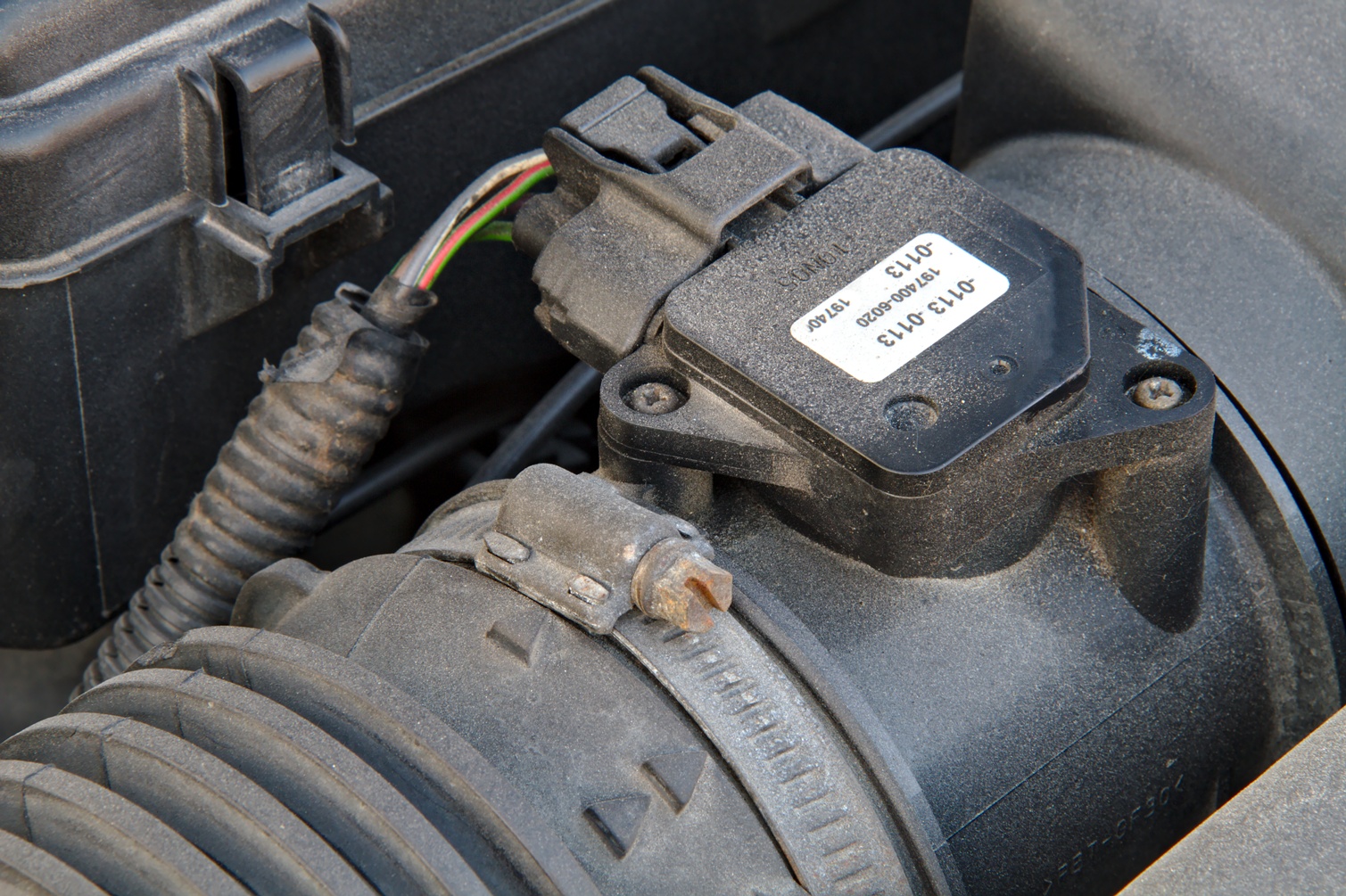
Code P0102 indicates a low signal level from the mass air flow sensor (MAF). This page provides a quick action plan, describes symptoms, probable causes, self-diagnosis methods, scanner reading standards, repair costs, and prevention tips.
“When the PCM registers P0102, it doesn’t say ‘replace the sensor’—it says ‘I see a signal below normal.’ The first step is to understand what the PCM expects to see and why it’s not happening. After 12 years of diagnostics, I’ve learned that most P0102 cases are resolved not by replacing the MAF, but by following the correct sequence of checks—from the filter to the wiring.” – Daniel Brooks, DecodeAuto
Page contents
What does code P0102 (DTC P0102) mean?
P0102 is a diagnostic trouble code (DTC) that stands for low input signal in the mass air flow (MAF) sensor circuit.
The MAF sensor measures the mass of air entering the engine and sends this signal to the powertrain control module (PCM). The PCM uses MAF readings as a key parameter to calculate fuel delivery: more air requires more fuel. When the sensor signal drops below a threshold considered acceptable by the PCM for the current engine operating mode, the control module logs code P0102.
How the PCM determines P0102:
The PCM continuously compares the actual MAF signal with a calculated expected value, which is based on:
- Throttle position sensor (TPS)
- Engine speed (RPM)
- Manifold absolute pressure (MAP)
- Intake air temperature (IAT)
- Barometric pressure (BARO), initially derived from MAP readings at startup
If the actual MAF signal is significantly lower than the calculated value for a certain period, the PCM records P0102. It is important to understand that this does not always mean the sensor itself is faulty—the code indicates a symptom (low signal), not a diagnosis.
Typical scenarios triggering P0102:
- MAF sensor is dirty or damaged, causing the sensing element to respond incorrectly to airflow.
- Open circuit or high resistance in the sensor signal wiring.
- Air leak downstream of the MAF sensor—unmetered air enters the intake, bypassing the sensor.
- Clogged air filter restricting airflow, causing the sensor to report low values.
- Blown fuse in the MAF circuit, resulting in zero or critically low signal.
Standards and references:
Definitions of DTC P0102 are regulated by the SAE J2012 standard, which describes OBD-II fault codes. Diagnostic methods under the OBD-II protocol are defined in SAE J1979.
Quick answer: what to do now if you have P0102
If your check engine light is on and the scanner shows P0102, follow this plan:
- Check intake system sealing: inspect hoses after the MAF sensor for cracks, loose clamps, or leaks. Any air leak after the sensor will cause mismatched readings.
- Assess the air filter condition: remove and inspect the filter. If it’s clogged with dirt, airflow is restricted and the sensor shows low values. Replace the filter if necessary.
- Check the MAF/PCM circuit fuse according to your vehicle’s wiring diagram. A blown fuse causes zero or critically low signal, triggering P0102.
- Inspect the MAF connector and wiring: disconnect the sensor, check contacts for oxidation, moisture, or deformation. Clean contacts with electrical contact cleaner and tighten connector pins if needed.
- Clean the MAF sensing element: use a specialized MAF cleaner. Do not use carburetor or brake cleaner as they can damage the element. Spray from 4–6 in. (10–15 cm) away and let it dry for 10–15 minutes.
- Clear the code and perform a test drive: after all procedures, reset the DTC with a scanner, warm up the engine to operating temperature, and drive for 10–15 minutes with smooth and sharp accelerations. Check live MAF data at idle and at 2500 rpm.
- If the code returns: use a multimeter to check power supply voltage (usually 5 V or 12 V), ground, and signal line. If the signal remains low and wiring is intact, the sensor is faulty and needs replacement.
Symptoms and signs of P0102 malfunction
P0102 affects fuel mixture formation, so symptoms relate to engine and fuel system performance. Here’s what you might notice:
1. Check engine light (MIL) illuminated
This is the first and most obvious sign. The PCM logs the code and turns on the malfunction indicator lamp on the dashboard.
2. Power loss and sluggish acceleration
When the MAF signal is low, the PCM cannot accurately determine the actual airflow. It may enrich or lean out the mixture while trying to compensate. As a result, the engine loses responsiveness, especially during sharp acceleration.
3. Unstable idle
At idle, airflow is minimal and MAF accuracy is critical. If the sensor shows a low signal, the PCM may not maintain stable RPM—engine may misfire, stall, or fluctuate.
4. Increased fuel consumption
Low MAF signal often causes the PCM to enrich the mixture as a protective measure. Fuel consumption rises, especially in city driving.
5. Black smoke from the exhaust
If the mixture is too rich, unburned fuel enters the exhaust. This is noticeable during sharp acceleration—thick black smoke and a gasoline smell.
6. Hesitation and jerking during acceleration
With a low MAF signal, the PCM receives incorrect airflow data. When accelerating, the engine hesitates or “bogs down,” not responding properly to the throttle.
7. Difficult starting
In some cases, especially on cold starts, the engine may struggle to start. The PCM cannot calculate the correct mixture if it does not trust the MAF signal.
8. Safety system warnings (DSC/ESP/ABS)
On some vehicles (e.g., Mazda), P0102 may trigger the stability control warning (DSC). This happens due to a mismatch in engine load data used by traction control systems.
Symptom severity depends on the degree of signal deviation: the lower the MAF signal, the more pronounced the issues. Symptoms may be mild at idle and steady driving but become obvious during sharp acceleration or under load.
| Symptom | Probable cause |
|---|---|
| Power loss | Dirty MAF / air leak after sensor |
| Black smoke from exhaust | Rich mixture due to low MAF readings |
| Unstable idle | Air leak / oxidized contacts / dirty MAF |
| Increased fuel consumption | Low MAF signal → PCM enriches mixture |
| Hesitation during acceleration | Incorrect MAF readings / clogged filter |
| Hard starting | Incorrect mixture calculation at start due to low signal |
| DSC/ESP warning | Load data mismatch (indirectly related to MAF) |
How serious is it and can you keep driving?
Short answer: with mild symptoms (check engine light on, slight power loss), you can drive to a repair shop or garage, but prolonged use is not recommended.
Here’s why. A low MAF signal causes an incorrect fuel mixture. If the mixture is too rich, unburned fuel can overheat the catalytic converter. The catalyst is not designed for continuous fuel burning, which can shorten its service life or lead to failure.
If the mixture is too lean, the engine can run hotter, increasing the risk of detonation, burned valves, and piston damage.
When driving is strongly discouraged:
- The engine stalls while driving or cannot maintain idle.
- Thick black smoke and strong gasoline smell from the exhaust.
- Noticeable power loss—the vehicle cannot accelerate even at full throttle.
In such cases, it’s better to stop, perform a basic inspection (filter, connector, visual check), or call a tow truck.
If symptoms are mild (light on but engine runs relatively stable), you can continue driving to the nearest repair facility, avoiding sharp accelerations and high RPM. This minimizes catalyst load and reduces the risk of secondary damage.
Main causes of P0102 code
Now let’s analyze what exactly causes a low MAF signal. Causes can be divided into three categories: sensor faults, intake system issues, and electrical defects.
MAF sensor malfunction or contamination
The MAF sensor operates on the hot-wire or frequency measurement principle. The sensing element is exposed to airflow and reacts to its speed and mass. When the element is coated with dust, oil, or carbon deposits, its ability to measure flow accurately decreases.
What happens inside the sensor:
Contamination alters heat transfer between the element and air. The PCM sees a reduced signal even if actual airflow is normal. The sensor effectively becomes “blind” and does not detect the full volume of air passing through.
How it manifests:
MAF signal at idle is low (e.g., 1.5 g/s instead of 3 g/s), and during acceleration the sensor does not show the expected increase. The PCM logs P0102.
What to do:
First step is cleaning. Use a specialized MAF cleaner (not carburetor cleaner). Remove the sensor, spray the cleaner on the sensing element from 4–6 in. (10–15 cm) away, and do not touch the element with your hands or brushes. Let it dry for 10–15 minutes, then reinstall it.
If the signal does not recover after cleaning, the element is damaged or worn out. In this case, the sensor must be replaced.
Intake system issues
Air leaks downstream of the MAF sensor are one of the most common causes of P0102. When unmetered air enters the intake bypassing the sensor, there is a mismatch between MAF readings and the actual air volume in the cylinders.
How the PCM perceives this:
The sensor might show, for example, 5 g/s, while 7 g/s actually enters the cylinders. The PCM detects a mismatch between the MAF and oxygen sensor (the O2 sensor indicates a lean mixture). Sometimes this triggers P0102, other times related codes like P0171/P0174 (lean mixture).
Common leak points:
- Cracks in the hose between the MAF and throttle body.
- Loose or damaged clamps.
- Leaky throttle body gasket.
- Leaks through the PCV valve (positive crankcase ventilation system).
- Protective mesh or grille in the intake tract (common on VW): if clogged with debris or insects, reduced airflow mimics a low MAF signal.
Diagnosis:
Visual inspection: look for cracks, abrasions, and oil traces at connections. Check the mesh before the MAF (if present) for contamination. For precise detection, use a smoke machine—introduce smoke into the intake and observe where it escapes.
Another frequent cause is a clogged air filter. When the filter is dirty, airflow is restricted. The MAF sensor shows low values because less air actually passes through. This is not a sensor failure but a direct consequence of limited flow.
What to do:
Replace the filter if dirty. Make sure the intake mesh (if any) is clean. Check hose and clamp sealing.
Wiring damage or poor contact
The MAF electrical circuit consists of several wires: power supply (usually 5 V or 12 V), ground, and signal line. If any of these wires are damaged, the signal will be low or absent.
Typical defects:
- Oxidation of sensor connector contacts—moisture, salt, and dirt can cause an oxide film to form, leading to unstable contact and signal interruptions.
- Signal wire breakage—the wire may chafe against the body, be damaged during repairs, or break from vibration.
- Poor ground—if the MAF ground has high resistance (corrosion, weak chassis contact), the signal will be distorted.
- Short circuit—a short of the signal line to ground or power is possible.
- Blown fuse—the MAF/PCM circuit fuse may blow, causing zero or critically low signal.
How it looks in practice:
MAF signal may be unstable—sometimes disappearing, sometimes appearing. The PCM sees a low signal and logs P0102. Sometimes accompanied by P0104 (intermittent MAF signal).
Diagnosis:
- Disconnect the MAF connector and inspect the contacts for oxidation, deformation, or moisture.
- Clean contacts with electrical contact cleaner.
- Check power supply with a multimeter: voltage at the power pin should be 5 V or 12 V (depending on sensor type) with the ignition on.
- Check ground: resistance between the MAF ground pin and chassis should typically be very low; refer to the service manual for the exact test procedure and specifications.
- Check the signal line for breaks and shorts.
- Check the MAF/PCM circuit fuse according to the vehicle wiring diagram.
If wiring is intact but the signal remains low, the sensor itself is faulty.
Cross-checking MAF with speed-density method (without removing the sensor)
One of the most effective ways to verify if the MAF sensor is reporting correctly is to compare its readings with a calculated expected value derived by the PCM using an alternative method (speed-density). This is especially useful when it’s unclear whether the sensor, an air leak, or other parameters are at fault.
Method essence:
The PCM can approximate expected airflow using:
- MAP (manifold absolute pressure)
- IAT (intake air temperature)
- RPM (engine speed)
- Engine displacement
- Volumetric efficiency (VE) – cylinder filling factor (usually 0.75–0.90 for naturally aspirated engines)
- BARO (barometric pressure) – often initially based on MAP readings at startup
Simple estimation formula:
MAF (g/s) ≈ (engine displacement, L) × (RPM / 2) × VE × air density
Air density depends on IAT and BARO. For simplicity, assume ≈ 1.2 g/L under normal conditions (68°F/20°C, 100 kPa).
Example:
1.6 L engine, idle at 750 rpm, VE ≈ 0.80, IAT 86°F (30°C), MAP ~30 kPa.
Expected MAF ≈ 1.6 × (750 / 2) × 0.80 × 1.2 ≈ 2.5–4.0 g/s.
If actual MAF is significantly lower (e.g., 1.0 g/s), check power, ground, signal, and sensor contamination. If MAP or IAT show unusual values, check those sensors first.
Important:
This is a guideline, not absolute. VE depends on intake design, camshafts, and engine wear. For precise data, consult OEM manuals or use a scanner with an expected MAF calculation function.
When this method is useful:
- Doubts about MAF accuracy (P0102 code but clean sensor).
- Suspected air leak (actual MAF lower than calculated).
- Checking MAP/IAT sensor functionality (if their readings don’t match calculations).
Diagnosis and troubleshooting of P0102: step-by-step guide
Now let’s combine everything into a single sequence of actions. This method is suitable for DIY diagnostics in a garage setting.
Step 1: Connect an OBD-II scanner and read codes
Connect the scanner to the diagnostic port (usually under the steering column), turn the ignition on. Read stored codes and check freeze-frame data—a snapshot of engine parameters at the moment the code was logged.
What to look for in freeze-frame:
- Engine speed (RPM) – did the code appear at idle or during acceleration?
- Coolant temperature (ECT) – was the engine cold or warmed up?
- MAF readings (g/s or volts) – what value was recorded?
Switch to live data mode and check current MAF readings at idle (engine warmed up) and at 2500 rpm.
Step 2: Visual inspection
Open the hood and inspect the intake system:
- Air filter: remove and check for contamination. Replace if clogged.
- Hoses after MAF: inspect for cracks, abrasions, oil traces. Check clamps for tightness.
- MAF connector: disconnect the sensor and inspect the contacts for oxidation, deformation, or moisture.
- Intake mesh (if present, common on VW): check for debris, insects, and contamination.
Step 3: Wiring check with a multimeter
Turn the ignition on (do not start the engine). Connect a multimeter:
- Power: voltage between the MAF power pin and chassis should be 5 V or 12 V (depending on sensor type). If lower, check fuses and relays.
- Ground: resistance between the MAF ground pin and chassis should typically be very low; refer to the service manual for the exact test procedure and specifications.
- Signal: with the ignition off, resistance between the signal wire and ground should be high (several megaohms). If low, there is a short.
- Fuse: check the MAF/PCM circuit fuse according to the wiring diagram.
Step 4: Clean the MAF sensor
Remove the sensor (usually 2–4 screws). Spray specialized MAF cleaner on the sensing element. Do not touch the element with your hands, a cloth, or brushes.
Let the sensor air dry for 10–15 minutes, then reinstall it.
Step 5: Clear the code and test drive
Clear the DTC with the scanner. Warm up the engine to operating temperature (176–203°F / 80–95°C). Drive for 10–15 minutes: several minutes of smooth driving at 37–50 mph (60–80 km/h), then 3–4 brisk accelerations up to 3000–4000 rpm followed by coasting.
After the test drive, reconnect the scanner and check:
- Did P0102 return?
- What are the MAF readings at idle and 2500 rpm?
Step 6: If the code returns
If P0102 reappears, check:
- Voltage drop in the power and ground circuits under load (engine running).
- Presence of air leaks using a smoke machine.
- Compare MAF readings with reference values (see table below).
- Perform cross-check with the speed-density method (MAP/IAT/RPM).
If all checks show no issues but the signal remains low, the sensor is faulty and must be replaced.
Reference data: MAF reading standards and PIDs for diagnostics
To correctly evaluate MAF readings, reference values are needed. Below are ranges for gasoline engines with 1.4–2.5 L displacement.
Note: values may vary depending on engine type, model year, and manufacturer. Use these as guidelines, not absolutes. Always consult OEM specifications for your vehicle.
MAF reading standards (mass air flow)
| Operating mode | Expected values (g/s) | Expected values (V/kHz) | Comments |
|---|---|---|---|
| Warm idle (1.4–2.5 L) | 2–7 g/s | 0.5–1.0 V (analog MAF) | Engine warmed to 176–203°F (80–95°C), stable idle |
| 2500 rpm no load | 8–18 g/s | ≈1.0–1.8 V | Smooth neutral RPM hold |
| Sharp acceleration / WOT | 80–150+ g/s | Up to 4.0–4.5 V | Full throttle, high RPM |
| Frequency MAF (idle) | – | ≈1.5–2.5 kHz | For frequency-type sensors (not analog) |
| Frequency MAF (WOT) | – | Up to 7–10 kHz | Depends on sensor model |
Related parameters (PIDs) for comprehensive diagnostics
| Parameter (PID) | Normal range | Notes |
|---|---|---|
| STFT (short-term fuel trim) | ±5–10% | Above +10% indicates a lean mixture; below -10% indicates a rich mixture |
| LTFT (long-term fuel trim) | ±5–10% | Shows how the PCM compensates for MAF deviations |
| MAP (intake pressure) | Engine-dependent | Typically 20–40 kPa at idle (atmospheric ~100 kPa) |
| RPM (engine speed) | 600–900 rpm (idle) | Stable idle without dips |
| IAT (intake air temperature) | Within about 9°F (5°C) of ambient | If significantly different, check IAT sensor |
| BARO (barometric pressure) | ~100 kPa (sea level) | Based on MAP at startup |
Note: For precise standards for your vehicle, consult OEM manuals, Bosch MAF datasheets, SAE J1979, and Autodata/AllData databases.
P0102 matrix + related codes → causes and next steps
P0102 rarely appears alone. It is often accompanied by other codes that provide clues to the root cause. This table helps quickly identify the likely source and diagnostic direction.
| Code combination | Probable cause | Next step |
|---|---|---|
| P0102 (isolated) | Dirty or faulty MAF; circuit break | Clean MAF; check wiring/fuse |
| P0102 + P0171 | Air leak after MAF; lean mixture | Smoke test intake; check PCV, hoses |
| P0102 + P0174 | Air leak (Bank 2); vacuum leak | Smoke test; inspect manifold and gaskets |
| P0102 + P0172 | Rich mixture due to incorrect MAF readings | Clean MAF; check fuel pressure regulator |
| P0102 + P0175 | Rich mixture (Bank 2); leaking injectors | Clean MAF; injector diagnostics |
| P0102 + P0104 | Intermittent MAF signal; poor connector contact | Clean contacts; check sensor ground |
| P0102 + P0100 | General MAF circuit fault; break/short | Continuity check with multimeter; check fuse |
| P0102 + P0101 | MAF sensor out of range; contamination + air leak | Clean MAF; smoke test intake |
| P0102 + P0106 (MAP) | MAP/MAF mismatch; high resistance in MAP circuit | Check MAP ground; compare MAP/BARO at startup |
| P0102 + P0113 (IAT) | Incorrect intake temperature distorts air density calculation | Check IAT sensor; compare with ambient temperature |
Common diagnostic mistakes to avoid
Even experienced technicians sometimes make errors that cause P0102 to return. The most frequent are:
1. Cleaning MAF with inappropriate products
Many use carburetor or brake cleaner to clean the MAF. These products can leave residue on the sensing element or damage it. Use only specialized MAF cleaner.
2. Skipping the air leak check
Replacing the sensor without checking intake sealing is a common mistake. If there is an air leak, the new sensor will show the same low values and the code will return.
3. Evaluating signal without checking power and ground
Low MAF signal may be caused not by a faulty sensor but by poor ground or low supply voltage. Always check the electrical circuit first.
4. Clearing the code without a test drive
Resetting the code immediately after cleaning or sensor replacement does not guarantee the problem is fixed. A test drive with various engine modes is needed to confirm the PCM no longer logs the code.
5. Replacing MAF without a wiring check
A new sensor won’t help if the signal wire is broken or the connector is oxidized. Always check wiring before replacing expensive parts.
6. Ignoring a dirty air filter
A clogged filter physically restricts airflow. The MAF shows a low signal not due to failure but because less air passes through. Replacing the filter is a simple solution often overlooked.
7. Not checking the MAF fuse
A blown fuse in the MAF/PCM circuit is a quick electrical cause that is easy to miss. Checking the fuse takes a minute but can save hours of diagnostics.
8. Skipping intake mesh inspection (VW and others)
Some vehicles (especially VW) have a protective mesh before the MAF sensor. If clogged with debris or insects, airflow decreases and the sensor shows a low signal.
How to properly clear the code and perform a drive cycle for the PCM
After fixing the cause of P0102, it is important to correctly clear the code and perform a drive cycle—a sequence of engine operating modes that allows the PCM to retest all systems and confirm the fault is resolved.
Step 1: Clear DTC
Connect an OBD-II scanner, go to the “Clear Codes” or “Erase Codes” menu, and clear all stored codes. This resets the PCM memory and fault flags.
Step 2: Warm up the engine
Start the engine and let it reach operating temperature (176–203°F / 80–95°C). This is critical—many PCM monitors do not activate on a cold engine.
Step 3: Drive cycle – standard sequence
Perform the following modes:
- Idle: 3–5 minutes stationary, engine warmed up, all accessories (A/C, lights) off.
- Steady driving: 5–10 minutes at 37–50 mph (60–80 km/h), no sharp accelerations. This allows the PCM to assess MAF stability in cruise mode.
- Accelerations: 3–4 smooth accelerations up to 3000–4000 rpm, then release the throttle and coast.
- Idle: stop and let the engine idle for 1 minute.
Step 4: Check readiness monitors
Connect the scanner and check the status of readiness monitors—indicators of PCM system readiness.
Important: The OBD-II standard does not have a separate readiness monitor specifically for the MAF sensor. The MAF participates in the Fuel System Monitor and Comprehensive Component Monitor (CCM). Check the status of these monitors after the drive cycle.
If monitors show “Ready” or “Complete,” the PCM has retested the system and found no issues.
If monitors show “Not Ready,” repeat the drive cycle.
Typical drive cycle conditions for popular OEMs (guidelines):
| OEM | Temperature | Speed | Duration | Notes |
|---|---|---|---|---|
| VAG (VW/Audi) | ECT >176°F (80°C) | 37–75 mph (60–120 km/h) | 10–15 min | Smooth driving + 2–3 accelerations |
| Toyota/Lexus | ECT >176°F (80°C) | 37–62 mph (60–100 km/h) | 10–20 min | Minimal load changes |
| Ford | ECT >167°F (75°C) | 37–56 mph (60–90 km/h) | 10–15 min | Includes idle + cruise + acceleration |
Note: Detailed OBD-II readiness procedures are described in EPA recommendations and PCM manufacturer documentation. See SAE J1979 and OEM manuals for details.
P0102 specifics on popular vehicles
Different car brands have their “weak spots” in the intake system and MAF sensor. Here’s what owners of popular brands should know.
| Brand | Vulnerable areas | Diagnostic tips |
|---|---|---|
| VAZ/Lada | Air leaks through intake bellows, weak clamps | Check bellows and clamp sealing first; monitor filter quality (cheap filters clog quickly) |
| Ford | Frequency MAF sensors; sensitive to PCV leaks | Check MAF frequency (kHz), 12 V power; inspect PCV valve and crankcase ventilation hoses |
| Kia/Hyundai | MAF contamination by oil due to PCV issues | Clean MAF regularly; check the oil separator for clogging |
| Nissan | Vulnerable connectors, contact oxidation | Use only MAF cleaner (Nissan sensors are sensitive to chemicals); check connector corrosion |
| VAG (VW/Audi/Skoda) | Intake mesh; leaks via PCV and turbo hoses | Check mesh before MAF for debris; inspect turbo hoses for cracks |
| Toyota/Lexus | Rare failures but sensitive to oil contamination | Regular filter replacement every 9,000–12,000 miles (15,000–20,000 km); avoid oil-coated “zero” filters |
| GM/Chevy/Opel | Frequency MAF; sensor ground issues | Check MAF ground at the chassis; clean the contact surface thoroughly |
| BMW/Mercedes | Precise calibration; aftermarket sensors may cause errors | Use OEM-quality sensors; some vehicles may require setup or relearn procedures with a diagnostic scanner |
Specifics for turbocharged and diesel engines
Turbo and diesel engines have their own MAF operation characteristics and P0102 behavior.
Turbocharged engines:
- MAF norms under boost: at WOT with 14.5–21.8 psi (1.0–1.5 bar) of boost, MAF readings can exceed 150–200 g/s (for 1.6–2.0 L engines), higher than naturally aspirated engines of similar size.
- Boost pressure effect: MAP shows not only vacuum but also positive pressure. When cross-checking MAF vs MAP, consider that air density under boost is higher, and expected MAF should be adjusted by the pressure factor.
- Intercooler leaks: air leaks after the turbo can distort readings. Check intercooler hoses and the bypass or blow-off valve, depending on the system design.
Diesel engines:
- EGR impact: Exhaust gas recirculation (EGR) valve mixes exhaust gases into the intake. If the EGR is clogged with soot or stuck, it changes intake gas composition and may indirectly affect MAF readings (especially on older systems without separate EGR sensors).
- MAF norms for diesels: often lower than gasoline engines of similar displacement, as diesels run with excess air. For example, a 1.6 TDI may show 3–5 g/s at idle and 10–15 g/s at 2500 rpm.
- Diesel particulate filter (DPF): a clogged DPF creates backpressure in the exhaust, which can indirectly affect PCM calculations and cause code combinations (P0102 plus exhaust pressure codes).
Note: For precise MAF norms on turbo/diesel engines, consult OEM manuals or specialized databases.
Related error codes (P0100, P0101, P0103, P0104)
P0102 often appears alongside or overlaps with other MAF and fuel system fault codes. Understanding their differences helps diagnose the problem more accurately.
MAF fault codes:
- P0100 – Mass or Volume Air Flow Circuit Malfunction: a general MAF circuit fault indicating a problem without specifying high or low signal. Often logged during complete sensor failure or a wiring break.
- P0101 – Mass or Volume Air Flow Circuit Range/Performance Problem: sensor operates but readings fall outside the expected range. This can be either low or high signal but without a clear threshold.
- P0103 – Mass or Volume Air Flow Circuit High Input: opposite of P0102—the PCM sees a signal above normal. Causes include a faulty sensor or a circuit short.
- P0104 – Mass or Volume Air Flow Circuit Intermittent: signal is unstable—appears and disappears. Often related to poor connector contact or an intermittent wire break.
Related fuel mixture codes:
- P0171 – System Too Lean (Bank 1): lean mixture on bank 1.
- P0174 – System Too Lean (Bank 2): lean mixture on bank 2.
- P0172 – System Too Rich (Bank 1): rich mixture on bank 1.
- P0175 – System Too Rich (Bank 2): rich mixture on bank 2.
These codes often appear with P0102 because a low MAF signal distorts fuel calculation. If the PCM sees low MAF, it may incorrectly command more fuel in some operating conditions, contributing to rich conditions and P0172/P0175. Conversely, if there is an air leak, the mixture can go lean—P0171/P0174.
Note: Diagnostics are more effective when analyzing all codes together rather than individually.
How to prevent P0102 code in the future
Prevention is the best way to avoid recurring MAF and intake system issues. Here are simple but effective measures:
1. Regular air filter replacement
Follow the manufacturer’s schedule (typically every 9,000–18,000 miles / 15,000–30,000 km or annually). A clogged filter restricts airflow and accelerates MAF contamination.
2. Preventive MAF sensor cleaning
Even if no code appears, inspect and clean the MAF as needed during routine service. This helps prevent buildup and extends sensor life.
3. Intake sealing control
Periodically inspect hoses, clamps, and connections for cracks and looseness. This is especially important for vehicles older than 5–7 years.
4. Quality filters and consumables
Avoid cheap filter substitutes and oil-coated “zero” filters unless recommended by the manufacturer. Oil can contaminate the MAF sensor.
5. Quality fuel
Low-quality fuel can accelerate deposit formation in the intake and combustion chamber, indirectly affecting MAF and other sensors.
6. PCV and crankcase ventilation check
A faulty PCV system can introduce oil into the intake, contaminating the MAF. Check the PCV valve and oil separator every 18,000–25,000 miles (30,000–40,000 km).
7. Seasonal visual intake inspection
Once a year (e.g., before winter or summer), inspect the intake tract for sealing, check the MAF connector for oxidation, and examine the mesh (if present) for contamination.
Frequently asked questions
Is it possible to drive with the P0102 error?
In short: yes, but only for a short time and carefully. If the symptoms are mild (warning light on, slight power loss), you can drive to a repair shop or garage. However, if the symptoms are severe (black smoke, stalling, unstable idle), continuing to drive is not recommended—there is a high risk of damage to the catalytic converter and other components.
Will a simple error reset via scanner help?
No. Resetting the code without fixing the cause will result in P0102 returning after several drive cycles. The PCM will log a low MAF signal again as soon as the conditions for it occur.
What is the approximate cost of replacing the MAF sensor?
Sensor cost: $40–250 (depending on the vehicle and sensor type—OEM or aftermarket). Replacement labor: $20–75. Total: $60–325. However, before replacement, it is worth making sure the problem is actually the sensor—diagnostics and cleaning may solve the issue for $50–100.
Is it possible to clean the MAF with alcohol?
No. Use only a specialized MAF cleaner. Alcohol may leave residue or damage the sensitive element. Carburetor cleaner and brake cleaner are also unsuitable.
Where is the MAF fuse located?
The location depends on the vehicle model. Usually, the MAF/PCM fuse is in the fuse box under the hood or inside the cabin. Check the fuse diagram in your owner’s manual or on the fuse box cover.
How to distinguish MAF failure from MAP failure using scanner data?
MAF shows mass air flow (g/s or volts), while MAP shows intake manifold pressure (kPa). If the MAF shows a low signal with normal MAP (for example, MAP 30 kPa at idle, but MAF 0.5 g/s instead of 3 g/s), the problem may be with the MAF. If MAP is also abnormal (for example, 50 kPa at idle), check the MAP sensor and possible vacuum leaks.