

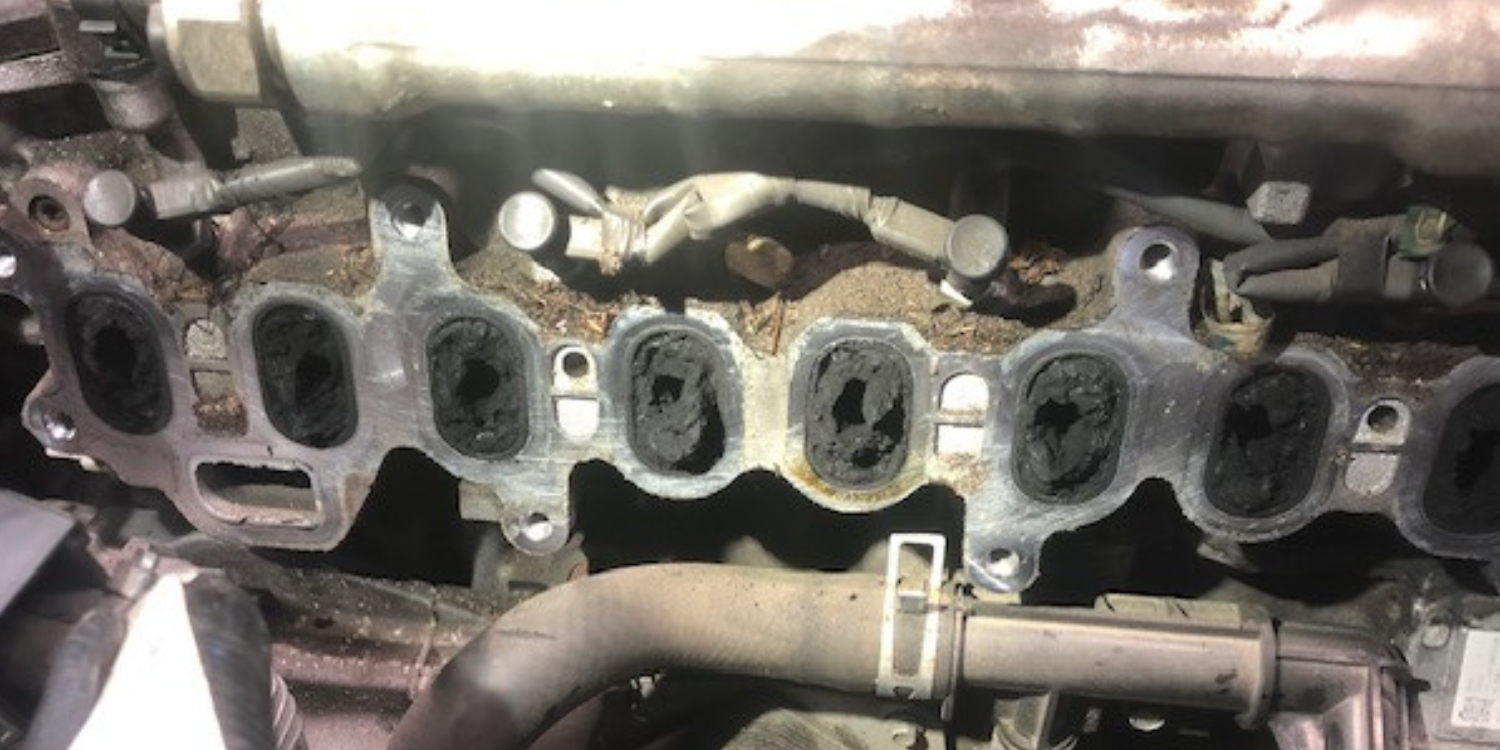
Error P0299 is a signal from the engine control module (ECM) indicating that the boost pressure has not reached the expected level. The ECM compares the target pressure with the actual pressure received from the MAP sensor, and if the discrepancy exceeds the allowable threshold for a certain period, a fault code is stored. The Check Engine light turns on.
This situation means that the turbocharger or supercharger is not generating the required air pressure in the intake manifold. Simply put, the engine is “suffocating”—receiving less air than the ECM calculated for the current operating mode. Without sufficient boost, the engine loses power, especially during acceleration and uphill driving.
“Eight out of ten P0299 cases we encounter are caused by intake system leaks. Pressure testing can rule out this cause within 15 minutes and saves time searching for problems in the turbo itself.” – Daniel Brooks, DecodeAuto
Page contents
Brief answer: what P0299 means and what to do right now
This information is general and does not replace professional consultation.
P0299 means “insufficient boost pressure.” The engine loses power, especially during acceleration and uphill driving. In some cases, the ECM switches to limp mode, limiting engine speed. Driving can continue only in a gentle mode and for a short distance—to a repair shop or a safe stopping point.
What to do right now:
Connect an OBD-II scanner and record all fault codes, including related ones (P0101, P0236, and others). Check live data for boost pressure and MAP sensor readings at idle and during acceleration. Inspect intake hoses, clamps, intercooler, and vacuum lines for visible damage, cracks, or oil traces.
Listen for unusual noises. Whistling or hissing indicates an air leak; grinding suggests turbo bearing wear. Pay attention to exhaust smoke: black smoke indicates a rich mixture, bluish smoke signals oil entering the combustion chamber.
This information is general and does not replace professional consultation.
If you notice loud whistling, oil in the hoses, or grinding noises from the turbo, stop driving immediately. Continuing operation may cause turbocharger failure and debris entering the cylinders.
What error P0299 (DTC P0299) means: full code explanation
P0299 is a diagnostic trouble code (DTC) defined by SAE J2012 and ISO 15031 standards, indicating a “Turbocharger/Supercharger ‘A’ Underboost Condition.” This code belongs to the P0 family (Powertrain – general category) and points to a problem in the air-fuel system, specifically insufficient boost pressure.
The ECM sets code P0299 when the actual boost pressure measured by the MAP sensor (Manifold Absolute Pressure) is consistently below the target value. The target is calculated by the control module based on engine operating parameters: mass air flow (MAF), intake air temperature (IAT), coolant temperature (ECT), engine speed (RPM), and injector pulse duration.
The conditions for setting the code vary by manufacturer. For example, on some Ford models, the code is set if the intake pressure (TIP – Turbo Inlet Pressure) remains below the target by 4 psi (0.28 bar) for 5 seconds or more under certain load. This means the ECM does not record a single deviation but checks for sustained discrepancy over time to exclude transient fluctuations.
Units and reference points (absolute vs gauge)
An important clarification: two types of pressure measurements are used in the boost system.
Absolute pressure is measured relative to vacuum; at sea level, atmospheric pressure is approximately 14.7 psi (1 bar, 100 kPa). Gauge pressure is measured relative to atmospheric pressure; it shows the “net” boost above atmospheric.
Reference points for the MAP sensor:
KOEO (Key On, Engine Off) – ignition on, engine off: MAP ≈ atmospheric pressure (~14.7 psi absolute at sea level). Idle – engine running without load: MAP is below atmospheric due to intake manifold vacuum (~4.4–7.3 psi absolute). Under load – engine accelerating: MAP rises above atmospheric (e.g., 21.8–29.0 psi absolute = 7.3–14.5 psi gauge).
When diagnosing, always clarify which pressure type is indicated in the manual or scanner to correctly compare readings.
Relationship between turbocharger, boost pressure, and code P0299
The turbocharger uses exhaust gas energy to spin the turbine wheel, which via a common shaft drives the compressor wheel. The compressor draws in atmospheric air, compresses it, and delivers it to the intake manifold at pressure above atmospheric. This process is called boost.
The ECM sets a target boost pressure for each engine operating mode. Under light load, the target may be close to atmospheric; under full load, it reaches a specific value depending on engine type and manufacturer settings. The MAP sensor continuously sends actual pressure data to the ECM.
When actual pressure falls below the target by a set amount for several seconds, the ECM logs an “underboost” event and stores code P0299. This can happen for several reasons: air leaks after the compressor, wastegate malfunction (valve regulating exhaust gas flow through the turbine), exhaust system restrictions, or turbocharger wear.
Graph of target vs actual boost pressure during acceleration. X-axis: time (seconds), Y-axis: pressure (bar). Two lines: target pressure (smooth rise from 1 to 1.8 bar), actual pressure (rise to 1.3 bar, then plateau). The moment P0299 is recorded is marked by a vertical dashed line.
It is important to understand: code P0299 is not triggered by “turbo failure” but by the inability to reach the required pressure. The turbo may be fully functional, but an air leak in the hose between the compressor and intake manifold will cause the same result—actual pressure below target, and the ECM will store the fault.
Symptoms and signs of error P0299
Below are typical symptoms noticed by drivers when error P0299 occurs. If any of these are present, there is a high likelihood of boost system issues.
Check Engine light illuminated on the dashboard
The Check Engine light is the first and most obvious sign. It lights up immediately after the ECM records code P0299. In some cases, the light may flash, indicating an active fault with a risk of catalytic converter damage.
Noticeable loss of engine power, especially during acceleration
The engine loses power during acceleration, especially when passing or driving uphill. The vehicle “does not pull,” and the accelerator pedal feels unresponsive without noticeable acceleration. This happens due to insufficient air in the cylinders—without adequate boost, the engine operates close to naturally aspirated mode, which is critical for turbocharged engines designed for forced induction.
Increased fuel consumption
The ECM may attempt to compensate for the lack of air by increasing fuel delivery to maintain the stoichiometric mixture or, in some cases, enrich the mixture to protect the engine. This leads to higher fuel consumption depending on driving conditions.
Unusual noises (whistling, grinding) from the turbocharger
Whistling or hissing indicates an air leak under pressure—damaged hose, crack in the intercooler, or loose clamp. Grinding or metallic noise from the turbo indicates bearing wear or contact between the impeller and housing. These sounds are critical and require immediate stop and inspection.
Black or bluish smoke from the exhaust pipe
Black smoke indicates a rich mixture due to insufficient air. The ECM supplies more fuel than can burn with the current air volume. Bluish smoke indicates oil entering the combustion chamber, typical for worn turbo seals or a damaged cartridge (CHRA – center housing rotating assembly).
Main causes of error P0299: from leaks to turbocharger failure
Causes of P0299 can be divided into several categories: pressure loss in the intake system, turbo control faults, sensor issues, exhaust restrictions, and mechanical turbo wear. Below is a complete list with brief technical explanations.
1. Leaks in the intake/boost system
Any damage to hoses between the turbo compressor and intake manifold causes pressure loss. Compressed air escapes through cracks or loose clamps directly into the atmosphere, not reaching the cylinders. The intercooler (charge air cooler) is also prone to microcracks and leaks, especially at hose connections.
Leaks may be visually undetectable but show up under pressure. Pressure testing the intake system with smoke or compressed air can detect even small gaps.
2. Faulty boost pressure sensor (MAP sensor)
The MAP sensor measures absolute pressure in the intake manifold and sends a signal to the ECM. The sensor contains a flexible silicon diaphragm that bends under pressure, changing electrical resistance and converting mechanical force into a voltage signal.
If the sensor is dirty, damaged, or outputs low readings due to internal failure, the ECM sees pressure lower than actual. As a result, the ECM records P0299 even if actual pressure is normal. High readings can affect fueling and drivability but do not typically trigger P0299.
3. Wastegate valve control issues
The wastegate is a valve that opens at a set boost pressure, diverting some exhaust gases past the turbine wheel to limit further pressure increase. The valve may be controlled by a vacuum actuator (spring and diaphragm) or an electronic actuator (ECM command).
If the wastegate sticks open, exhaust gases constantly bypass the turbine, and the compressor cannot build speed. This is a common cause of P0299 on VAG engines with an N75 valve (vacuum solenoid) and Ford EcoBoost engines with an electronic actuator.
A torn vacuum actuator diaphragm causes the same result—the valve cannot close, and boost pressure remains low.
4. Exhaust system restrictions
A clogged catalytic converter or diesel particulate filter (DPF) creates backpressure in the exhaust system. Exhaust gases cannot exit freely; their energy is insufficient to spin the turbine wheel, and the compressor fails to develop the required pressure.
Backpressure can be measured with a gauge installed in the oxygen sensor port before the catalyst. Normal values depend on the engine; elevated readings indicate clogging.
5. Mechanical wear/damage of the turbocharger
Wear of turbine shaft bearings, scoring on compressor or turbine wheel surfaces, blade contact with housing—all reduce turbo efficiency. The turbo may spin but fail to generate sufficient pressure due to increased clearances and friction losses.
Common wear causes: low oil level, use of oil with incorrect viscosity or specification, foreign object ingress (air filter debris) into the compressor.
6. Faulty diverter/blow-off valve
The diverter valve (DV or BOV) is installed between the compressor and intake manifold. Its task is to release excess pressure during sudden throttle closure (e.g., gear shifts), protecting the compressor from surge. On VAG TSI/TFSI engines, the diverter valve is integrated into the turbo or compressor housing.
A torn valve diaphragm or worn seat causes constant air leakage bypassing the intake manifold. The compressor builds pressure, but it bleeds off through the open valve, and the ECM records P0299.
How to diagnose code P0299: step-by-step guide
Sequential diagnostics allow pinpointing the cause of P0299 without replacing functioning components. Follow the steps in order to rule out simple issues before checking more complex parts.
Step 1: Read fault codes
Connect an OBD-II scanner and read all stored codes. Ensure P0299 is the primary code (Present/Current DTC), not a historical one (Pending/History). Record related codes:
P0101 – Mass Air Flow Sensor Circuit Range/Performance. Indicates MAF sensor issues that may distort target boost calculation. P0236 – Turbocharger/Supercharger Boost Sensor Circuit Range/Performance. Problem with boost pressure sensor other than MAP (if a separate boost sensor is used). P0243–P0250 – Turbocharger Wastegate Solenoid Control Circuit. Faults in wastegate control circuit (N75 valve and equivalents). P2263 – Turbo/Super Charger System Performance. Indicates issues in the boost system as a whole. P2563 – Boost Control Position Sensor. Problem with wastegate actuator position sensor.
Check live data parameters: Boost Pressure (actual boost), Boost Target (target boost), MAP Sensor Voltage, MAF Sensor g/s, Wastegate Duty Cycle. Compare readings at idle and during acceleration (2,000–3,000 rpm).
Step 2: Visual inspection
Inspect all boost system hoses from compressor outlet to intake manifold. Check for:
Cracks, tears, abrasions on silicone and rubber hoses. Loose or damaged clamps. Oil traces on inner hose walls (sign of turbo oil leak). Intercooler condition: dents, impact marks, condensation at joints.
Check vacuum lines to the wastegate actuator. Cracks or disconnected hoses are common causes of P0299 on vacuum-controlled engines.
Step 3: Wastegate actuator check
Disconnect the vacuum line from the actuator (for vacuum type) or unplug the electronic actuator connector. Check the actuator rod for free movement—it should move smoothly without sticking. If stuck or stiff, the actuator or wastegate is faulty.
For vacuum actuators: apply vacuum manually (using a hand vacuum pump) and make sure the rod retracts and holds position. Vacuum leaks through a torn diaphragm make wastegate control impossible.
For electronic actuators: use a diagnostic scanner to check the control signal (PWM duty cycle). Typical values at idle are 20–40%, under load 60–80%. Deviations may indicate control circuit or actuator faults.
Step 4: MAP sensor test
Check MAP sensor signal voltage via live data on the scanner.
Reference points for testing:
KOEO (ignition on, engine off): MAP ≈ atmospheric pressure (~14.7 psi or 100 kPa at sea level). Idle: MAP below atmospheric due to intake vacuum (~4.4–7.3 psi absolute). Under load (acceleration 2,000–3,000 rpm): MAP rises above atmospheric; compare dynamics with target boost and reference values for your engine model.
Note: MAP readings depend on measurement type (absolute vs gauge) and test conditions. Verify reference values in the manufacturer’s manual. Deviations over 10% from reference may indicate a sensor fault.
Clean the sensor connector and port to remove dirt. Oil deposits or dust can distort the signal.
Step 5: Leak check (pressure testing intake system)
Pressure testing is the most reliable way to detect leaks. Use a smoke machine or compressed air with a regulator (pressure not exceeding 21.8 psi (1.5 bar) to avoid damage to hoses and sensors).
Remove the intake hose before the compressor and install a plug with an air supply valve. Seal the throttle body (close it or remove the hose after the manifold and install a plug). Apply pressure and inspect all connections, the intercooler, and hoses.
Leaks will show up as hissing or smoke (when using a smoke machine). Mark all leak points and fix them before re-diagnosing.
Step 6: Turbocharger inspection
Remove the intake hose before the compressor and inspect the compressor wheel. Check axial and radial shaft play: hold the blades and try to move the shaft along its axis and sideways.
Play assessment criteria:
Radial play (side to side): blade contact with the turbo housing is unacceptable. Small free play without contact is normal. Axial play (along shaft axis): minimal movement is allowed but no knocking or sticking. The wheel should spin freely.
Note: do not specify numerical play tolerances without manufacturer manual reference. Values vary greatly by turbo type and engine model.
Inspect compressor and turbine wheels (through exhaust outlet) for damage, chips, or scoring. Check for oil in hoses before and after the compressor—this indicates turbo seal wear.
Step 7: Exhaust system backpressure check
Measure exhaust backpressure before the catalytic converter or DPF. Screw a pressure gauge into the oxygen sensor port before the catalyst. Start the engine and raise RPM to 2,500.
Note: normal backpressure values depend on the specific engine and exhaust system. Compare readings with manufacturer reference data. Elevated values indicate catalyst or DPF clogging. In this case, the turbo cannot spool up because exhaust gases lack sufficient flow.
Step-by-step P0299 diagnostic demonstration (60–90 seconds). Shots: connecting scanner, reading live MAP/Boost data, pressure testing hoses with smoke machine, wastegate actuator check, compressor wheel inspection. CTA: “Watch without sound – subtitles enabled.”
Common mistakes when diagnosing P0299
Replacing the turbo without pressure testing the system and checking for leaks
The most common mistake is replacing the turbocharger without first verifying intake system sealing. If the cause of P0299 is an air leak in a hose or intercooler, a new turbo will not solve the problem, and the code will return immediately after installation.
Ignoring vacuum lines and control valve (N75/solenoid)
Vacuum hoses, especially on high-mileage engines, become brittle and crack. A disconnected or damaged hose makes wastegate control impossible but may go unnoticed during a visual inspection. Checking the vacuum system must be a mandatory diagnostic step.
Incorrect evaluation of MAP/Boost data without comparing to reference values
Reading live data without knowing reference values for a specific engine model leads to wrong conclusions. For example, pressure at idle may be normal for one engine and a critical deviation for another. Always compare readings with factory specifications.
Skipping backpressure check before the catalytic converter/DPF
A clogged catalyst or particulate filter creates backpressure that prevents the turbo from reaching operating speed. Without checking this parameter, replacing the actuator or repairing leaks will be ineffective.
Failing to perform a post-repair test drive with data logging
After fixing the fault, a test drive with a connected scanner and logging of boost pressure, target/actual boost, and wastegate duty cycle is necessary. This helps confirm the repair was successful and that the P0299 code does not return.
“Six out of ten P0299 cases are intake system leaks. Don’t rush to replace the turbo before pressure testing. This will save you 70% of time and money.” – Daniel Brooks, DecodeAuto
Ways to fix error P0299: repair and replacement
To fix P0299, eliminate the root cause identified during diagnostics. Below are the main repair scenarios with action sequences.
Fixing air leaks
Replace damaged hoses, reinforce or replace clamps, and restore intercooler connections. If the intercooler has cracks or microleaks, repair or replacement is required.
After fixing leaks, repeat pressure testing to ensure system sealing. Start the engine, check live boost data, and perform a test drive with parameter logging.
Working with sensors (MAP sensor)
Clean the MAP sensor connector and port to remove oil and dirt. If cleaning does not help and readings remain incorrect, replace the sensor. Ensure the new sensor matches manufacturer specifications (part number, calibration).
After replacement, update ECM calibrations if the manufacturer released a software update (TSB). Some VAG and Ford models have campaigns for ECM reprogramming to ensure correct operation with new sensors.
Repairing turbo control system (wastegate, actuator)
Check vacuum lines and the control valve (N75 on VAG, wastegate solenoid on other platforms). Replace damaged vacuum hoses, and clean or replace the solenoid if stuck.
If the wastegate actuator itself is faulty (torn diaphragm, worn rod), repair or replace the actuator. On some models, the actuator is integrated into the turbo and cannot be replaced separately—in this case, the cartridge (CHRA) or the entire turbo must be replaced.
After repair, calibrate the wastegate actuator using a diagnostic scanner (Actuator Test or Wastegate Learn function). This is necessary for correct valve positioning and precise boost control.
Cleaning or replacing catalytic converter/DPF
If measured backpressure is above specification, diagnose the catalyst or particulate filter. Clean the DPF (forced regeneration) or replace the catalyst if internally damaged.
Eliminate root causes of soot formation: injector issues (rich mixture), oil leaks into the combustion chamber, exhaust gas recirculation (EGR) system faults. Without addressing the root cause, a new DPF or catalyst will clog again quickly.
Repairing or replacing the turbocharger
If shaft play, blade scoring, or blade-to-housing contact is found, repair the turbo cartridge (CHRA—bearing and seal replacement, shaft balancing) or replace the turbo assembly.
Always flush oil supply and return lines before installing a new or rebuilt turbo. Replace engine oil and oil filter. Failure to do so can cause rapid failure of the new turbo due to contaminated oil or oil starvation.
After installation, start the engine and let it idle for 2–3 minutes to circulate oil through turbo bearings. Then perform a gentle test drive (no hard acceleration) for the first 31–62 miles (50–100 km).
Summary table of solutions
| Cause | Fix method | Time | Difficulty |
|---|---|---|---|
| Boost leaks | Replace hoses/clamps, intercooler repair | 1–3 h | Medium |
| MAP sensor | Clean/replace, wiring check | 0.5–1 h | Low |
| Wastegate/actuator | Repair/replace valve/actuator, calibration | 2–4 h | Medium |
| Catalyst/DPF | Backpressure diagnosis, cleaning/replacement | 2–5 h | High |
| Turbo wear | CHRA repair/turbo replacement | 4–8 h | High |
| Diverter/BOV | Check diaphragm/actuator, replacement | 1–2 h | Low |
P0299 features on popular cars
P0299 on VAG (Volkswagen, Audi, Skoda) with TSI/TFSI engines
Typical issues on VAG engines (1.8 TSI, 2.0 TSI/TFSI) include:
N75 valve (vacuum solenoid controlling wastegate) sticking open due to contamination or internal wear. P0299 is often accompanied by P0243 (Turbocharger Wastegate Solenoid Control Circuit).
Diverter valve (DV) diaphragm rupture caused by high temperature and oil deposits. Early DV revisions (pre-2010) are especially prone to this issue.
Cracks in plastic intake and intercooler hoses. Plastic hoses on TFSI engines (especially Audi A4, A5) crack from vibration and thermal cycling. Replacing them with reinforced silicone hoses may help prevent recurrence.
P0299 on Ford (Focus, Kuga) with EcoBoost engines
Common problems on Ford EcoBoost engines (1.0, 1.5, 2.0) include:
Wastegate actuator wear (electronic drive with lever and joint). The actuator lever wears at the joint, causing play and incomplete wastegate closure. Ford issued TSB 20-2246 for the 2020 Explorer 2.3L EcoBoost recommending an ECM reflash to compensate for actuator wear.
Leaks at “hot side” connections (hoses between turbo and intercooler). High exhaust gas temperatures can cause gasket deformation and clamp loosening.
ECM software updates—on some EcoBoost models (especially 1.0 EcoBoost), the manufacturer released updates to adjust the boost control algorithm, eliminating false P0299 triggers.
P0299 on Opel/Chevrolet (Astra, Cruze)
Weak points on turbocharged Opel/Chevrolet engines (1.4 Turbo, 1.6 CDTI):
Intercooler hoses—rubber hoses cracking at metal flange connections. Typical for Astra J and Insignia with over 62,000 miles (100,000 km).
Oil seepage at turbo and hose joints. Turbo seal wear causes oil leakage into the intake system, reducing boost pressure and triggering P0299.
Degradation of vacuum hoses controlling the wastegate. Rubber hoses become stiff and crack, losing their seal. Replacing all vacuum lines during P0299 diagnostics is standard practice for these platforms.
VAG (Volkswagen, Audi, Skoda) with TSI/TFSI engines
N75 valve on TSI engine. Frequent failures of the N75 valve/solenoid, cracks in plastic hoses, and intercooler leaks; early-revision TSI models show diverter valve (DV) wear.
Ford (Focus, Kuga) with EcoBoost engines
Typical issues with the wastegate actuator (lever/joint), leaks at “hot side” connections, and a TSB for boost control reflash.
Opel/Chevrolet (Astra, Cruze)
Weak points—intercooler hoses, oil seepage at joints, vacuum hose degradation.
When to visit a repair shop: risks, safety, and approximate costs
This information is general and does not replace professional consultation.
Driving with code P0299 is possible only in gentle mode and for a short distance—to the nearest repair shop or a safe stopping place. Avoid hard acceleration, uphill driving under full load, and towing trailers. The ECM may switch the engine to limp mode, limiting RPM and disabling boost, making the vehicle slow and unsafe in traffic.
Stop driving immediately if:
There is loud metallic grinding or whining from the turbo. There is a large amount of oil in the hoses. Thick bluish smoke comes from the exhaust. The engine loses power to the extent that it cannot maintain a safe speed.
Continuing to operate under these conditions may cause turbocharger destruction and debris entering the cylinders, leading to major engine repair.
Approximate repair costs (2026)
| Work | Price range | Urgency signs |
|---|---|---|
| Fixing leaks (hoses/clamps) | $55–$330 (€50–300) | Whistling during acceleration, power loss |
| MAP sensor replacement | $35–$165 (€30–150) | Unstable idle, jerks |
| Wastegate/actuator repair | $130–$550 (€120–500) | Codes P0243–P0250, low boost |
| Catalyst/DPF cleaning/replacement | $220–$1,320 (€200–1200) | High backpressure, smoke |
| Turbo repair/replacement | $550–$2,200 (€500–2000) | Shaft play, grinding, oil in hoses |
Check with your dealer for warranty campaigns, recalls, or TSBs for your model. In some cases, the manufacturer acknowledges design defects (e.g., wastegate actuator wear on Ford EcoBoost) and performs repairs free of charge or with significant discounts.
Prevention: how to avoid P0299 recurrence
Regular replacement of air and oil filters
A clogged air filter restricts airflow to the compressor, reducing turbo efficiency. Replace the filter every 9,000–12,000 miles (15,000–20,000 km) or more frequently in dusty conditions.
The oil filter is critical for the turbocharger. Contaminated oil fails to lubricate turbo shaft bearings properly, causing wear. Change oil and filter strictly according to the manufacturer schedule (usually every 6,000–9,000 miles (10,000–15,000 km) for turbo engines).
Use of quality engine oil
Use oil with the specification recommended by the manufacturer. Poor quality or incorrect oil causes deposits (coking) in turbo oil channels, bearing overheating, and seal damage.
Avoid extended oil change intervals (12,000–18,000 miles (20,000–30,000 km)), especially under severe driving conditions.
Periodic inspection of boost system hoses
Inspect hoses, clamps, and intercooler connections every 12,000–18,000 miles (20,000–30,000 km) or during scheduled maintenance. Watch for cracks, abrasions, and oil traces. Replace damaged hoses before they rupture under pressure.
Perform intake system pressure testing during major maintenance (37,000–50,000 miles (60,000–80,000 km)) to detect hidden leaks.
Proper warm-up and cool-down of turbocharged engine
Before driving, let the engine idle for 1–2 minutes to circulate oil through the turbo bearings. Cold oil is highly viscous and does not lubricate properly.
After intense driving (high speed, uphill), let the engine idle for 30–60 seconds before shutdown. This allows the turbo to reduce speed and temperature, helping prevent oil coking in hot passages. A turbo timer (a device that automatically shuts off the engine after a set time) is helpful but not mandatory if proper operating practices are followed.
Frequently asked questions
Is it possible to drive with the P0299 error?
Short answer: it is permissible for a short time and without load; if symptoms worsen — stop. Detailed answer: P0299 indicates insufficient boost pressure, which reduces engine power and may cause the ECM to enter limp mode with RPM limitation. Driving can continue only in a gentle mode until you reach a repair shop or a safe stopping point. If unusual noises appear (turbo grinding), oil in the hoses, or heavy smoke from the exhaust — stop immediately. Further operation may lead to turbocharger failure and serious engine damage.
How much does it cost to repair the P0299 error?
Short answer: from $55 (€50) for leak repair to $2,200 (€2000) for turbo replacement, depending on the cause. Detailed answer: repair cost depends on the root cause of the code. Replacing hoses and clamps costs $55–$330 (€50–300), replacing the MAP sensor $35–$165 (€30–150), repairing the wastegate or actuator $130–$550 (€120–500), cleaning or replacing the catalytic converter/DPF $220–$1,320 (€200–1200), and repairing or replacing the turbocharger $550–$2,200 (€500–2000). An exact estimate is possible only after diagnostics. Check with the dealer for warranty campaigns or TSBs — in some cases, repairs are covered by the manufacturer.
Will a simple error reset with a scanner help?
Short answer: no, if the cause is not fixed — the code will return; reduced power mode is possible. Detailed answer: resetting the P0299 code without fixing the fault is a temporary measure. The code will return as soon as the ECM detects the same conditions (actual pressure below target for a set time). In some cases, resetting the code switches the engine from limp mode to normal, but this does not solve the problem. Diagnosis and elimination of the root cause is the only reliable way to get rid of P0299.