

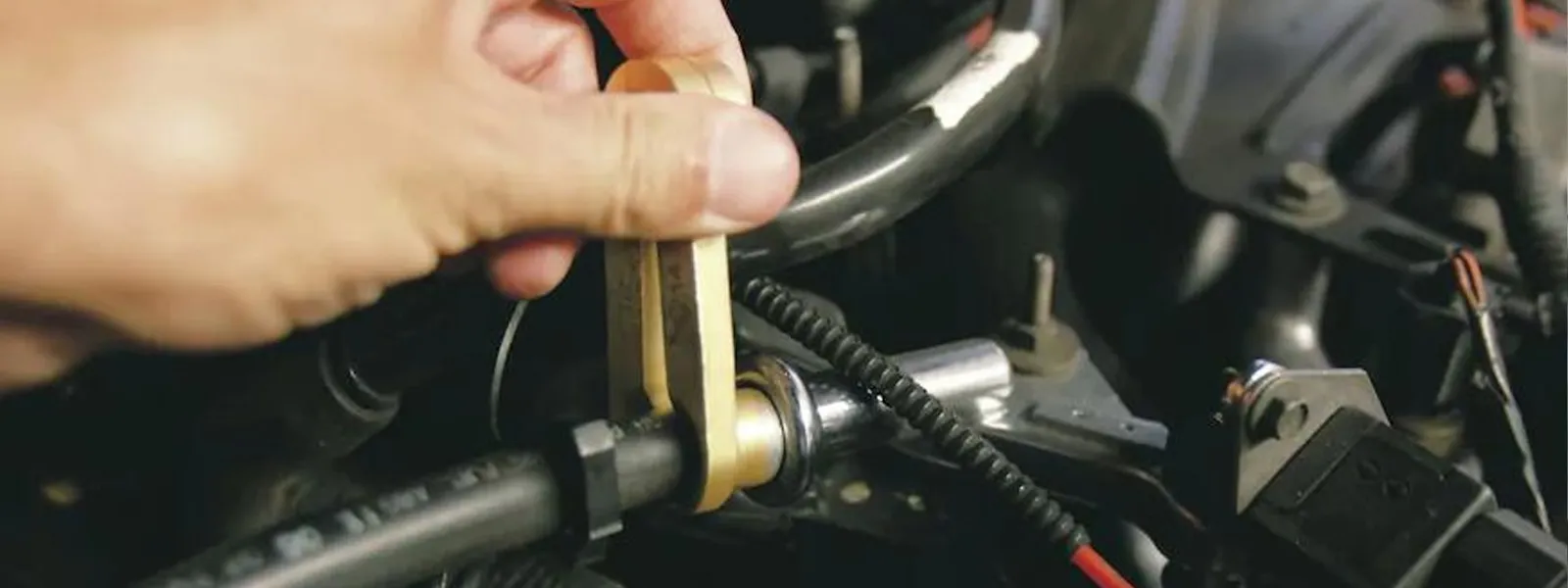
Code P0087 indicates the PCM signal reporting fuel rail pressure dropping below the target value. In Common Rail systems, this means a decrease of 250 bar or more from the norm (target pressure ranges from 300 to 1600 bar depending on operating mode). In gasoline GDI/TSI engines, the situation is similar: the high-pressure pump fails to generate the required injection pressure, and the PCM detects the discrepancy.
Symptoms usually appear under load: loss of power during acceleration, jerking, difficult starting, unstable idle. The engine may stall when the accelerator is pressed abruptly or enter limp mode with rpm limitation. Operating with a lit Check Engine light and code P0087 is undesirable—it risks sudden engine shutdown, overheating of the high-pressure fuel pump (HPFP) due to cavitation, and damage to the catalytic converter from unburned fuel.
Below, we will analyze how the PCM decides to set the code, which components control system pressure, how to diagnose the cause, and what to do to fix the fault.
Page contents
What does error P0087 (DTC P0087) mean: code explanation
According to the OBD-II standard, code P0087 stands for “Fuel Rail/System Pressure – Too Low.” The PCM records this DTC when the actual fuel rail pressure (common rail in diesel or direct injection rail in gasoline GDI) falls below the target by a specified amount.
This information is general and does not replace professional consultation.
In modern diesel Common Rail systems, the trigger threshold is a pressure drop of several hundred bar relative to the target. Target pressure may be around 300–400 bar at idle and reach approximately 1600–2000 bar under load, depending on system generation and manufacturer calibration. Exact thresholds are defined by OEM specifications.
“According to data on Cummins ISF 2.8/3.8 and 6BT systems, the ECU registers P0087 when pressure drops 250 bar below normal—the target pressure usually ranges from 300 to 1600 bar depending on operating mode.”
In gasoline direct injection engines (GDI/FSI/TSI), pressure norms are lower: 30–60 bar at idle, up to 200 bar or more under load, but the logic is the same—the PCM compares commanded and actual pressure from the fuel pressure sensor and stores the code if there is a discrepancy.
It is important to understand that P0087 indicates a parameter mismatch, not a specific part failure. Causes may include physical fuel supply restriction (clogged filter, weak pump), pressure leaks (faulty regulator, injectors with internal leaks), or incorrect fuel rail pressure sensor readings. The PCM logs the code when the condition persists for a certain time—usually several seconds under load according to OEM calibrations.
References:
The decoding of P0087 and its detection logic are defined by SAE J2012 (DTC code definitions), while SAE J1979 describes service PIDs and OBD communication; code detection criteria are set by manufacturer calibrations (OEM). Injection system manufacturer documentation (Bosch Common Rail Technical Instruction, OEM manuals—VW, Ford, PSA) is also used. These sources establish universal principles for monitoring fuel system pressure applicable to all OBD-II vehicles.
“According to Bosch ESI and Autodata, diagnostic procedure catalogs contain reference pressure values and methods for checking fuel system components.”
How serious is error P0087?
Code P0087 is classified as a critical fuel system fault. Low rail pressure disrupts air-fuel mixture formation: the PCM cannot accurately meter fuel, injectors spray inefficiently, leading to a lean mixture, misfires, and knocking under certain conditions. Under load, the engine loses power, may stall, or enter limp mode with rpm and torque limitation.
Main risks of ignoring P0087:
Damage to the high-pressure fuel pump (HPFP). The HPFP is cooled and lubricated by fuel. Insufficient fuel supply (e.g., due to a clogged filter or weak low-pressure pump) causes cavitation—air bubbles form in the fuel. The HPFP plunger pair overheats, wears out, and metal shavings appear in the system.
“In practice, wear of the HPFP lifter occurs—for example, on Infiniti QX80/Nissan Patrol Y62 with VK56VD engine, cases of lifter destruction due to oil loss have been recorded, leading to metal shavings in the fuel system and low pressure, causing P0087/P0090 errors.”
Damage to the catalytic converter and diesel particulate filter (DPF). Unburned fuel enters the exhaust system and burns in the catalytic converter, causing overheating and destruction of the catalyst substrate. In diesels with DPF, this can lead to filter plugging.
Engine shutdown. At critical pressure drop, the PCM may limit fuel supply to protect the system, causing engine stall. This is dangerous while driving, especially at highway speed or during passing.
Increased fuel consumption. The PCM tries to compensate for low pressure by increasing injection duration, leading to overconsumption.
Short-term driving with P0087 is acceptable only until the nearest repair shop, in a gentle mode (no sharp accelerations, high rpm, or prolonged load). Continued operation with this error can lead to costly repairs.
Symptoms accompanying fault code P0087
Symptoms of P0087 depend on the pressure drop severity and engine type, but there is a general pattern: most signs worsen under load when fuel demand is highest and the system fails to keep up.
Typical signs of P0087:
Check Engine light on. This is the first and mandatory symptom. Sometimes the light flashes during hard acceleration when pressure drops especially sharply.
Loss of power and poor acceleration. The engine lacks power, especially during acceleration and at high rpm due to insufficient fuel. The PCM limits fuel supply, causing sluggish throttle response.
Jerks and hesitation during acceleration. The vehicle jerks as if it is choking. This results from unstable pressure fluctuating between low and normal. It shows up during loaded acceleration.
Difficulty starting the engine. Typical for both cold and hot engine operation. Cold-start issues arise from overall weak fuel supply; hot-start problems are due to fuel evaporation in the low-pressure circuit or regulator sticking.
Engine stalls. Especially common when pressing the accelerator abruptly from idle or during deceleration. The PCM cannot stabilize pressure in time, and fuel supply is interrupted.
“On the Hyundai H1 forum, a case was recorded: ‘Stalls at 800 rpm, pressure drops to 7700 kPa (77 bar), won’t start without priming.’”
Unstable idle operation. RPM fluctuates, vibrations appear. Typical when the pressure sensor transmits incorrect data or the regulator sticks.
Increased fuel consumption. The PCM increases injector on-time to try to compensate for low injection pressure.
Excessive exhaust smoke (diesel). Black smoke during acceleration indicates incomplete fuel combustion.
RPM limitation (limp mode). The PCM switches the engine to limp mode, limiting rpm to a preset threshold according to protective calibrations.
Important feature: after restarting the engine, symptoms may temporarily disappear, and code P0087 may clear from active memory (but remain in history). This creates the illusion that the problem resolved itself, although the root cause remains and will reappear under the same conditions.
Main causes of error P0087
P0087 is recorded when actual fuel rail pressure does not match the target. Causes can be divided into three categories: fuel supply restriction, pressure leak/dump, and sensor/control failure.
High-pressure fuel pump (HPFP) malfunction
The HPFP is a key component of Common Rail and GDI systems. It generates pressure according to system requirements (approximately 300–1800 bar for diesel or 50–200 bar for gasoline GDI depending on operating mode). Wear of internal HPFP components leads to performance loss.
Typical wear types:
Plunger pair. The plunger and cylinder wear, creating clearance; fuel flows back, and pressure fails to reach the required level.
“Wear of Cummins HPFP parts reduces pressure under load, triggering P0087.”
Cam plate and lifter. In gasoline GDI (e.g., VW TSI, Audi FSI), the HPFP is driven by the camshaft via a lifter. Wear of the lifter or cam plate reduces plunger stroke, decreasing pump performance.
Pressure relief or metering valve (IMV, SCV). This valve regulates fuel quantity entering or exiting the pump. Sticking open causes constant fuel return, preventing pressure buildup.
HPFP wear symptoms:
Pressure drops under load, especially at high rpm. Characteristic pump noise (knocking, grinding). Metal shavings in the fuel filter, at the bottom of the fuel rail, or in the lines indicate pump component damage.
Diagnosis: measure actual rail pressure under load (3000–4000 rpm) and compare with target. If deviation consistently exceeds OEM tolerances with a functional low-pressure pump and sensor, HPFP wear is likely.
Fuel rail pressure sensor failure
The fuel rail pressure sensor (FRP) sends current pressure data to the PCM. It is a resistive or piezoresistive sensor outputting 0.5–4.5 V depending on pressure. The PCM compares the signal with calibration tables to determine pressure.
Typical sensor faults:
Signal drift. Over time, the sensor may report pressure lower or higher than actual. The PCM detects a mismatch and logs P0087, although physical pressure is normal.
“A faulty pressure sensor sends incorrect low-pressure data to the ECU, which registers P0087 despite normal pressure.” – iCarsoft (2023)
Open or short circuit in wiring. Poor connector contact, oxidation, or a break in the signal wire. The PCM receives incorrect signals (usually 0 V or 5 V), interpreting them as critically low or high pressure.
Sensor diaphragm corrosion. Moisture in fuel or condensation damages the sensitive element.
Faulty sensor symptoms:
P0087 appears with normal engine operation and no power loss. Pressure readings on the scan tool fluctuate or remain fixed at one level (e.g., 0 bar or maximum). The code disappears after sensor replacement.
Diagnosis: check sensor power supply (usually 5 V), ground, and signal wire. Compare sensor readings at idle and under load with actual pressure. Significant discrepancy indicates a faulty sensor.
Pressure regulator (solenoid) failure
The fuel pressure regulator (Pressure Control Valve, PCV; or metering valve IMV/SCV) controls rail pressure by dumping excess fuel back to the return line. It is an electromagnetic valve controlled by a PWM signal from the PCM.
Typical faults:
Sticking open. The valve remains open, fuel continuously returns, and pressure fails to rise. The PCM tries to compensate by increasing HPFP output but fails.
“A regulator stuck open or leaking lowers rail pressure below normal, causing the ECU to register P0087.” – Kelley Blue Book (2023)
Seal wear. Fuel leaks through worn seals or valve seat. Symptoms are similar to sticking.
Electrical faults. Coil break, short circuit, poor connector contact.
Symptoms:
Rail pressure rises slowly and unstably. Pressure drops faster than normal under load. P0087 is often accompanied by regulator control codes (P0251–P025A).
Diagnosis: measure solenoid coil resistance, check PCM control signal with an oscilloscope (PWM, frequency varies by system). Leak test: briefly clamp the return line; if pressure rises sharply, the regulator is leaking.
Fuel filter clogging or system leaks
A clogged fuel filter is one of the most common and simplest causes of P0087. The filter traps dirt, water, and paraffin wax (diesel in winter). When clogged, flow capacity drops, and the low-pressure pump cannot supply enough fuel to the HPFP. Pressure at the HPFP inlet (typically 43–87 psi (3–6 bar)) falls, causing cavitation in the HPFP and a drop in output pressure.
“Clogged fuel filter is highly likely; key sign is pressure drop at idle; check by visual inspection and filter replacement date.”
Symptoms: power loss progresses over time, especially noticeable under load. If clogged with waxed fuel (diesel in winter), the vehicle may fail to start or stall after a few minutes.
Diagnosis: check filter replacement date. Visually inspect the housing for cracks. Measure pressure before the HPFP—if below system specification, suspect the filter or low-pressure pump.
Leaks and air ingress:
Physical fuel leaks. Cracks in fuel lines, loose clamps, leaking fittings. Fuel escapes, pressure drops. Typical in older vehicles or after poor repairs.
Air ingress in the low-pressure circuit. Air enters the fuel system through leaks. The HPFP cannot compress air, so pressure fails to rise. Typical for diesels: fuel filter heater, tank check valve, line connections.
“Air ingress in Hyundai filter heater causes P0087.” – Automig.services (2024)
Injector leaks (diesel). Injectors with worn nozzles or valves leak fuel into the return line even when closed. Rail pressure drops.
Leak diagnosis: visually inspect under the hood and under the vehicle for fuel traces. Check low-pressure circuit sealing—clamp the return line, apply pressure with a hand pump, and monitor pressure drop. For diesel, perform an injector return flow test: measure fuel volume returned by each injector per minute during engine operation.
| Cause | Likelihood | Key sign | Quick check method |
|---|---|---|---|
| Clogged fuel filter | High | Progressive power loss | Check replacement date, visual inspection for restriction |
| HPFP wear (plunger, lifter) | Medium | Pressure drops under load, metal shavings in filter | Measure actual vs. target pressure at high rpm |
| Faulty pressure sensor (FRP) | Medium | P0087 with normal operation, fluctuating readings | Compare scan tool readings with system reference values |
| Pressure regulator/solenoid | Medium | Unstable pressure, slow rise at startup | Check control current/voltage, PWM with an oscilloscope |
| Injector leaks (diesel) | Low | P0087 + lean codes, diesel smell in exhaust | Return flow test (fuel volume per injector per minute) |
| Air ingress in lines | Low | Engine stalls after start, bubbles in fuel | Check low-pressure circuit sealing, bleed system |
Source confirmation:
Typical causes of P0087 and diagnostic procedures are described in OEM service bulletins (e.g., for Cummins Common Rail, VW/Ford/PSA direct injection systems). Bosch ESI and Autodata diagnostic catalogs contain reference pressure values and component testing methods.
Step-by-step diagnosis of code P0087
Diagnosing P0087 requires a systematic approach: from simple to complex, from visual inspection to instrumented measurements. The goal is to identify where pressure loss occurs in the system.
This information is general and does not replace professional consultation.
Tools:
OBD-II scan tool with live data display. High-pressure electronic sensor/transducer on a test bench or reading FRP (actual) via a scan tool for pressure monitoring; do not use mechanical high-pressure gauges without special equipment. Multimeter, oscilloscope (for sensor and solenoid checks). Wrench set, adapters for connections.
Step 1. Visual inspection.
Check the fuel system for obvious leaks and damage: fuel traces under the hood, on fuel lines, injectors, rail, and connections. Fuel filter condition: last replacement date (if known), housing cracks, water in sediment bowl (diesel). Fuel line condition: rubber hose cracks, loose clamps, corrosion on metal tubes. Sensor and solenoid connector condition: oxidation, moisture, wire breaks.
If a visible leak is found, fix it and check if the code disappears. If the filter has not been replaced per manufacturer recommendations, replace it and check again.
Step 2. Read scan tool data.
Connect the scan tool and perform the following: read code P0087 and all related DTCs (e.g., P0088, P0190–P0194, P0251–P025A, P0171/P0174). Record freeze-frame data—conditions when the code was set (rpm, temperature, load).
Check current parameters: FRP Commanded (desired) – target rail pressure, FRP Actual (sensor) – actual pressure from sensor. The difference between them is the cause of P0087.
Check control signals: duty cycle of pressure regulator or metering valve, HPFP voltage/resistance (if applicable).
Start the engine and warm it up. At idle, actual pressure should be close to target per system specification. Then smoothly increase rpm to 3000–4000 and hold for several seconds. Observe the pressure graph on the scan tool: if pressure rises slowly, fails to reach target, or drops sharply under load, the problem is in supply or leakage. If readings fluctuate or remain fixed, the sensor or wiring is at fault.
Step 3. Pressure check (safe method).
Use a high-pressure electronic sensor/transducer on a test bench or read FRP via a scan tool; in field checks, monitor PWM/current of the regulator. Do not use mechanical high-pressure gauges without special equipment.
Connect measuring equipment to the low-pressure circuit (HPFP inlet). Start the engine.
Low-pressure circuit (HPFP inlet):
Norm: gasoline 43–87 psi (3–6 bar), diesel 43–87 psi (3–6 bar) (check OEM specs). If pressure is lower, suspect the low-pressure pump (in-tank), filter, or a leak in the lines from the tank to the HPFP.
High-pressure circuit (rail):
Compare readings with scan tool data. If discrepancy is significant, the FRP sensor is faulty. If readings match and both are below specification, the problem lies in the HPFP, regulator, or a leak.
Step 4. HPFP performance test.
Raise rpm to 3000–4000 and hold. Pressure should rise and stabilize near target per system specification. If pressure does not rise or rises slowly with a functional low-pressure circuit and sensor, the HPFP is worn.
Additionally, listen for pump noise. Knocking, grinding, and other unusual sounds indicate plunger pair or lifter wear.
Step 5. FRP sensor check.
Measure voltage at the sensor signal pin with a multimeter with the engine off (should match calibration at atmospheric pressure) and running (should increase proportionally to pressure). Compare with the calibration table for your vehicle (usually in the service manual).
Check sensor power (5 V) and ground. If power or ground is missing, suspect wiring or a PCM fault.
If available, use an oscilloscope to check the sensor signal for noise, dropouts, and spikes. A clean signal is smooth without steps or impulse interference.
Step 6. Pressure regulator (solenoid) check.
Measure solenoid coil resistance (typical values vary by system). Open circuit (infinite resistance) or short circuit (below expected) indicates solenoid failure.
Check PCM control signal: should be PWM with frequency and variable duty cycle per system. No signal or a constant signal indicates wiring or PCM fault.
Sticking test: with the engine off, try to move the valve plunger mechanically (if accessible). If it does not move or moves with difficulty, the valve is stuck.
Step 7. Injector test (diesel).
For diesel Common Rail, perform a return flow test. Disconnect the return line from each injector and connect measuring containers. Run the engine at idle for 1 minute. Measure the fuel volume returned by each injector.
Specifications are usually listed in the service manual for the system (exact values per OEM). If one injector returns significantly more, it has internal leakage and should be replaced.
For gasoline GDI, check fuel trim balance by cylinder. Large positive trim indicates insufficient fuel supply to that cylinder.
Step 8. Electrical check.
Perform a continuity test on the wiring harness from the PCM to sensors, pumps, and solenoids. Check insulation resistance, presence of shorts to ground, or shorts between wires. Inspect shielding of signal wires—damaged shielding can cause interference and false sensor readings.
Recommendation for structured data:
For this section, implementing Schema.org HowTo with steps, required tools, and estimated time is recommended. This improves search visibility and makes content more accessible for SGE snippets.
Pressure norms: quick reference values for checks
Reference pressure values depend on engine type and injection system. Below are approximate norms for common systems. Exact values are always in your vehicle’s service manual.
| System type | Idle pressure | Pressure under load | Notes |
|---|---|---|---|
| Gasoline (MPI, port injection) | 43–58 psi (3.0–4.0 bar) | 51–65 psi (3.5–4.5 bar) | Stable, little load dependence |
| Gasoline (GDI/FSI/TSI, direct injection) | 435–870 psi (30–60 bar) | 1450–2900 psi (100–200 bar) and higher | Depends on brand. VW TSI: up to 2900 psi (200 bar), Ford EcoBoost: up to 2175 psi (150 bar) per OEM specs |
| Diesel (Common Rail) | About 4350–5800 psi (300–400 bar) | Approximately 23,200–29,000 psi (1600–2000 bar) | Depends on system generation; exact values per manufacturer manual |
| HPFP inlet (low pressure) | 43–87 psi (3–6 bar) (gasoline/diesel) | – | Supply before HPFP, provided by in-tank pump |
Note: These norms are for reference only. Always use factory specifications for your vehicle model. They are available in service manuals, Autodata catalogs, Bosch ESI, or specialized resources.
How to fix error P0087: repair methods
Repair depends on the cause identified during diagnosis. Below are repair methods for each main cause of P0087.
Fuel filter replacement and system bleeding.
If the filter is clogged, replace it with a new one, preferably OEM or a quality aftermarket brand (Mann, Bosch, Mahle). After replacement, bleed the system: start the engine, let it idle for several minutes, then gradually increase rpm to remove air from the lines. Check pressure with a scan tool—it should return to normal.
Repair or replacement of the high-pressure fuel pump (HPFP).
If the HPFP is worn, two options exist: replace it with a new/rebuilt unit or repair it (replace plunger pair, bearings, seals). New HPFPs are expensive (price depends on model), rebuilt units are cheaper but quality varies by supplier. Repair is cost-effective for localized wear (e.g., only plunger or lifter).
Critical: If metal shavings are found during HPFP disassembly, a full fuel system flush is mandatory. Shavings circulate through the lines, rail, injectors, and return line. Without flushing, a new/repaired pump may fail within a few hundred miles.
“Metal shavings from HPFP plunger wear require HPFP disassembly, replacement of plunger pairs/bearings/seals, camshaft grinding, bench testing; full flushing of all lines/rail/tank and filter replacement is mandatory.”
Flushing includes draining and cleaning the fuel tank, blowing out lines, removing and cleaning the rail, replacing all filters and screens, and injector inspection.
After installing the HPFP, perform adaptation (calibration) with a diagnostic scan tool if supported by the manufacturer.
Fuel rail pressure sensor replacement.
The FRP sensor is usually replaced as a complete unit (not repairable). Original parts vary in cost; aftermarket sensors are cheaper but may have lower accuracy. Use new sealing rings and tighten the sensor to the recommended torque (usually in the manual). After replacement, clear trouble codes and verify scan tool readings match system reference values.
Pressure regulator (solenoid) service or replacement.
The pressure regulator can often be cleaned if sticking is caused by dirt. Remove the solenoid, clean it with solvent (carburetor cleaner), blow it out with compressed air, and check plunger movement.
If worn or if the coil is faulty, replacement is required. Cost depends on engine model. After installation, check PCM control signal and pressure response.
Leak elimination and line repair.
Replace damaged fuel hoses, tighten clamps, and replace cracked fittings. For diesel, check injector seals: if an injector leaks into the return line, replace the injector or seals.
If air ingress is detected, locate the leak (usually line connections, filter heater) and restore sealing. After repair, bleed the system manually (if equipped) or via scan tool (forced pump activation).
Tank and pump screen cleaning.
If the fuel tank is contaminated (dirt, water, rust), remove it, drain the fuel, and clean it with solvent. Replace or clean the low-pressure pump screen (in-tank). A dirty tank is a frequent cause of repeated filter clogging and reduced fuel supply.
After repair:
Clear trouble codes with a scan tool. Perform PCM adaptations if required, such as fuel pressure adaptation and injector calibration. Conduct a test drive: idle, smooth acceleration, hard acceleration. Check pressure under load—it should be stable and meet target values.
P0087 features by engine type
Diesel (TDI, HDi, dCi, TDCi, CDI)
Diesel engines with Common Rail systems are especially sensitive to fuel pressure: it is significantly higher than in gasoline GDI. This makes the system more vulnerable to wear and contamination.
Common causes of P0087 in diesels:
Injector return leaks. Worn injector nozzles or valves leak fuel into the return line. Rail pressure drops, especially under load when fuel consumption is highest.
HPFP wear. The diesel pump plunger pair operates under high pressure and temperature. Wear leads to performance loss. Metal shavings from worn parts circulate and damage injectors, rail, and regulator.
Cavitation due to a clogged filter. Diesel fuel contains more contaminants than gasoline. The filter clogs quickly, especially with poor-quality fuel. Low pressure at the HPFP inlet causes cavitation—air bubbles in fuel sharply reduce pump efficiency and accelerate wear.
Fuel wax formation in winter. Diesel thickens at low temperatures, and wax clogs the filter. The vehicle may fail to start or stall after a few minutes.
Mandatory procedures during diesel repair:
Injector return flow test (see “Diagnosis” section). This is a key test for diesels to identify injectors with internal leaks.
Check for metal shavings. When removing the HPFP, inspect the fuel rail, filter, and return lines. If shavings are found, a full system flush is required; otherwise, the new pump will fail.
System cleanliness. Even the smallest dirt in the Common Rail system damages precision parts (injectors, regulator, HPFP plunger). Work must be done in clean conditions with clean tools. Do not blow lines with dirty air.
Risks of air ingress: If air enters the diesel fuel system (e.g., due to a low-pressure circuit leak), repeated dry starts can damage the HPFP. Air compresses but does not lubricate the plunger pair, causing pump overheating. The system must be bled manually or via diagnostic scan tool before starting.
Gasoline GDI/FSI/TSI
Gasoline direct injection engines (GDI) use an HPFP mounted on the cylinder head and driven by the camshaft via a lifter or cam plate. Pressure is lower than diesel but the system is also sensitive to wear and contamination.
Common causes of P0087 in gasoline GDI:
HPFP lifter wear. The lifter operates under high load and temperature, lubricated by engine oil. Poor oil quality or low level causes lifter wear or failure, reducing plunger stroke and pump performance.
Plunger pair wear. The plunger wears, creating clearance; fuel flows back, and pressure fails to rise.
Pressure regulator failure on the rail or in the HPFP. In gasoline GDI, the pressure regulator may be on the fuel rail or integrated into the HPFP. Sticking open causes constant fuel return, preventing pressure buildup.
Critical parameters:
Reference pressures by circuit. It is important to know the norm for the low-pressure circuit (43–87 psi (3–6 bar) at the HPFP inlet) and high-pressure circuit (per rail specification). If low pressure is normal but high pressure is low, the HPFP or regulator is at fault. If low pressure is below specification, the in-tank pump or filter is suspect.
Long hot start. A typical GDI symptom: after driving, when the engine is hot, the vehicle starts poorly. Cause: fuel evaporation in the low-pressure circuit or regulator sticking. The problem disappears when cooled. This often indicates a weak in-tank pump or faulty check valve.
After HPFP work:
Check engine oil level and quality. The HPFP lifter is lubricated by oil; low oil level or contamination accelerates wear.
Check fuel trims. Large positive trims indicate insufficient fuel supply; negative trims indicate excess. If trims do not normalize after HPFP replacement, injector leaks or regulator issues may exist.
| Engine type | Common cause of P0087 | Key diagnostic test | Specific risk |
|---|---|---|---|
| Diesel (Common Rail) | Injector return leaks, HPFP wear, cavitation | Injector return flow test, metal shavings check | High risk of HPFP damage with air ingress |
| Gasoline GDI/TSI | HPFP lifter and plunger wear | Measure HPFP inlet and outlet pressure, inspect lifter | Lifter failure → metal shavings in system, long hot start |
Common mistakes in diagnosing and repairing P0087
Even experienced technicians sometimes make errors leading to unnecessary part replacements or code recurrence. Typical mistakes include:
Replacing parts without pressure and control current measurements.
The most common error is replacing the HPFP, sensor, or regulator just in case without confirming the failure. Result: money spent, code remains. Always measure actual pressure, check control signals, and compare sensor readings with reference values.
Example: a vehicle with P0087 and power loss had the HPFP replaced, but the code returned. It turned out the fuel filter was clogged, and the pump did not receive enough fuel at the inlet. Replacing the filter solved the problem.
Ignoring injector return flow test (diesel).
Injector internal leaks are a frequent cause of P0087 in diesels. Without the return flow test, the faulty injector may be missed, and unnecessary HPFP or regulator repairs may continue.
Not flushing the system after finding metal shavings in the HPFP.
If shavings are found during HPFP disassembly but the system is not flushed, the new pump may fail within a few hundred miles. Shavings circulate through lines, rail, and injectors, damaging everything. Flushing is mandatory: tank draining, line blowing, rail cleaning, filter replacement.
Misinterpreting sensor data due to poor ground.
The pressure sensor signal is referenced to ground. If the ground contact is oxidized, resistance increases, distorting the signal. The PCM sees incorrect voltage and interprets it as low or high pressure, causing false P0087 with a healthy fuel system. Always check sensor ground quality.
Skipping HPFP inlet pressure check.
Many technicians blame the HPFP without checking inlet pressure. If the low-pressure pump (in-tank) is weak or the filter is clogged, inlet pressure drops below specification. The HPFP operates under cavitation and cannot generate the required outlet pressure. Replacing the HPFP in this case is pointless—the problem will recur.
Clearing the code without fixing the cause.
Some drivers or technicians clear the code with a scan tool hoping it will not return. But P0087 is not a random PCM glitch; it reflects a real pressure drop. If the cause is not fixed, the code will reappear at the first load.
Related fault codes
P0087 often appears with other fuel system codes. Their combination helps refine the diagnosis.
P0088: Fuel rail/system pressure too high
The opposite of P0087. The PCM detects pressure above target. Causes: faulty pressure regulator (stuck closed), faulty FRP sensor (overreports), clogged return line.
If P0087 and P0088 alternate, the pressure sensor (unstable readings) or regulator (sticking intermittently) is likely at fault.
P0190 – P0194: Fuel rail pressure sensor circuit faults
P0190: FRP sensor circuit malfunction (general code).
P0191: Sensor signal out of range (range/performance).
P0192: Sensor signal too low.
P0193: Sensor signal too high.
P0194: Intermittent sensor signal.
These codes indicate wiring, connector, or sensor problems. If P0087 appears with P0192 (low signal), likely an open circuit or poor sensor ground. If with P0193 (high signal), likely a short to power.
P0251 – P025A: HPFP metering valve control faults
P0251: Fuel metering valve circuit malfunction (IMV/SCV/P-PRV).
P025A: Metering valve stuck open.
These codes often accompany P0087 in diesels where the metering valve regulates fuel quantity to the HPFP. If the valve or its control circuit is faulty, the pump cannot generate the required pressure.
P0171/P0174: Lean mixture (Bank 1 / Bank 2)
Lean mixture codes may result from low fuel pressure. The PCM tries to compensate by increasing injection time but fails; oxygen sensors detect a lean mixture. If P0087 appears with P0171/P0174, the cause is likely fuel system related, not an air intake leak.
Prevention: how to avoid P0087 recurrence
P0087 results from wear or contamination of the fuel system. Prevention aims to minimize these factors.
Use quality fuel from trusted stations.
Use fuel from reputable stations. Poor-quality fuel contains more contaminants, water, and paraffin (diesel). Water causes corrosion, and dirt clogs filters and injectors. For diesel in winter, use winter-grade fuel or add anti-gel additives.
Timely fuel filter replacement.
Filter replacement intervals: gasoline engines per manufacturer recommendations; diesels per manufacturer schedule (may be more frequent under severe conditions). Do not skimp on filters: OEM or quality aftermarket is an investment in HPFP longevity.
“Fuel filter replacement is recommended according to manufacturer intervals to prevent P0087.” – Preventive maintenance guidelines
Regular maintenance and fuel system service.
Inspect the fuel system at every service: lines, connections, sensor connectors, fuel tank condition. Check fuel pressure at least annually or when symptoms appear (power loss, hard start). Early problem detection saves time and money.
Fuel tank cleanliness.
When removing the low-pressure pump (usually during replacement), clean the pump screen and inspect the tank. If rust, dirt, or water is present, flush the tank. A dirty tank is a constant source of contamination that clogs filters and damages the HPFP.
Avoid running on low fuel.
At low fuel levels, the in-tank pump draws dirt from the bottom, accelerating pump wear and filter clogging. Also, the HPFP is cooled and lubricated by fuel; insufficient fuel can cause pump overheating. Keep fuel above the minimum level.
Additional filter-separator (diesel).
For diesel vehicles, especially those operating with contaminated fuel or in low temperatures, installing an additional heated filter-separator is recommended. It traps water and fine particles, protecting the main filter and HPFP.
Repair cost and timelines
Repair cost for P0087 depends on the cause and region. Below are approximate ranges for the 2026 market. Exact prices should be confirmed with local suppliers and repair shops.
“Parts prices are expected to rise 8–25% in 2026 due to logistics, VAT, and taxes.” – Market analysts Brannor, Fit Service (2025–2026)
| Service/Part | Price range | Labor hours | Comments |
|---|---|---|---|
| Fuel filter replacement | Market dependent | 0.3–1 hr | Depends on filter availability and vehicle type |
| Fuel pressure sensor (FRP) | Market dependent | 0.5–1 hr | OEM is more expensive; aftermarket is cheaper but may be less accurate |
| Pressure regulator/solenoid | Market dependent | 0.7–1.5 hr | Availability depends on engine model |
| HPFP (new) | Market dependent | 2–4 hr | New is expensive; rebuilt is cheaper; quality varies by supplier |
| HPFP (rebuilt) | Market dependent | 2–4 hr | Cost-effective with warranty; risk of failure if shavings remain |
| Fuel system flush (with shavings) | Market dependent | 2–5 hr | Includes tank draining, line blowing, rail cleaning, filter replacement |
| Diagnostics with pressure measurements | Market dependent | 1–2 hr | Includes scan tool connection, circuit checks |
Disclaimer:
Prices are approximate and depend on region, vehicle make, engine type, and repair facility. For accurate estimates, contact local parts suppliers and service providers. Data confirmed by market analytics and regional service price lists.
What to do right now: quick checklist
If your Check Engine light comes on and the scan tool shows code P0087, follow these steps:
Do not push the engine. Avoid sharp accelerations, high rpm, and prolonged load. Stop in a safe place at the earliest opportunity.
Check for obvious leaks and fuel smell. Open the hood, inspect fuel lines, injectors, and rail for fuel traces. If fuel smell or wet spots are present, do not start the engine; call a tow truck.
Read codes with a scan tool and save freeze-frame data. Connect an OBD-II scan tool (a budget ELM327 adapter with a smartphone app is acceptable). Record P0087, all related codes, and freeze-frame data (conditions when the code was set).
Check fuel filter date and condition. If the filter has not been replaced per manufacturer recommendations, replace it as the first measure.
For diesel: do not repeatedly start the engine if air or fuel leaks are evident. If air ingress is suspected (engine stalls immediately after start, bubbles in fuel), bleed the system manually or via scan tool before starting. Repeated dry starts can damage the HPFP.
Schedule diagnostics with pressure measurement. Visit a shop specializing in fuel system diagnostics. Ensure they have equipment for rail pressure measurement and experience with your engine type (GDI or Common Rail).
Safety and notes
Fuel system work requires safety precautions.
This information is general and does not replace professional consultation.
General rules:
Perform work on a cold engine, in a well-ventilated area, away from open flames and sparks.
Relieve fuel system pressure before disassembly. To do this, disconnect the fuel pump relay or fuse, start the engine, and let it stall. In high-pressure systems (Common Rail, GDI), residual pressure up to tens of bar may remain after engine shutdown; disassemble only per the service manual.
Wear safety glasses—pressurized fuel can spray into your eyes when loosening connections.
Do not smoke or use open flames near the fuel system.
For diesel (Common Rail):
Maintain cleanliness. Even the smallest dirt damages precision parts. Use clean tools and gloves, and do not blow lines with dirty air.
Flush the system if metal shavings are found during HPFP or injector replacement.
For gasoline (GDI):
After HPFP replacement, check engine oil level. The HPFP lifter is lubricated by oil; low oil level accelerates wear.
Frequently asked questions
Is it possible to drive with error P0087?
Short-term driving is allowed only to the nearest repair shop and in a gentle mode: without sharp accelerations, high RPM, or prolonged operation under load. Continued driving with P0087 can lead to damage to the high-pressure fuel pump (overheating, cavitation), the catalytic converter (overheating from unburned fuel), and the risk of sudden engine shutdown. “P0087 causes engine shutdown, power loss, misfires while driving; serious, leads to accidents.” — Fixter (2023)
How much does the repair cost?
The cost depends on the cause. Price ranges vary according to the market. An exact estimate can only be obtained after diagnostics.
Will resetting the error via a scanner help?
No, if the cause is not eliminated. Resetting the code clears the PCM memory, but at the next start or under load, when the pressure drops below the target again, the code will return. Resetting is not a repair; it only clears the fault record. Code P0087 indicates a real fuel system problem that must be diagnosed and fixed. “Resetting with a scanner does not fix the cause (faulty pump/filter), the code returns at the next cycle.” — ClickMechanic
Why does the error appear only under load?
Under load (acceleration, high RPM, driving uphill) the engine requires more fuel, so the pressure in the rail must be higher. If the fuel supply system is working at its limit (clogged filter, weak pump, leak), it cannot create the required pressure in time. At idle or during light driving, fuel consumption is lower, the system can keep up, and pressure remains normal. That is why code P0087 is often recorded during hard acceleration or prolonged high-speed driving. “Under load (acceleration, high RPM) fuel consumption increases, weak pump/clogged filter cannot maintain pressure.” — CarParts.com (2023)